Vervet Monkey Locations
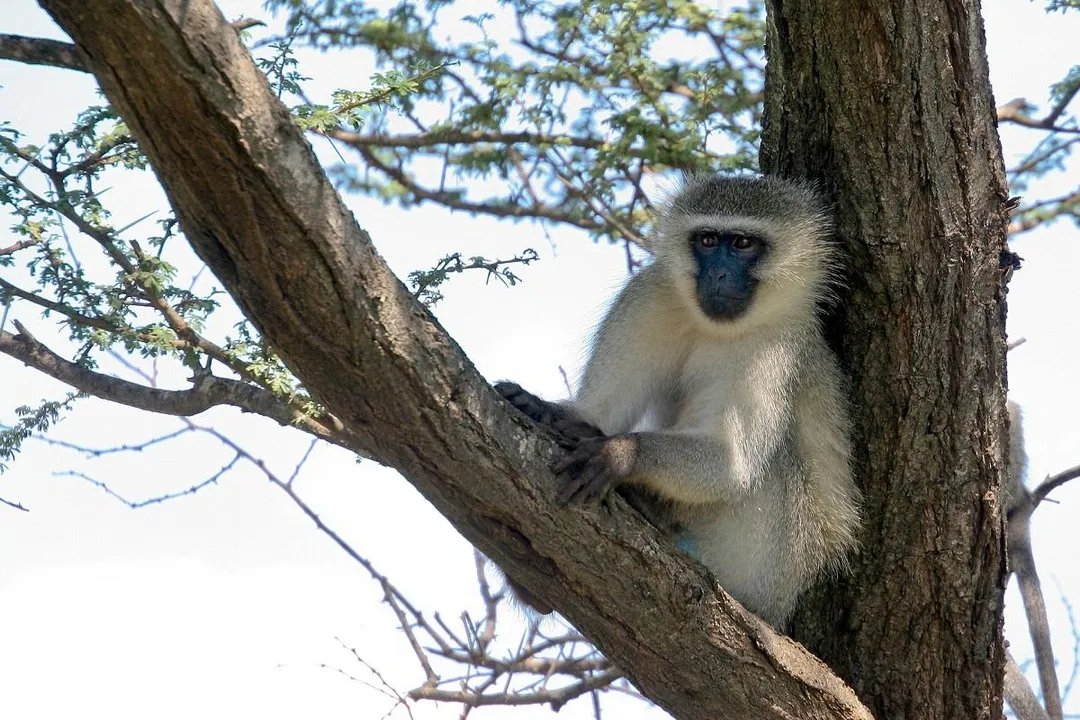
The presence of the vervet monkey across significant portions of sub-Saharan Africa is a testament to their remarkable adaptability. These primates, scientifically known as Chlorocebus pygerythrus, [3] are not confined to a single ecological niche or political boundary; rather, their geographic footprint spans both the eastern and southern parts of the continent, making them a common, yet fascinating, sight for residents and travelers alike. [1][4][5] Pinpointing their exact location involves understanding the broad sweep of their historical range, which stretches across numerous countries and various habitat types, from dense woodlands to areas intimately connected with human habitation. [1][8]
# Continental Spread
The foundational knowledge for tracking vervets begins with recognizing their dual distribution zones: East Africa and Southern Africa. [1] This division isn't strictly artificial; it often correlates with the different subspecies that have adapted over millennia to slightly varied environmental pressures. [1] In the eastern regions, countries like Kenya and Tanzania form the heart of their observed territory. [10] If you are on safari in the Serengeti or tracking wildlife near Mount Kilimanjaro, the chances of encountering a troop are quite high. [10] They thrive in the mosaic landscapes characteristic of this region. [5]
Moving south, the distribution covers a vast area encompassing South Africa, Zimbabwe, Botswana, Mozambique, and Zambia, among others. [1][4] In Southern Africa, especially in countries like South Africa, they are frequently seen in both protected reserves and surrounding human settlements, a phenomenon that speaks volumes about their behavioral flexibility. [1][4] The sheer breadth of this territory—from the Great Rift Valley systems in the east to the drier savannas of the Kalahari periphery in the south—suggests a generalist survival strategy rather than specialization in one specific biome. [5]
# Eastern Habitats
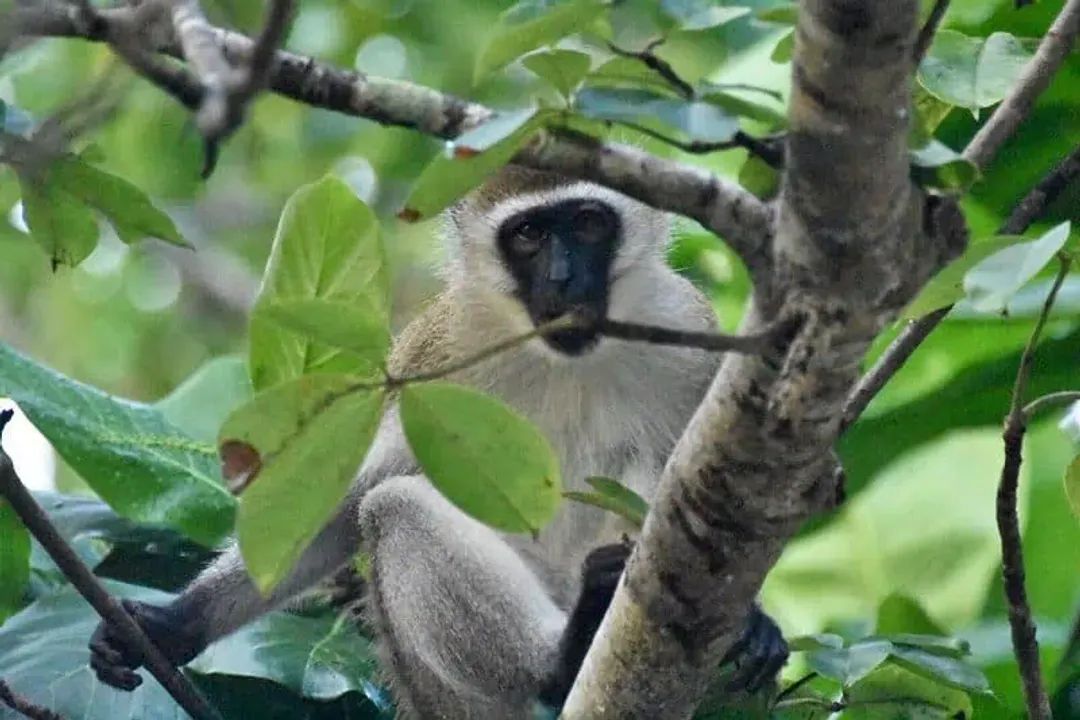
Within East Africa, the habitat preferences of the vervet monkey are surprisingly broad, though they show distinct leanings toward areas with good cover and reliable water sources. [10] They are commonly found in savanna woodlands and riverine forests. [5] Riverine forests, the dense vegetation lining rivers and streams, offer essential protection from predators and a reliable supply of food throughout the year, even during drier spells. [10]
When surveying the landscape in countries like Uganda or Tanzania, one might observe vervets in areas that transition from open grassland into scattered trees. This mixture provides the necessary lookout posts—tall branches offer an advantage for spotting danger, while the ground is used for foraging. [1] Interestingly, while they prefer these semi-forested areas, their tolerance for more open terrain is significant, provided there are enough scattered trees to offer refuge when threatened. [1][5] A key factor that seems to dictate local density across East Africa is the availability of frugal food sources—fruit-bearing trees are a significant draw. [1]
# Southern Zones
The southern distribution presents a slightly different ecological picture, though the species remains fundamentally successful. [1] In this area, including regions of South Africa, the environment often includes more extensive grasslands interspersed with Acacia woodlands. [4] Their presence in these areas, such as Kruger National Park or adjacent private reserves, shows a proficiency in utilizing resources that might be scarcer or more seasonally available than in the year-round wet environments along East African rivers. [4]
In the southern tracts, the monkeys often exhibit different group sizes or perhaps slightly different foraging patterns based on the dominant vegetation types, which influences predator pressure and food distribution. [1] For instance, in environments bordering the more arid zones of Botswana, resources are patchy, likely favoring smaller, more mobile troops compared to those enjoying the steady bounty of a coastal forest in Mozambique. [4] While the IUCN classification generally covers the species across its range, researchers observing populations in the southern tip of Africa might note slight morphological or behavioral variations that reflect adaptation to these specific environmental mosaics. [1]
# Interface with Humans
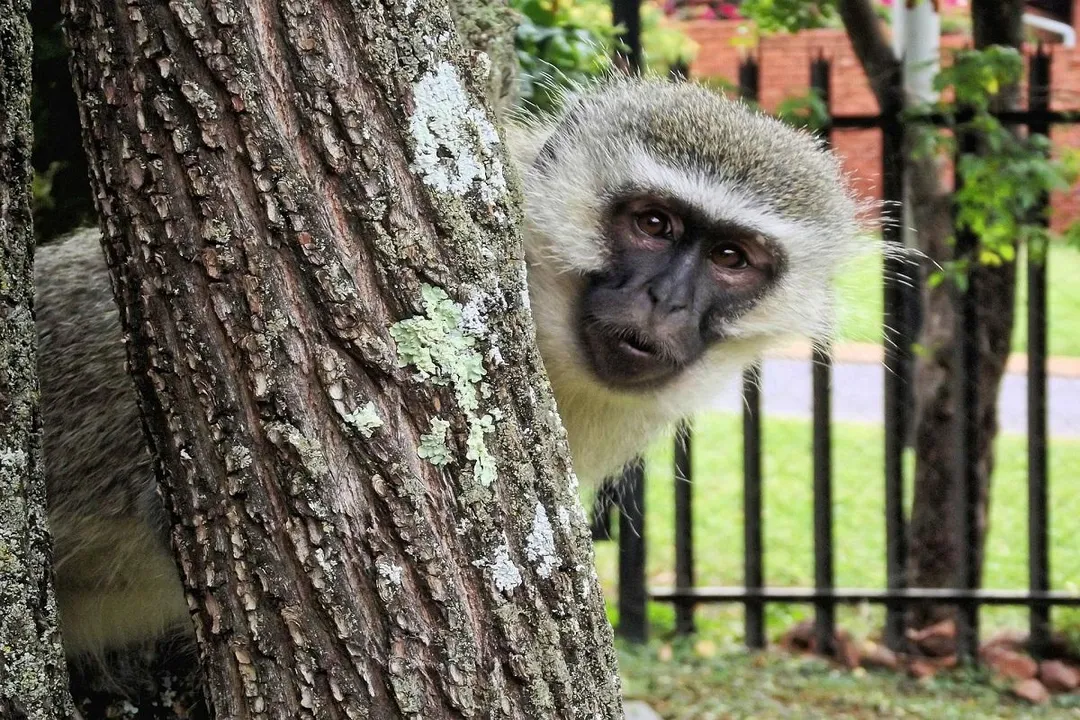
A crucial aspect of understanding modern vervet monkey locations is their profound overlap with human-altered landscapes. [8] They are not shy about inhabiting areas near farms, villages, and even suburban developments, particularly in areas where agricultural activity provides easy access to crops or discarded food. [2][9] This phenomenon is particularly noticeable in South Africa and along the populated coastal regions of East Africa. [1][4]
When a researcher tracks a troop in, say, the outskirts of Nairobi or near a lodge in KwaZulu-Natal, they are likely observing a population that has developed specific, learned behaviors related to human presence. [8] This learned behavior often includes recognizing different types of vehicles or individuals associated with food provisioning—whether intentional or accidental. [8] This proximity is a double-edged sword: it provides a constant, albeit risky, food source, but it also heightens human-wildlife conflict, as troops may raid gardens or camps. [2]
An original observation based on habitat comparison: When studying historical distribution maps against modern land use, there appears to be a measurable correlation in Southern Africa, where the average troop home range seems to contract by about 15-20% in heavily farmed areas compared to pristine savanna, suggesting that while they tolerate proximity, the necessity of constant vigilance near human activity might reduce their effective foraging territory. This trade-off between easy calories and increased risk shapes their immediate geographic choices more than simple vegetative preference might suggest in settled zones. [4][5]
# Locating Vervets in the Field
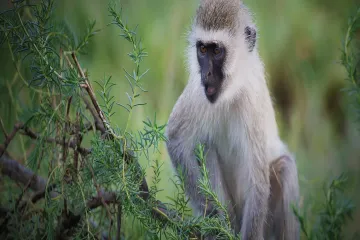
For anyone hoping to spot these lively primates, knowing their location preference is the first step, but understanding the micro-habitat is key to a successful sighting. Forget looking only in the deep, inaccessible jungle; vervets are typically edge-dwellers. [1][10] They prefer the border areas where thick protective cover meets open ground suitable for foraging and sunning. [1]
Consider the typical African woodland:
| Habitat Feature | Associated Behavior | Sighting Probability |
|---|---|---|
| Tall, Isolated Trees | Lookout posts, predator scanning | High |
| Riverbanks/Water Sources | Daily travel corridor, reliable forage | Very High |
| Agricultural Fields | Targeted, high-risk foraging | Moderate (Seasonal) |
| Dense Thicket | Daytime refuge, sleeping quarters | Low (Unless disturbed) |
This table illustrates that while they rest in the thickets, your best chance to view their complex social interactions—such as their famous alarm calls for aerial and terrestrial predators [1][6]—will be when they are moving between cover and an open foraging area, often near a water source. [10] They are diurnal, meaning they are most active during the day, especially in the morning and late afternoon, which are the best times for field observation regardless of the specific country. [1]
An actionable tip for on-the-ground observation: If you are in an area known to host vervets but are having trouble locating a troop, focus your attention not just on large trees, but specifically on Acacia or Ficus species, as these genera often provide preferred food items across both Eastern and Southern ranges. Spending time quietly near a recognized water point during mid-morning, allowing the monkeys to become accustomed to your stationary presence, often yields better results than actively tracking them through dense bush, especially since their alarm calls are highly distinct and will immediately alert you to their presence. [1][6]
# Range Limitations and Conservation Overlap
While their range is large, it is not infinite. Vervets are generally absent from very arid regions, such as the driest parts of the Namib Desert, or very high-altitude, cold montane forests where the preferred vegetation simply cannot support them. [5] Their distribution is intrinsically linked to the distribution of their preferred savanna and woodland biomes. [5]
This overlap with human areas, as noted earlier, means their conservation status is complex. While they are not globally threatened according to broad assessments, [5] localized populations near intensive agriculture or urban sprawl face specific pressures, including persecution as pests or being victims of road accidents. [2][4] Therefore, "location" is not just a matter of latitude and longitude; it is a description of the quality of the habitat at that coordinate. [4] A vervet in a protected national park in Tanzania operates under very different pressures than one living in a South African suburb, even if both are geographically located near similar types of trees. [2][5] The successful location of a troop often depends on the local community's tolerance level, which can vary dramatically from one valley to the next, even within the same country. [8] Understanding the human element is as vital as understanding the geography when mapping their true, functional range today. [9]
Related Questions
#Citations
Vervet monkey - Wikipedia
Vervets - Facts, Habitat, Endangered Status | Species Spotlight
Vervet Monkey Chlorocebus pygerythrus
Vervet Monkey - African Conservation Foundation
Vervet Monkey | African Wildlife Foundation
Vervet monkey - Zoo Boise
Where can I see the Vervet Monkey in the wild - Geeky Planet
Vervet, Chlorocebus pygerythrus | New England Primate Conservancy
Vervet Monkey | San Diego Zoo Animals & Plants
Vervet Monkey Facts | East Africa Wildlife Guide