Is it better to put a hummingbird feeder in the sun or shade?
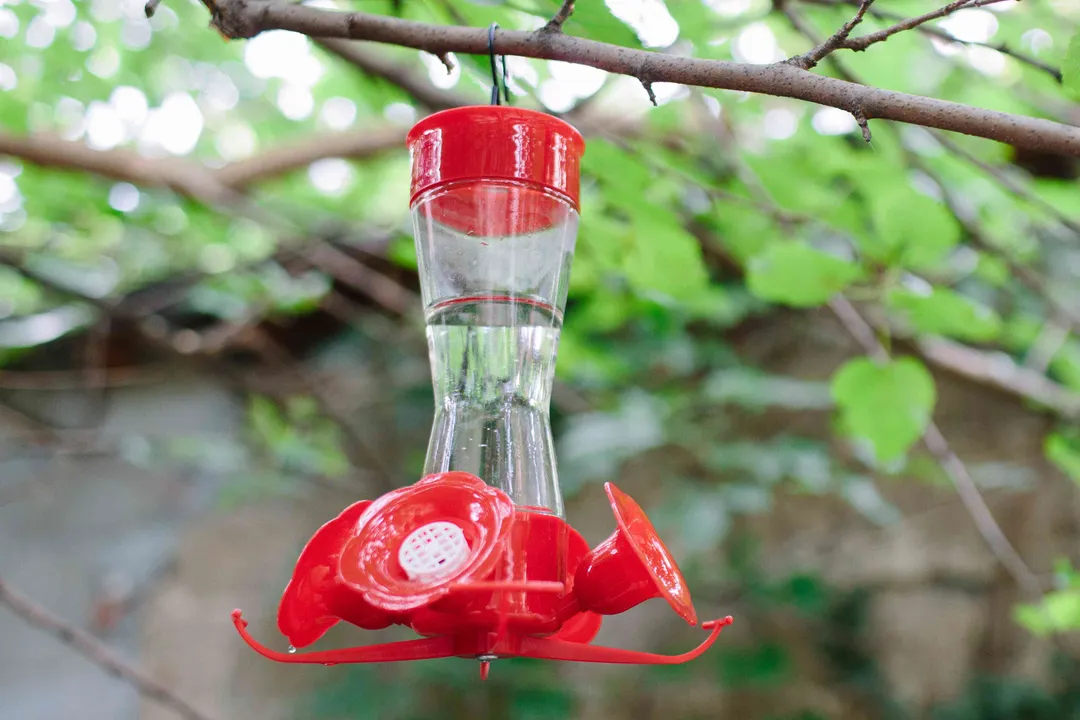
Deciding the perfect location for a hummingbird feeder is one of the most common, yet surprisingly complex, decisions a backyard bird enthusiast faces. The placement—specifically whether to choose a sunny spot or a shady refuge—directly impacts the safety of the nectar, the visibility of the feeder, and ultimately, the health and patronage of your tiny visitors. [2][3] There isn't a simple, one-size-fits-all answer; the ideal location is a careful compromise between keeping the food fresh and ensuring the hummingbirds can easily find it.
# Heat Versus Spoilage
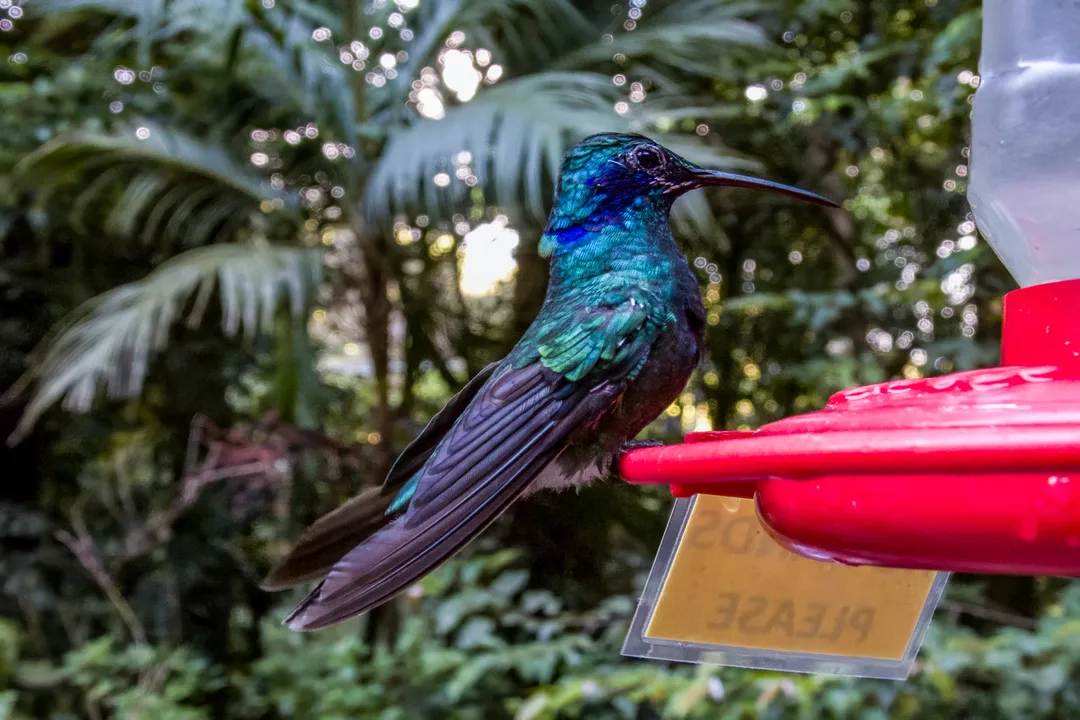
The primary concern driving the sun versus shade debate revolves around the rate at which the sugar water solution spoils. [3] Hummingbirds require a consistent supply of fresh nectar, and spoiled food can harbor mold and bacteria that are dangerous to them. [1][4]
The direct sun is an incubator for microbial growth. When the ambient temperature rises, especially on hot summer days, a feeder placed in full, intense sunlight can quickly heat up. [9] This elevated temperature significantly accelerates the fermentation process in the four-to-one sugar-water mix, turning a safe treat into a potential hazard in a matter of hours. [1][5] If you notice the nectar looking cloudy or seeing any visible signs of mold, the placement is definitely too sunny for the current conditions. [4] In regions experiencing sustained high temperatures, leaving a feeder in the blazing midday sun can necessitate changing the solution twice a day or more, which places a significant burden on the feeder owner. [3]
Conversely, placing the feeder in deep, consistent shade slows down this spoilage process considerably. [3][5] Shade keeps the nectar temperature lower and more stable, which buys the caretaker more time between cleanings and refills. [9] This is especially helpful during periods of moderate weather when the birds are active but the sun isn't scorching. For many, especially those who cannot check their feeders daily, the shade offers a layer of insurance against accidental poisoning of the birds. [5]
# Visibility Factors
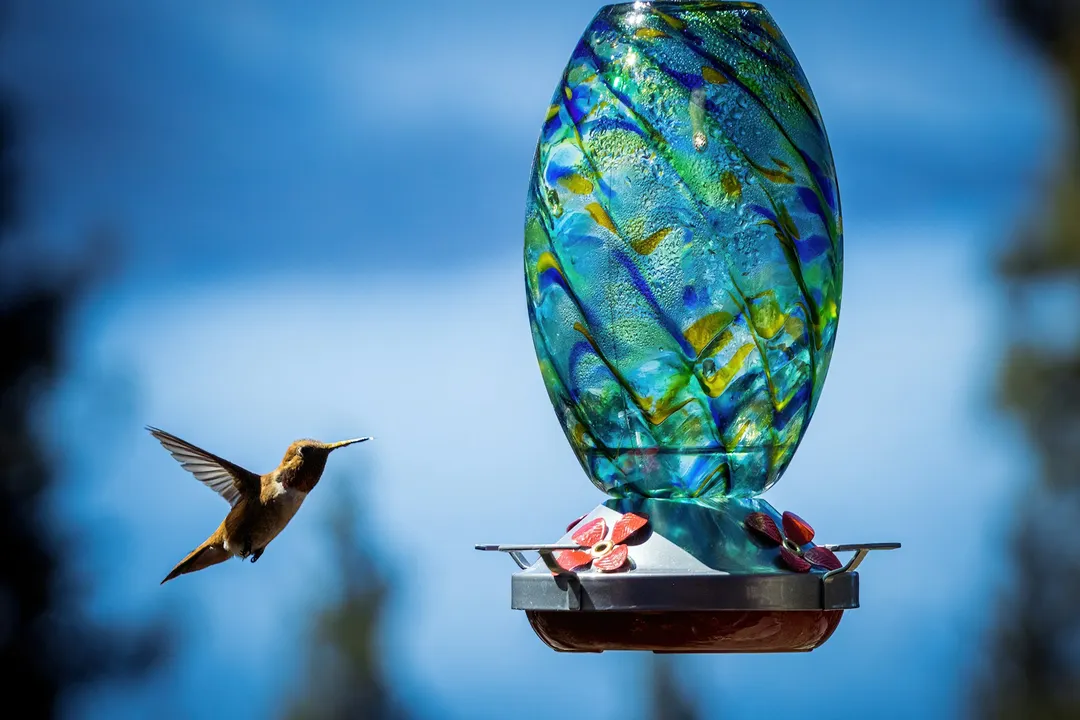
While nectar safety is critical, the feeder must first be seen to be used. Hummingbirds are highly visual creatures, strongly attracted to the color red and the way light reflects off the feeder ports. [5] This brings the shade placement into question.
If a feeder is tucked away in a dark, deep shadow—say, under a dense evergreen or deep within a covered porch—it might become effectively invisible to passing hummingbirds. [5] They rely on visual cues from a distance to locate their refueling stations. A feeder that is too hidden might be completely overlooked, regardless of how fresh the nectar inside is. [5]
The general consensus among bird enthusiasts acknowledges this trade-off: you need brightness to attract them, but not so much heat that you endanger them. [5][9] If you have a feeder with bright red components, it has an inherent advantage in drawing attention, which might slightly mitigate the need for full, direct sun exposure. However, if your feeder is primarily clear glass or plastic, maximizing its visibility through good, bright placement becomes even more important.
One subtle factor that interacts with solar heating is the elevation of the feeder. A feeder placed very high up, exposed to the full expanse of the sky, will often heat up faster than one placed lower down, closer to the ground or sheltered by surrounding foliage, even if both receive the same amount of direct overhead sun. This is due to better air circulation at height, which can sometimes lead to faster evaporation and localized heating around the reservoir, creating convection currents that cook the nectar more efficiently. [1]

# Establishing Optimal Positioning
Given the conflicting needs for coolness and visibility, the ideal placement often lies in a middle ground, prioritizing shade over continuous sun exposure, especially during the hottest part of the day. [3][9]
# Morning Light Strategy
The most frequently recommended strategy involves utilizing the morning sun while avoiding the intense afternoon heat. A spot that receives direct, gentle morning sunlight—say, between the hours of 8:00 AM and 11:00 AM—is often considered the best compromise. [3]
Morning sun helps warm the nectar slightly, making it more appealing to birds as they begin their active foraging day, but the location should transition into shade by the time the sun is at its peak intensity (usually noon to 4:00 PM). [3] This allows the feeder to benefit from the slight warming effect without risking rapid spoilage from sustained high temperatures.
# Seasonal Adjustments
A crucial, yet often overlooked, consideration is that the sun’s path changes dramatically throughout the year, especially in temperate climates. [3] What is deep shade in July might be full sun in November, and vice-versa depending on the orientation of your yard relative to the horizon line.
To maximize success across the seasons, it is helpful to establish a seasonal placement routine. During the height of summer (June through August), prioritize shade protection during the hottest hours, even if it means moving the feeder slightly if necessary. [3] As the weather cools in early spring and late autumn, you can afford to move the feeder into slightly more sun exposure, as the lower ambient temperatures reduce the spoilage risk significantly. For instance, an area that gets full sun in October might be perfectly safe for feeding because the peak temperature struggles to reach 80 degrees Fahrenheit, whereas that same spot in August would require changing the feed daily. [9] Thinking about the sun's arc—the angle at which it strikes the feeder—is more important than just thinking about general shade.
Here is a simple way to think about adjusting placement based on the time of year:
| Season | Ambient Temperature Trend | Recommended Sun Exposure | Primary Goal |
|---|---|---|---|
| Summer (Peak Heat) | High (85°F+) | Morning Sun / Afternoon Shade | Prevent rapid spoilage |
| Spring/Fall (Moderate) | Medium (60°F - 80°F) | Morning Sun / Partial Shade | Balance visibility and freshness |
| Winter (Cool) | Low (Below 60°F) | Partial Sun to Full Sun | Maximize visibility; spoilage is rare |
This table illustrates that the correct answer is dynamic, changing with the weather rather than being fixed to one physical spot year-round. [3]
# Maintenance Interacts with Location
No matter where you hang your feeder—sun or shade—proper, rigorous maintenance remains the single most important factor in keeping your hummingbird visitors healthy. [4][6] Placement only manages the rate of spoilage; it doesn't eliminate the need for cleaning.
# Cleaning Schedule
Birding experts strongly advise cleaning and replacing the nectar frequently, regardless of the weather. [6] A good baseline rule is to change the solution every three to five days when temperatures are below 80°F. [3] However, if the temperature soars above 90°F, this schedule must be drastically shortened, potentially to every day, especially if the feeder is exposed to any direct sun. [3][9]
It is not enough to simply top off old nectar with new solution; this just dilutes the spoiling mixture. [6] The entire feeder—bottle, base, and ports—must be disassembled and scrubbed thoroughly with hot water and a mild brush (a small bottle brush works well) every time the solution is changed. [4][6] If you see any discoloration or slime, an occasional soak in a weak vinegar solution (about one part vinegar to four parts water) followed by a clear water rinse can help sanitize plastic or glass components, but always ensure all traces of the vinegar are gone before refilling with fresh sugar water. [4]
# Feeder Features
The design of the feeder itself can influence how well it manages heat. Many modern feeders incorporate features specifically designed to address the sun issue. Look for feeders that use red plastic for attraction rather than painting the glass red, as paint can sometimes leach chemicals into the solution. Feeders with built-in UV protection or those designed with very narrow nectar reservoirs that hold less liquid (requiring more frequent filling but ensuring smaller amounts are exposed to heat) can be beneficial when hanging in brighter areas. [5] Furthermore, some designs incorporate small, built-in sun shields above the feeding ports themselves, acting as miniature umbrellas that deflect direct overhead rays while still allowing ambient light to reach the liquid. [1]

# Providing Shelter and Security
Beyond the sun/shade dichotomy, the surrounding environment plays a significant role in whether a hummingbird feels safe enough to approach the feeder in the first place. [2] A feeder placed in an exposed, wide-open area might be easy to spot but also easy prey for predators like neighborhood cats. [2]
Placing the feeder near, but not directly in, dense cover offers an excellent layer of security and comfort for the birds. [2] Ideally, the feeder should be visible from about 15 to 20 feet away, perhaps hanging near a bush, tree, or dense vine where the birds can perch safely while surveying the area. [2] This arrangement allows them to retreat quickly if startled. A hanging spot with morning sun exposure, positioned near a source of protective cover that casts afternoon shadow, often ticks all the necessary boxes: attraction, safety from sun, and predator awareness. This proximity to cover also slightly buffers the feeder from wind, which can sometimes accelerate evaporation and cooling/heating cycles on very exposed mounts.
When setting up the location, consider the sightlines from your own home as well. While the birds need cover, you also want a clear view to monitor the feeder's condition without disturbing the birds. A common practice is to hang the feeder where you can see it from a window—perhaps 10 to 15 feet away from the glass—to observe their activity and check the nectar level without having to walk directly up to it, which might spook them away from a newly placed feeder. The hummingbirds will quickly learn that the area near the window is safe for regular visits, provided the food supply remains reliable and fresh. This strategy integrates human observation with avian comfort, making twice-daily checks much easier to maintain.
The final decision hinges on your local microclimate and your commitment to maintenance. If you live in a region with mild summers or you are absolutely certain you can change the nectar daily, a spot with more direct morning sun might attract more birds. However, for most people managing feeders in average or hot climates, the slight reduction in visibility associated with a slightly shadier location is a worthwhile trade-off to ensure the nectar remains safe and unspoiled. [3][5] Always err on the side of caution; a clean feeder in partial shade is always better than a potentially toxic feeder basking in full sun.
#Videos
how to position your Hummingbird Feeder for the best results
Related Questions
#Citations
Should hummingbird feeders be placed in direct sunlight or shaded ...
Do you hang your feeder in the sun or shade? - Houzz
Where to Place Hummingbird Feeders: 8 Tips - The Spruce
Is there anyway to cover the hummingbird feeder from direct Sun ...
how to position your Hummingbird Feeder for the best results
Best Practices Keeping Hummingbird Feeders Safe Rainbow Gardens
Where to Hang a Hummingbird Feeder - Happy Gardens
Why You Should Never Put Hummingbird Feeders in Full Sun