Why do Bernese put their paw on you?
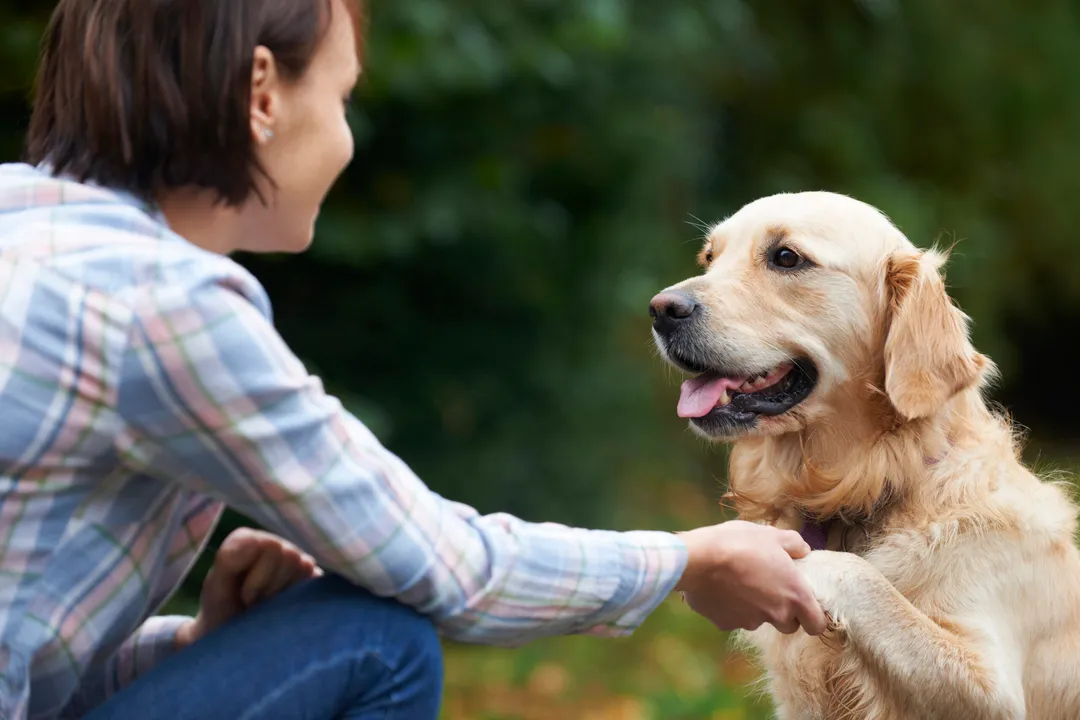
The appearance of a large, gentle paw resting carefully on your leg or arm is a hallmark moment for many owners of Bernese Mountain Dogs. [1][2] This gesture, which can range from a soft tap to a deliberate weight placement, is one of the breed's most endearing forms of non-verbal communication. It’s rarely aggressive; instead, it signals a deep connection rooted in the breed's famously sweet, calm, and devoted temperament. [3][7] To truly appreciate this behavior, one must look beyond the simple action and consider the underlying motivations that drive this giant, furry companion to seek physical contact in this specific way. [4][5]
# Attention Seeking
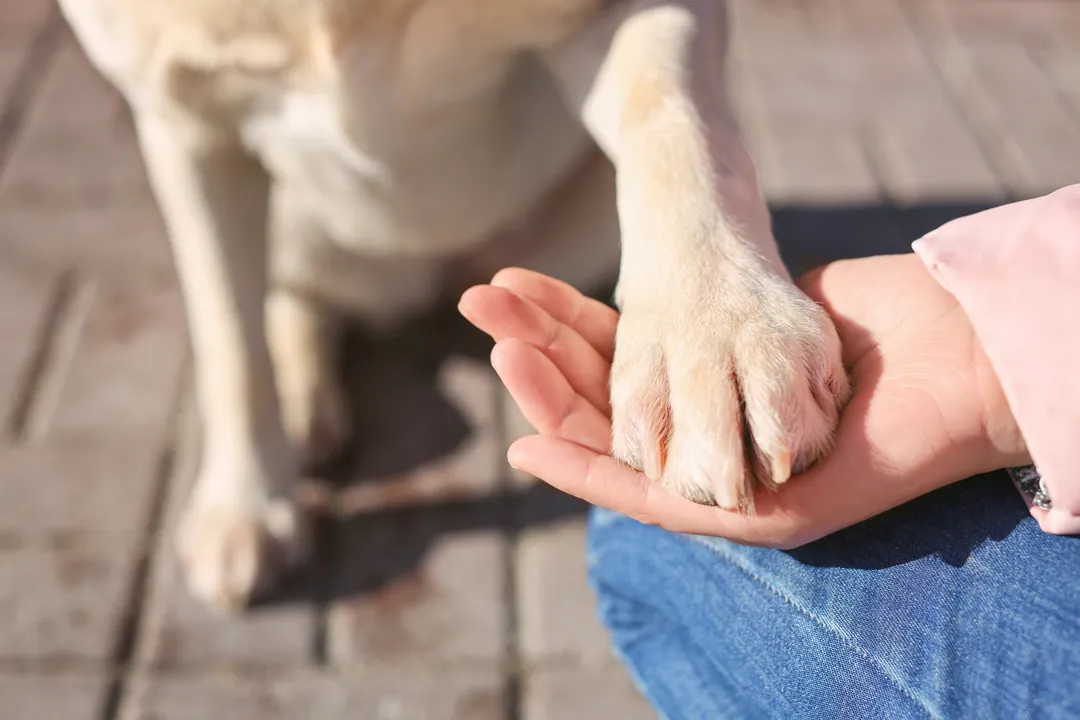
The most common interpretation of a dog placing a paw on a person revolves around capturing their attention. Dogs quickly learn which actions draw an immediate response from their human companions, and a physical touch often yields a faster result than a bark or a whine, especially when the owner is engaged in an activity like reading, working on a computer, or watching television. [5][9] For a Bernese, whose default setting is often one of gentle companionship, the paw becomes an efficient, low-volume tool for intervention. [3] They are not typically known for being excessively demanding in the way some smaller, high-energy breeds might be, but when they decide they need your focus, the paw is their chosen method. [7] This is often observed when they are happy or excited to see you return home, or simply when they notice you've been quiet for too long. [2]
# Learned Interaction
This specific action is frequently a learned behavior reinforced by positive outcomes. [5][9] Think back to the first time your puppy or young Bernese tried this. If placing a paw resulted in you immediately stopping what you were doing to offer a scratch behind the ears, a reassuring word, or perhaps even a brief walk, the dog logged that data: Paw on Human = Good Things Happen. Over time, the dog refines the gesture. For instance, a tentative, light tap might mean, "Excuse me, I have a low-priority request," while a firm, sustained placement might indicate, "This is important now". [4] It’s fascinating to observe how quickly a dog, especially one as attuned to its family as the Bernese, adapts its communication style to suit the environment and the owner's typical response patterns. [1] If you consistently respond by giving attention, even briefly, you are validating the paw placement as a successful communication strategy. [9]
# Expressing Needs
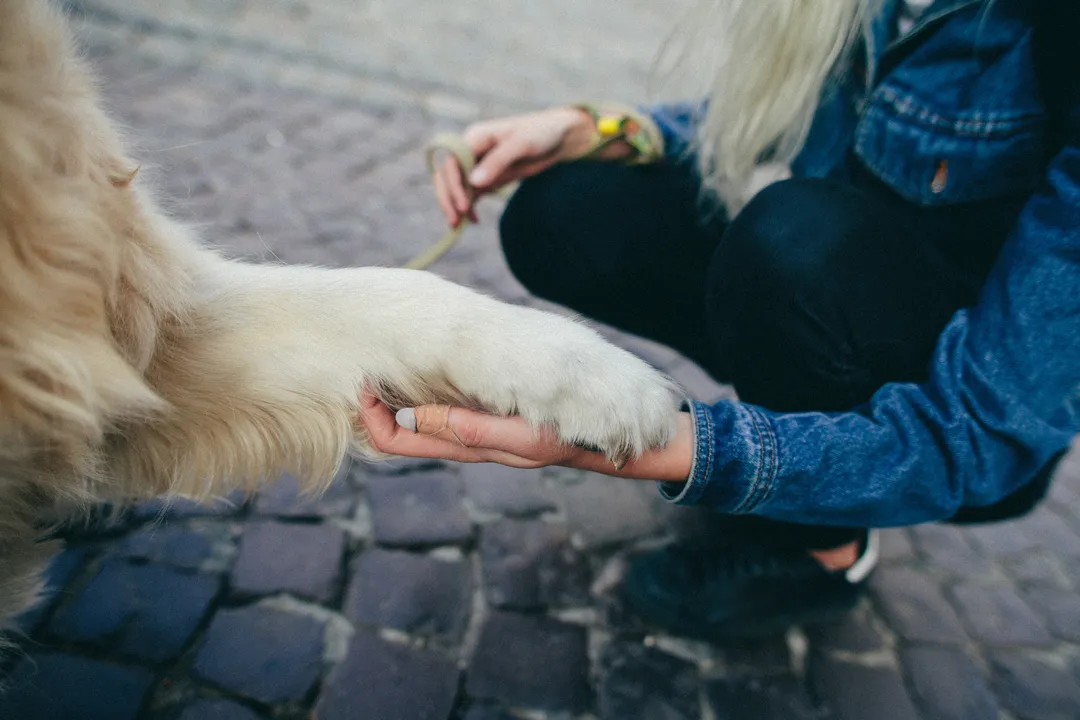
Beyond general attention, the paw is often a direct solicitation for a specific item or action. This motivation category encompasses several frequent canine demands: food, play, or access to the outdoors. [4][8] If the paw appears around mealtime, or if you are holding a bag of treats, the message is straightforward: Feed Me. [5] If the dog is dropping a favorite toy near your lap and then gently places a paw on your knee, the request is clearly for a game of fetch or tug. [4]
For a breed known for its working heritage and need for appropriate physical and mental activity, expressing the need to go out—whether for a potty break or a proper walk—can also manifest as this gentle touch. [7] It is imperative for owners to differentiate between the "I want attention for affection" paw and the "I have an urgent need" paw. A key differentiator is often where the paw lands and what accompanies it. A paw on the hand holding a book is likely attention; a paw on the leg while standing near the door is likely a request for passage. [9]

# Comfort and Connection
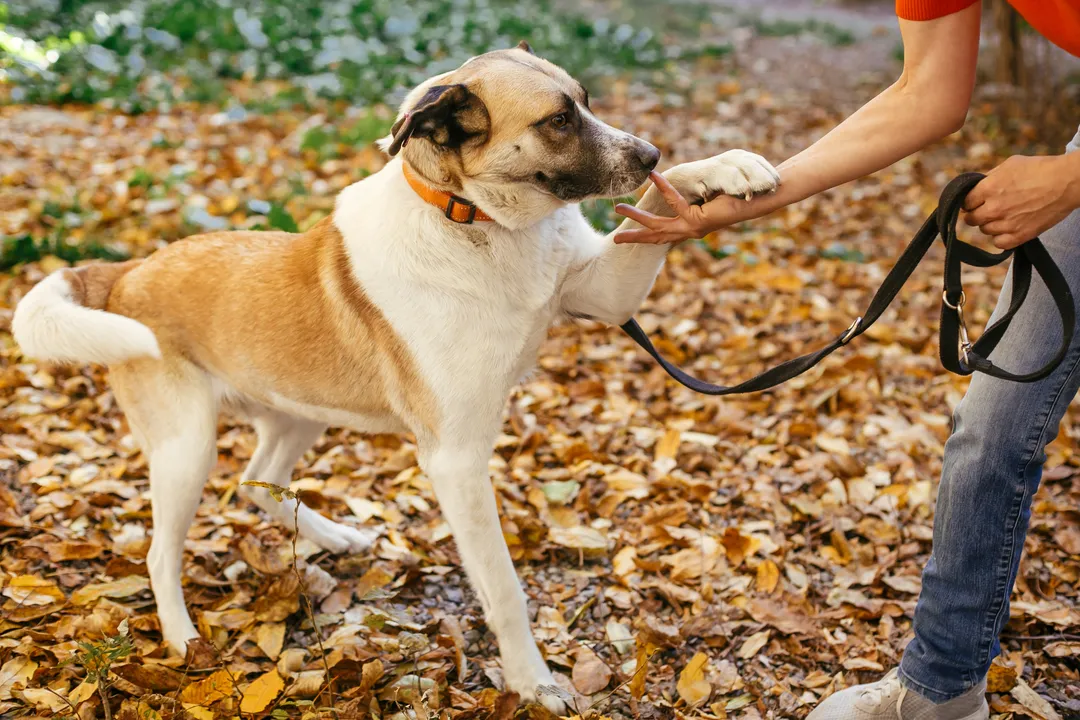
While needs and attention are primary drivers, many dog owners report that the pawing behavior peaks during times of quiet companionship, suggesting a strong emotional component. [1][5] This is where the Bernese's inherent gentle nature shines. [3] The gesture becomes an expression of affection, bonding, and reassurance. [4][8] For the dog, putting a paw on you might mimic the way they sought comfort from their mother or littermates, establishing a physical tether to their primary social unit—their human family. [9]
In moments of perceived stress, such as during a thunderstorm or when a strange noise occurs outside, a Bernese might place a paw on you as a means of self-soothing. They are seeking physical confirmation that you are present and that everything is safe. [4][8] This is slightly different from simple anxiety; it's an active seeking of connection during uncertainty. Unlike some breeds that might retreat or pace when nervous, the Bernese often seeks to anchor itself to its owner, and the paw is a tactile way to do this. [7]
When observing this behavior in your Bernese, notice the quality of the touch. A nervous paw might be lifted and placed repeatedly with a slightly hesitant body posture. An affectionate paw is often placed and held, accompanied by soft eye contact or a contented sigh. [1][2]
# Decoding the Paw Placement Context
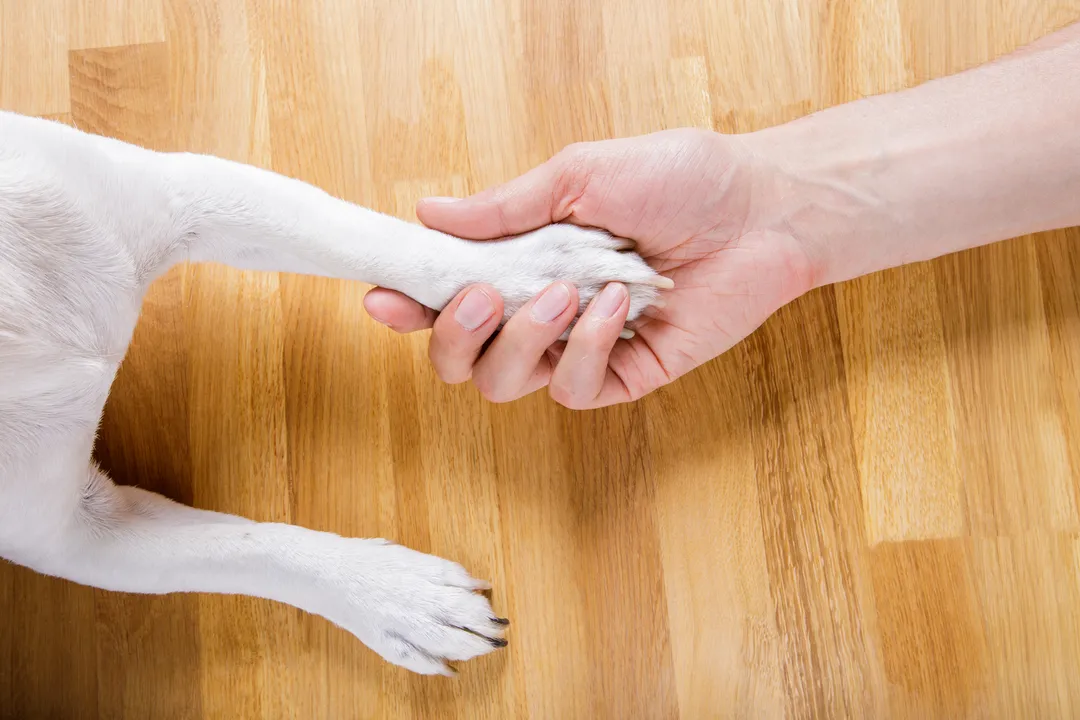
Understanding the why requires keen observation of the when and where. While general behavioral science offers the main categories, applying them specifically to a Bernese Mountain Dog's daily routine provides greater insight.
| Context of Pawing | Likely Primary Motivation | Owner Response Suggestion |
|---|---|---|
| Owner on the couch, quiet evening | Affection / Bonding / Comfort | Gentle petting, soft verbal affirmation [4][8] |
| Owner preparing food or near treat jar | Requesting Food/Treats | Delay response by 30 seconds, then address need to prevent demanding behavior [5] |
| Owner is actively typing/reading/on phone | Attention Seeking | Acknowledge with eye contact and a single, short phrase before returning to the task [9] |
| Near the leash hook or outside door | Need for Activity/Potty Break | Immediately address the need; this is functional communication [4] |
| During a loud, unfamiliar noise | Reassurance / Anxiety | Provide calm physical contact and reassuring presence [8] |
One area where owner accounts often diverge is the gentleness associated with the touch from this specific breed. Many large-breed owners report that while the paw is substantial—a Bernese paw is considerable—the dog possesses an innate ability to modulate its force, offering what feels more like a weighted pat than a demand. [1][2] This learned modulation, which distinguishes it from an accidental knock or a rough nudge, suggests a high level of emotional intelligence and control unique to how these dogs interact with their most cherished people. [3] It’s a physical demonstration of their devoted nature, which prioritizes soft interaction over rough contact. [7]

# Shaping Future Communication
As Bernese owners, we are constantly shaping the dialogue we have with our dogs. If the pawing behavior becomes excessive—for example, constant tapping throughout the day regardless of need—it signals that the dog may be feeling bored or under-stimulated, or that the initial positive reinforcement was too strong. [5]
If you wish to encourage the pawing as a sweet greeting but discourage it as an interruption during focused work, you need a consistent management strategy. When the paw appears inappropriately, avoid giving any attention, even negative attention like saying "No" sternly, as this is still a form of acknowledgment. [9] Instead, practice the "Ignore and Redirect" technique. When the paw lands while you are working, sit still, offer no eye contact, and remain silent. The very second the paw is lifted, even if only to shift position, immediately reward the dog with praise and a gentle scratch. This teaches the dog that lifting the paw or maintaining quiet presence earns the reward, not the act of placing it. [5]
Conversely, to encourage the behavior when you want it—say, as a calm request for a cuddle—you can proactively initiate the behavior yourself in a calm setting. Gently lift your hand, say a cue word like `Touch` or `Paw`, and guide their paw onto your hand or leg, immediately rewarding heavily. [5] Over time, this teaches them to offer the action voluntarily when they desire the connection, often replacing more insistent behaviors. [4]
An original observation many owners of massive breeds like the Bernese notice is the subtle difference in weight distribution compared to smaller breeds. A Chihuahua's tap is negligible, but a Bernese placing their paw on your chest while you lie down feels like a significant, comforting weight. This heavy, steady pressure acts as a profound, physical affirmation of presence and security for the dog. When a Bernese sits near you and places a paw on your foot, they are effectively grounding themselves to you, utilizing their substantial physical structure to reinforce the bond in a way a smaller dog simply cannot replicate. This tactile anchoring is a powerful, unspoken expression of trust and belonging, far exceeding the simple need for attention once established in a comfortable setting. [1][3]
# The Importance of Temperament
The baseline personality of the Bernese Mountain Dog heavily influences this characteristic behavior. [3][7] They are bred to be steady, reliable farm dogs—companions that worked closely with their owners in demanding conditions. [7] This history cultivates a deep desire for partnership and proximity. They are not aloof; they are intensely devoted. [7] When this devotion meets the dog's inherent desire to be near its people, the paw becomes the perfect tool. It allows them to maintain contact without climbing into your lap, which, given their size, is often impractical or impossible. [3]
Their calm demeanor means they often prefer subtle communication over high-energy demands. [3] If a Bernese wanted to move you, they could likely use their body weight more forcefully. The choice of the paw is an indication of restraint and respect for your boundaries, even while communicating a desire for closeness. [5]
To synthesize the different behavioral viewpoints, consider the energy level associated with the pawing. A dog that is generally anxious or highly dependent might use the paw frequently due to underlying stress or separation issues. [8] A happy, well-adjusted Bernese, however, tends to use the paw selectively—as a greeting, a final check-in before settling down, or when they notice a lapse in connection during a quiet time. [2][7] If your Bernese exhibits the pawing behavior exclusively when you are busy and ignores you when you are actively engaging them, it leans heavily toward attention-seeking. [9] If it happens randomly while you are both relaxing peacefully, the motivation is likely pure affection and bonding. [4]
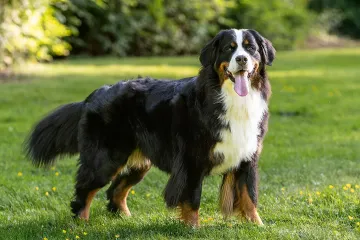
# Final Considerations for Owners
Ultimately, when a Bernese places a paw on you, the owner should feel acknowledged as the center of that dog's world. [7] This unique gesture is a blend of breed instinct, learned communication, and pure devotion. [5] It is rarely a negative sign; rather, it is a specific, tactile language tailored to the gentle giant that trusts you implicitly. [3]
For new owners grappling with this endearing yet sometimes confusing habit, maintaining a behavioral log for a week can be extremely insightful. Note the time, your activity, the dog's apparent mood, and your response, and compare it against the motivations above. [9] For example, if you find that 80% of the paw placements occur between 6:00 PM and 7:30 PM while you are watching the evening news, you can confidently deduce this is likely a "cuddle time" request signaling the end of the active day and the beginning of shared downtime. [1] This small effort at systematic observation moves the owner from simply reacting to intelligently partnering with their dog's communication style. [4] Embrace the paw; it is the handshake of the Bernese Mountain Dog, offered only to those they consider family. [2][7]
#Videos
Do Dogs Put Their Paws on You? It Says More About ... - YouTube
Related Questions
#Citations
Holding paws, new behavior : r/bernesemountaindogs - Reddit
How to stop a Bernese Mountain dog from pawing at people?
Berner Personalities | bernerbabies
Why Do Dogs Put Their Paw on You? - MyDogLikes
Why Does My Dog Put Their Paw On Me? - American Kennel Club
Do Dogs Put Their Paws on You? It Says More About ... - YouTube
Bernese Mountain Dog - All About Dogs - Orvis
Why Do Dogs Put Their Paws On People? - PetMD
Why does my dog place his paw on me whenever I sit down? - Quora