Is a puffin a duck or a penguin?
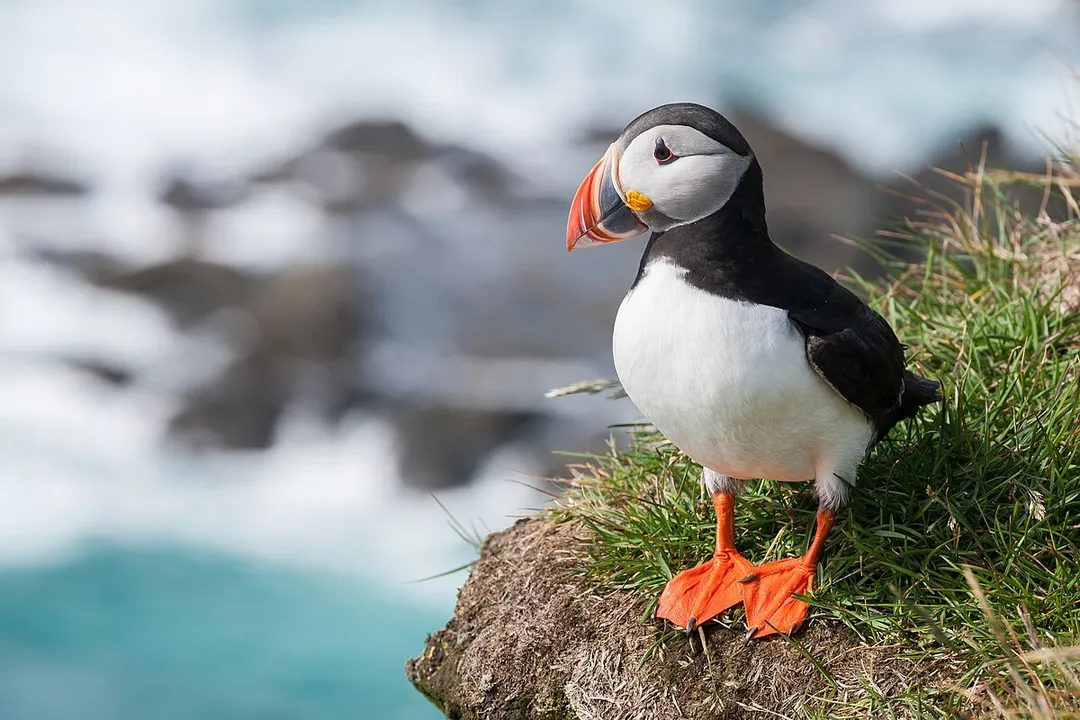
The constant mix-up between the puffin and the penguin is easy to understand; after all, they are both striking, black-and-white seabirds known for being adept swimmers. [1][4][7] Yet, despite these surface-level similarities, these two charismatic birds are biologically distinct, belonging to entirely separate evolutionary lines. [2] A common misconception is that the puffin might be a type of duck or perhaps a smaller, northern penguin—neither is true. Puffins are members of the auk family, Alcidae, whereas penguins belong to the family Spheniscidae. [3][4]
# Classification Divide
To properly separate these avian cousins, one must look at their scientific classification. This reveals just how distant their relationship is. [4] Puffins are classified under the order Charadriiformes. [4] This large group also contains gulls and waders, placing the puffin among species that generally inhabit coastal or aquatic environments but are not specialized for the Antarctic extremes that spring to mind when thinking of penguins. [4] Within this order, puffins specifically belong to the tribe Fraterculini. [3]
Penguins, on the other hand, are grouped into the order Sphenisciformes. [4] This order is entirely dedicated to penguins, signifying a unique evolutionary path focused on an aquatic, flightless lifestyle. [4] This fundamental difference in their scientific orders means that while both birds have successfully mastered the marine environment, they arrived at that mastery through separate evolutionary pathways. [7]
# Geographic Separation
Perhaps the clearest, most non-negotiable difference separating these birds is where they call home. [7] Puffins are strictly birds of the Northern Hemisphere. [3][5] You will find them thriving in the cold, rich waters of the North Atlantic and the Arctic Oceans. [3][5] They establish large breeding colonies on steep cliffs or remote islands across regions like Iceland, Norway, and the eastern coast of Canada. [3][5]
Penguins, in sharp contrast, are creatures of the Southern Hemisphere. [4][7] While popular culture frequently depicts them waddling across vast sheets of Antarctic ice, only a few species actually reside there. [4] Many penguin species live much further north, but critically, no penguin species is native to the Arctic. [4][7] This geographical segregation—Puffins North, Penguins South—is a definitive boundary between the two groups. [7]
# Flight Capability
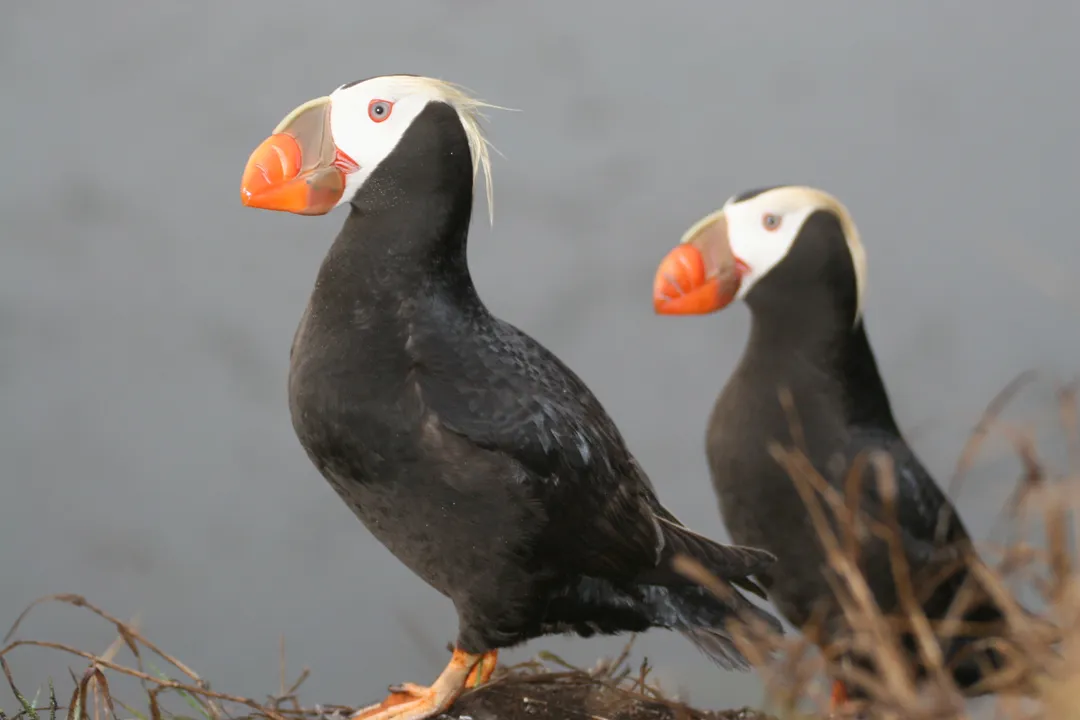
One of the most significant physical and functional differences lies in their wings. [7] Puffins are capable of flight. [1][4][7] When airborne, they beat their wings very rapidly, which is necessary for their small size. [4] However, these same wings are incredibly effective underwater; puffins essentially "fly" through the water column to hunt their prey, a behavior shared by their penguin cousins, but puffins retain the ability to leave the ocean surface entirely. [4][7]
Penguins are completely flightless. [4][7] Over millennia, their wings have adapted into stiff, powerful flippers optimized for underwater propulsion. [7] This specialization means they are superb swimmers, arguably more efficient underwater than the puffin, but they cannot take to the air above the waves. [7]
# Distinctive Features
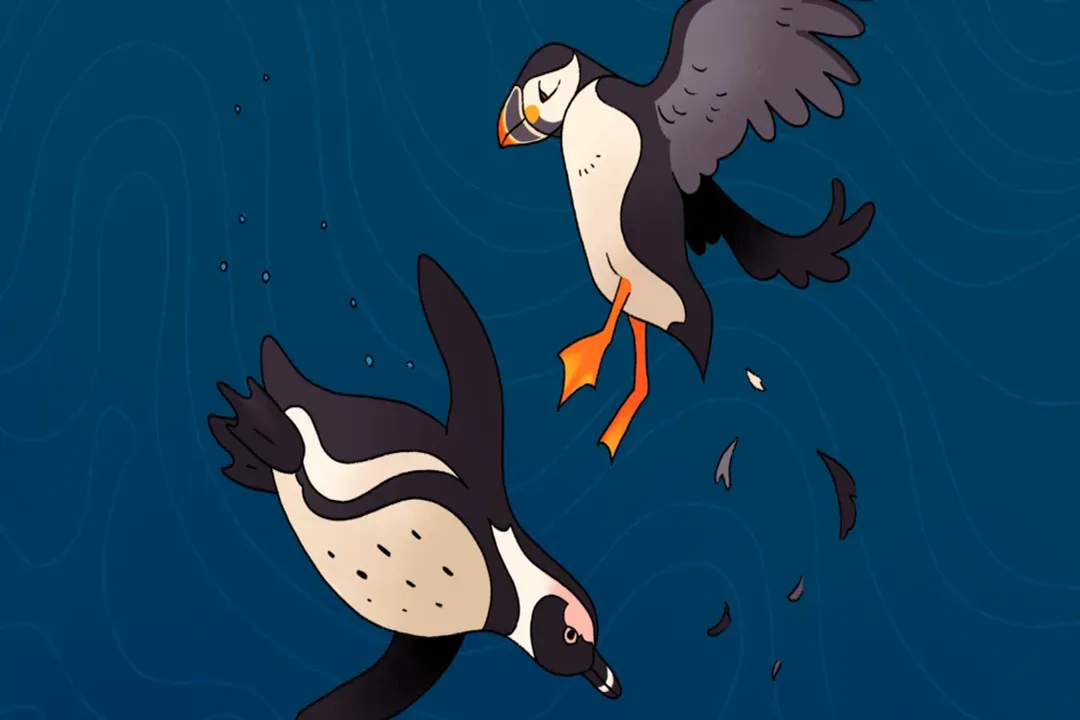
When observing these birds up close, the differences become even more apparent, particularly concerning their bills. [7] Puffins are famous for their spectacular, large, and brightly patterned beaks during the breeding season. [1][5] The Atlantic Puffin, for example, displays vibrant patches of blue, yellow, and orange on its beak during this time. [5] What is fascinating is that this colorful structure is temporary; once the breeding season ends, the outer plates are shed, revealing a smaller, duller bill for the winter months. [1][5][7]
This dramatic seasonal bill change is not seen in penguins. [7] While penguin beaks vary by species—from the long, slender bill of the Gentoo to the thick, multi-hued bill of the Emperor—they maintain their basic structure and color profile year-round, reflecting their constant, year-round need for aquatic hunting prowess rather than a specialized breeding display structure. [7]
The coloration itself, while superficially similar, serves different camouflage needs. [4] Both use countershading—dark on the back, light on the belly—which is a common strategy for marine animals. [4] For the puffin, this helps it blend into the dark, deeper water when viewed from above by a predatory bird, and blend into the bright surface light when viewed from below by a fish. [4] Penguins employ this same tactic for survival in the vast Southern Ocean. [4]

# Life in the Colony
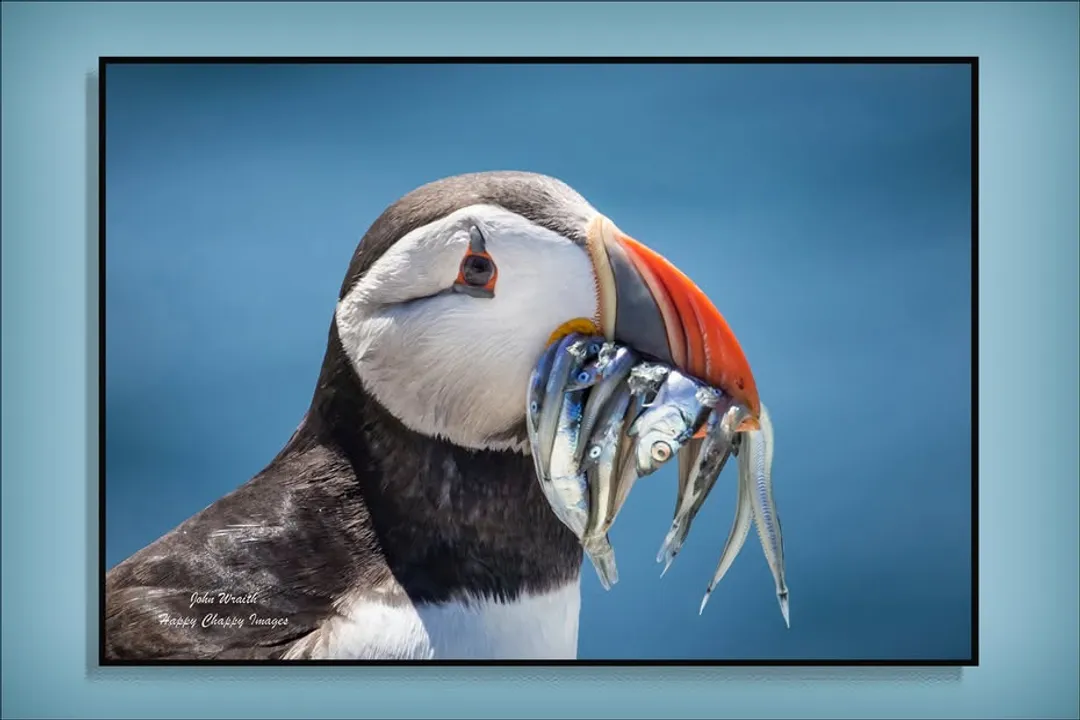
The way these birds raise their young also shows divergent nesting strategies. [5] Puffins typically nest in large, dense colonies. [5] They often excavate their own nesting burrows into soil or use natural crevices in rocky slopes. [5] Once the single chick hatches, both parents work diligently to feed it, often making multiple trips daily. [5] A remarkable feat is how puffins provision their young; they are capable of holding dozens of small fish, such as sand eels, crosswise in their uniquely serrated bills during a single foraging trip to deliver a meal. [5]
Penguin breeding habits vary significantly by species, but they generally do not dig burrows in the same fashion as puffins; instead, they often create simple nests of pebbles or scrape shallow depressions on the ground, or utilize rookeries on ice or land. [7]
Thinking about their specialized existence, it is interesting to note the energetic efficiency trade-off inherent in their evolution. The puffin, needing to fly long distances between feeding grounds and breeding sites over the North Atlantic, must maintain a relatively light bone structure and wing loading suitable for aerial lift, even if those wings are also excellent for underwater propulsion. [4] The penguin, having entirely abandoned flight, can afford the dense bone structure and powerful pectoral muscles necessary for true hydrodynamic mastery in the water, maximizing diving depth and speed at the cost of ever seeing the sky from above. [7] This split represents two highly successful, yet fundamentally different, ecological solutions to living near the ocean surface and exploiting its resources.
# Explaining the Resemblance
The primary reason people confuse these birds is a classic case of convergent evolution. [8] This biological phenomenon occurs when unrelated species independently evolve similar traits because they have adapted to similar environmental pressures or ecological niches. [8] Both puffins and penguins occupy the niche of a diving seabird that hunts fish in cold, productive waters. [7] Their shared need to evade predators from above and below, and their shared requirement to capture slippery prey underwater, favored the evolution of that particular black-and-white, torpedo-like body shape. [4][8]
It is a fantastic illustration that nature often arrives at the same "solution"—in this case, a streamlined body and contrasting plumage—through entirely different genetic blueprints. [8] The puffin's heritage lies with gulls and terns, while the penguin's lies with entirely different groups of southern seabirds. [4]
# Puffin Profiles
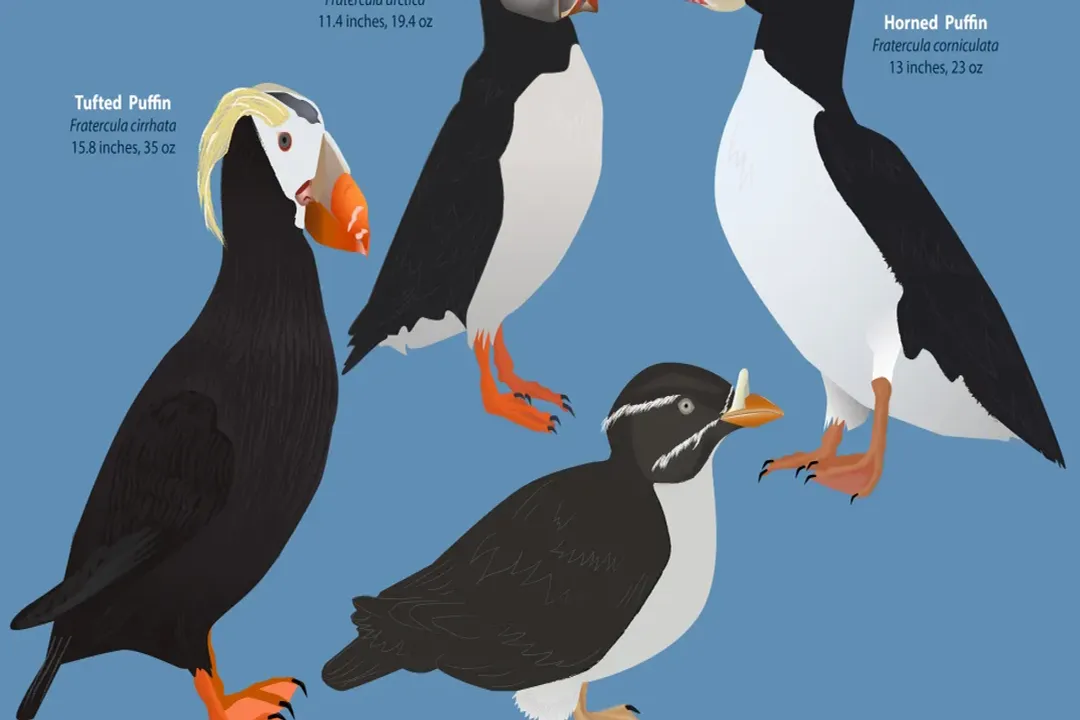
Puffins are often affectionately called the "sea parrots" of the North due to their distinctive look. [5] The Atlantic Puffin (Fratercula arctica) is the most widely known representative of the genus Fratercula. [3][5] An adult Atlantic Puffin typically weighs around one to one and a half pounds and measures roughly 10 to 15 inches in length. [5] Their striking appearance helps them stand out in the often monochrome gray seascapes of their habitat. [5]
Consider the sheer logistics of raising a chick in a cliff face colony. A parent puffin doesn't just bring back one fish; it organizes its catch so that the silvery bodies of dozens of sand eels are held securely, creating an impressive, multi-fish bouquet for its single offspring. [5] This efficiency in transport is crucial, given the energy demands of commuting from the feeding grounds back to the burrow site on a turbulent coast. [5]
# Penguin Basics
Penguins are the iconic birds of the Southern Ocean, embodying extreme aquatic adaptation. [4][7] Their flipper system allows for incredible maneuverability, enabling them to pursue fast-moving prey like squid and small fish deep beneath the surface. [4] Unlike the puffin’s temporary colorful attire, the penguin's defining feature, the black-and-white tuxedo look, is permanent, reflecting a constant evolutionary pressure for effective countershading across all seasons and environments where they reside. [4]
While they cannot fly through the air, the degree of specialization in their wings as flippers is a testament to evolutionary success in a specific environment. For instance, the larger penguin species, like the Emperor, can dive to depths exceeding 500 meters and remain submerged for over 20 minutes, capabilities far beyond any flying seabird, including the puffin. [7] The entire architecture of the penguin—its dense bones, streamlined body, and insulated plumage—is tailored for endurance and efficiency in a cold, three-dimensional water column where the sun is the only light source from above.
# Summary Comparison
To clearly summarize these differences, it helps to look at their key attributes side-by-side:
| Feature | Puffin | Penguin |
|---|---|---|
| Family | Alcidae (Auk family) [3][4] | Spheniscidae [4] |
| Flight | Capable of flight [1][7] | Flightless [4][7] |
| Primary Range | North Atlantic and Arctic Oceans [3][5] | Southern Hemisphere [4][7] |
| Bill Coloration | Brightly colored seasonally; dull in winter [1][5] | Generally constant coloration year-round [7] |
| Nesting | Often digs burrows in cliffs [5] | Varies; scrapes or pebble nests common [7] |
Though the allure of the "sea parrot" and the iconic tuxedo bird often leads to mix-ups, the truth is that both the puffin and the penguin represent magnificent, parallel examples of avian mastery over the marine world, perfectly adapted to their respective hemispheres. [7]
#Videos
What Is The Difference Between Puffins and Penguins? - YouTube
Related Questions
#Citations
Mistaken Identities: Puffins vs. Penguins - National Aquarium
Puffins are not actually penguins! They are birds that look similar but ...
Puffin - Wikipedia
What's the difference between a penguin and a puffin?
Know Your Puffins | Smithsonian Ocean
What Is The Difference Between Puffins and Penguins? - YouTube
What's the Difference? Penguin vs. Puffin
Why do puffins resemble penguins? - Quora
Atlantic Puffins....... Atlantic puffins have penguin-like colouring but