What did Icadyptes penguins eat?
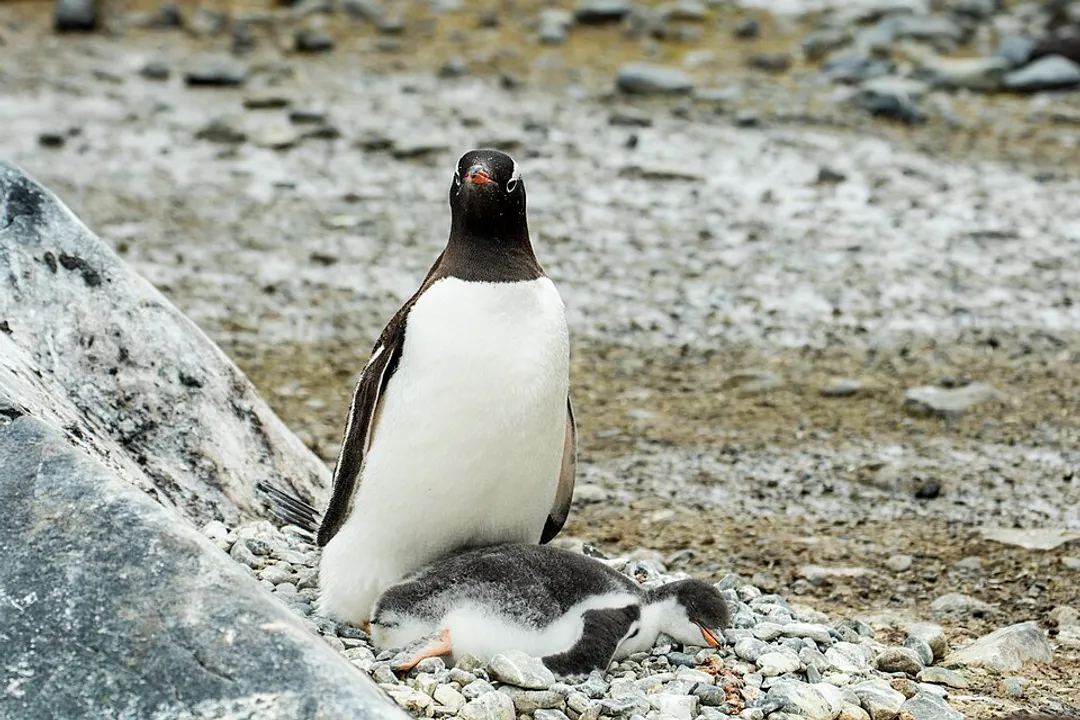
The extinct Icadyptes penguin presents a fascinating puzzle when trying to reconstruct its ancient life, particularly what it chose to consume in the seas of the Oligocene epoch. [1] Since we cannot observe them diving today, understanding their diet relies heavily on meticulous examination of fossil remains, primarily the structure of their bills, which serve as the most direct proxy for feeding habits. [8] Penguins, both ancient and modern, are fundamentally aquatic predators, relying on speed and agility to capture prey in the water column. [3][6]
# Fossil Morphology
Icadyptes was a relatively large penguin, belonging to a group of extinct giant penguins that inhabited the waters millions of years ago. [1] Specifically, Icadyptes is known from the Late Eocene to the Oligocene in what is now New Zealand. [1] Its sheer size suggests it may have competed for different resources than smaller, extant species. The skeletal material available allows paleontologists to reconstruct aspects of its anatomy crucial for feeding, much like how modern penguins exhibit diverse feeding strategies reflected in their bill proportions. [8]
# Bill Clues
The shape and proportions of a penguin's bill are directly linked to its foraging ecology. [8] By studying fossil skulls, researchers can compare Icadyptes to modern penguins whose diets are known, like those species that eat krill or small fish. [2] A key area of investigation in paleontology revolves around bill disparity—the variation in bill shape among different species—to distinguish feeding strategies. [8]
While modern penguins generally consume fish, squid, and krill, [2] the exact menu for Icadyptes remains an inference based on its unique skeletal measurements. [1][8] If a fossil species possesses a relatively long, slender bill, it might suggest a strategy focused on snatching smaller, individual prey items, perhaps more akin to a modern skua or even some cormorants, although the wing structure firmly anchors Icadyptes in the penguin lineage. [8] Conversely, a shorter, more robust bill might indicate the capability to handle larger prey or a crushing action more suited to shelled organisms, though penguins are generally not known for consuming hard-shelled prey. [8][6] The precise analysis of Icadyptes bill structure provides the foundation for this dietary hypothesis. [1][8]
# Ecological Context
To better understand what Icadyptes might have eaten, one must consider the marine environment it inhabited. [4] The Oligocene world was different from today, featuring a different distribution of landmasses and ocean currents, which in turn shaped the distribution and availability of marine life. [6]
# Coexisting Predators
Icadyptes did not live in isolation; it shared the ancient seas with other large, flightless marine birds. [1] For instance, the presence of other contemporaneous giant penguins, such as Palaeeudyptes or Kairuku in the same general region, suggests that the ecosystem could support multiple large piscivores. [1] This cohabitation implies that these different species likely had distinct feeding niches to avoid direct competition for the exact same food source. If Icadyptes and another large penguin species were found with very similar bill structures, it would strongly suggest they were hunting the same types of prey, perhaps dividing the resource by depth or time of day, or that niche partitioning was less pronounced than in current ecosystems. [8] The differing bill measurements between extinct species are precisely what allow scientists to propose these different ecological roles, assigning one penguin a slightly different prey size preference than its neighbor. [8]
An interesting implication of these ancient, relatively large seabirds coexisting is that the prey base in the Oligocene oceans must have been exceptionally rich to sustain multiple mega-penguins, each potentially needing to consume significant quantities of calories daily to maintain their large body mass, much like modern large penguins still require high caloric intake. [2][6]
# Modern Comparisons
While Icadyptes is long gone, looking at the diets of modern penguins offers a baseline for what any penguin eats. [2][6] Modern species range from small birds eating almost exclusively krill to larger species focusing on fish or squid. [2] Penguins typically hunt by pursuit diving, using their wings as flippers to propel themselves through the water. [3]
# Dietary Range
The staple diet for most modern penguins includes small schooling fish, squid, and crustaceans like krill. [2] The smaller Adélie and Chinstrap penguins often focus on krill, while larger penguins, such as the Emperor or King penguins, consume more fish. [2] Penguins hunt by chasing down their prey underwater. [6] They swallow their food whole while still submerged. [2]
If we hypothesize that Icadyptes bills, inferred from fossil analyses, point toward a more generalized or perhaps slightly larger prey size than a modern krill specialist, we can establish a probable upper and lower boundary for its diet. [8] Given the generally robust nature inferred for some of these extinct giants, they were likely targeting substantial prey items that allowed them to fuel their large frames. The Oligocene seas would have been rich in the ancestors of today's schooling fish and cephalopods, which would have been the most energetically sound targets for a bird this size. [4]
# Inferring Prey Size
The analysis of bill morphology often translates directly into estimates of the maximum prey size a bird can effectively capture and swallow. [8] A significant finding in the study of fossil penguins is that bill shape helps distinguish between penguins that specialize in small, easily captured prey versus those that target larger, more powerful individuals. [8]
If the skeletal evidence for Icadyptes shows a bill that is proportionally shorter and deeper compared to the very long, slender bills seen in some contemporary extinct forms, this suggests a different handling strategy. [8] A deeper bill might confer more crushing strength or simply be better suited to securely gripping a larger, struggling fish before it can escape the penguin's gape. [8] For a penguin estimated to be substantially taller than a modern human—some Icadyptes species reached around 1.5 meters in height—the daily caloric requirement would have necessitated reliably catching sizable meals. [1] It is highly probable that their diet was dominated by fish, which provide a high energy return for the diving effort, rather than relying heavily on small, low-energy crustaceans that would require near-constant consumption. [2]
For example, consider the modern Magellanic penguin, which primarily eats anchovies and sardines. [2] If Icadyptes occupied a niche comparable to a larger, sub-Antarctic specialist, we might estimate its main components to be medium-sized fish—perhaps the fossil equivalents of mackerel or herring—that were abundant in those Oligocene currents. To put the scale into perspective, if an adult Icadyptes needed, say, 10,000 kilocalories a day (a rough extrapolation given their inferred mass compared to modern large seabirds), and a meal of 200-gram fish provided about 400 kcal, the bird would need to catch 25 such fish daily, assuming perfect capture rates—a significant hunting effort. [6]
# Adaptations Beyond the Bill
While the bill is paramount, feeding success is a complete system adaptation. Modern penguins have evolved specialized tongues and palates covered in backward-pointing spines, called papillae, which help them grip slippery prey during the ascent to the surface. [2] It is reasonable to assume that Icadyptes, being a penguin, possessed a similar adaptation, as this feature is fundamental to the aquatic capture strategy common to all members of the group. [3][6] This morphology ensures that once the prey is caught underwater, it stays caught until it can be swallowed headfirst on the journey to the surface or just before surfacing. [2]
The ability of Icadyptes to dive effectively would also dictate its prey accessibility. Fossil evidence suggests that the paddle-like wings were fully adapted for underwater flight, a trait shared across all penguins. [3][6] This indicates that Icadyptes was an active pursuit predator, chasing down mobile prey rather than ambushing or passively filtering. [3] The physical demands of deep or prolonged diving would have favored prey that was energy-dense enough to make the dive worthwhile.
In comparing the feeding strategies inferred for Icadyptes with some other extinct giant forms, like Palaeeudyptes klekowskii which may have been one of the largest ever, the subtle differences in bill shape across the fossil record—even slight variations in the angle or robustness—represent critical evolutionary divergence. It suggests that the early penguin radiation was an experiment in aquatic predation, filling multiple specialized roles across the available marine biomass. [8] The very fact that Icadyptes is a distinct genus highlights that it occupied a niche separated enough from its contemporaries to warrant its own classification, likely through a refined feeding apparatus. [1] This separation in morphology, even if subtle, speaks volumes about the pressure to partition the food web in those ancient, crowded seas.
Ultimately, while the exact fossil record for Icadyptes diet remains incomplete—we lack direct stomach contents, of course—the evidence from skeletal biomechanics, particularly bill disparity analysis, points toward a diet consisting primarily of fish and potentially squid, tailored to the specific size range their unique bill structure was best equipped to handle in the rich, but competitive, Oligocene oceans. [8]
Related Questions
#Citations
Icadyptes salasi – the giant spear-billed penguin
All About Penguins - Diet & Eating Habits | United Parks & Resorts
Penguin - Wikipedia
Penguin evolution - ArcGIS StoryMaps
[PDF] Feeding habits of Antarctic Eocene penguins from a morpho
Penguin - Flightless, Antarctic, Aquatic | Britannica
#penguin – @palaeopedia on Tumblr
Bill disparity and feeding strategies among fossil and modern ...