How to identify a bandicoot?
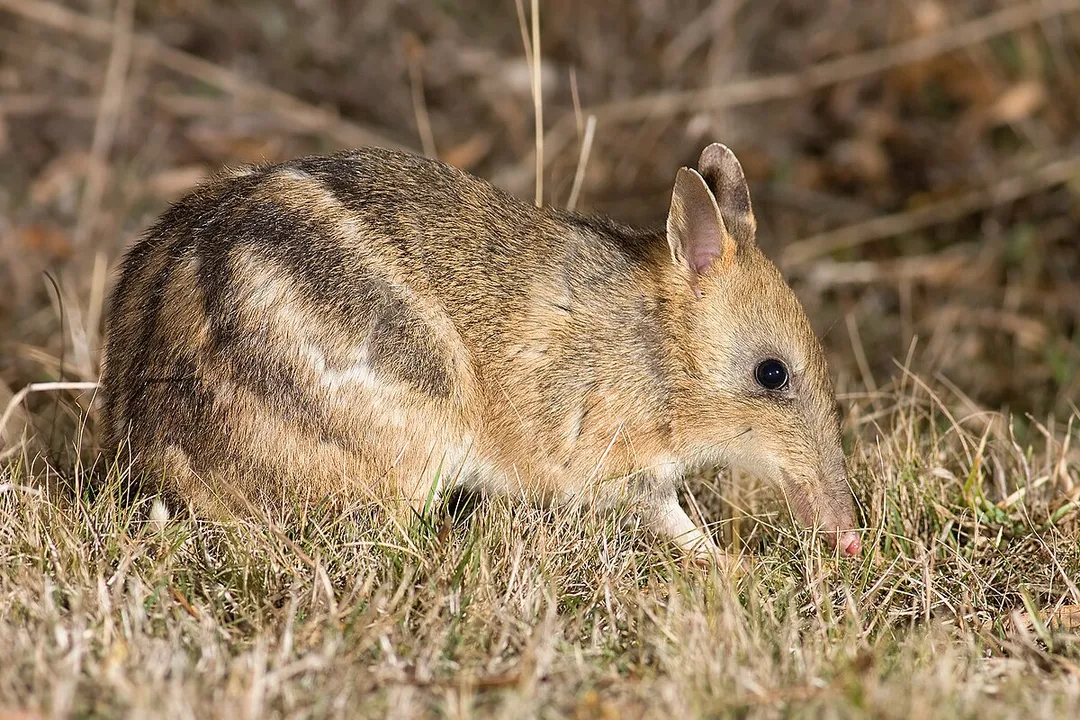
Identifying a bandicoot requires paying attention to several distinct physical characteristics, as well as the tell-tale signs they leave behind in their environment. These fascinating marsupials are native to Australia and New Guinea and play an often-unseen role in their local ecosystems. [1][7] Because many species are nocturnal, spotting the animal itself can be rare, making knowledge of their habitat and foraging evidence essential for confirmation. [4][7]
# General Appearance
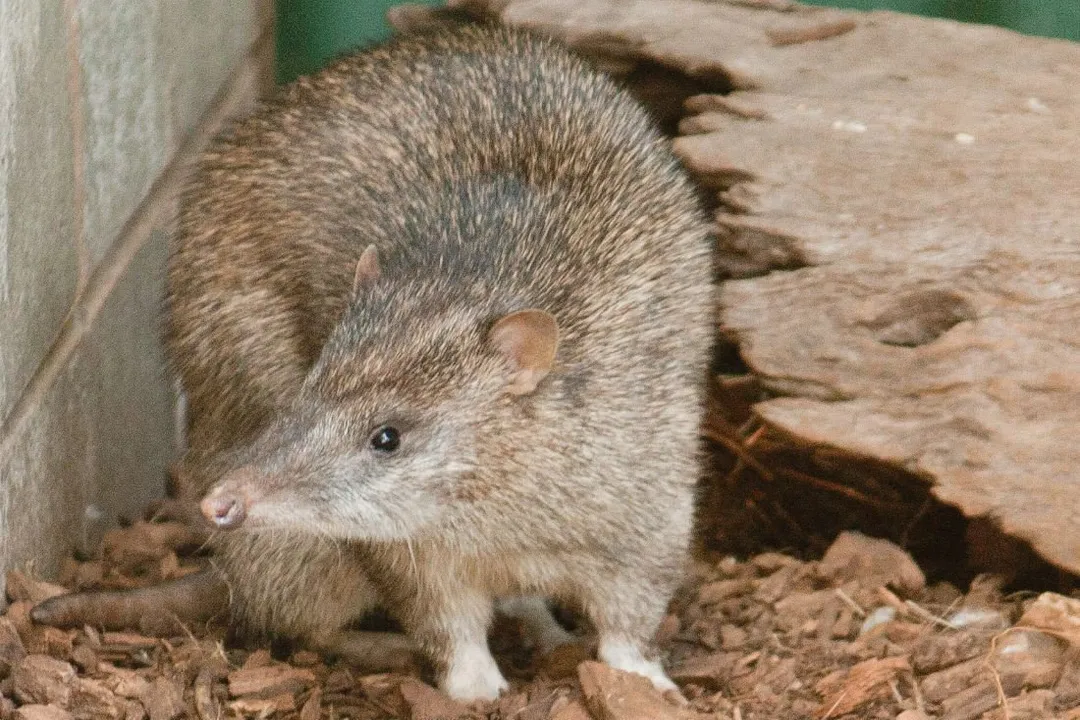
Bandicoots belong to the family Peramelidae. [1] While there are many different species, they generally share a characteristic body shape that sets them apart from other small native mammals. They are typically described as having a somewhat slender body, small forelimbs, and noticeably longer, more powerful hind legs. [4][7] The overall size can vary significantly depending on the specific species you are observing, ranging from small to medium-sized marsupials. [1]
Most bandicoots possess fur that is generally a shade of brown or greyish-brown. [5][7] For example, the Northern Brown Bandicoot, found across northern Australia, has a dense coat of coarse, dark-brown fur. [5] This coloring provides effective camouflage in the leaf litter and undergrowth where they spend most of their time. [3] Keep in mind that color alone is rarely enough for positive identification, as several small native mammals share similar drab coloration.
# Snout Ears

Perhaps one of the most defining external features of any bandicoot is its head structure. They possess a remarkably long, pointed snout. [4][7] This elongated muzzle is adapted for rooting and probing through soil and leaf litter in search of food, acting almost like a specialized shovel. [8] This distinctive snout profile is a major clue; if you see a small, furry animal digging with a prominent, tapering nose, you are likely looking at a bandicoot or a closely related species.
Accompanying the long snout are the ears. Bandicoots generally have relatively large, pointed ears that stand erect. [1] These large ears are characteristic of many nocturnal ground-dwelling animals, helping them detect subtle sounds in the dark while they forage. Comparing the size of the ears relative to the head—they often appear quite prominent—can help distinguish them from other small ground dwellers that might have rounder or smaller ears.

# Limbs Feet
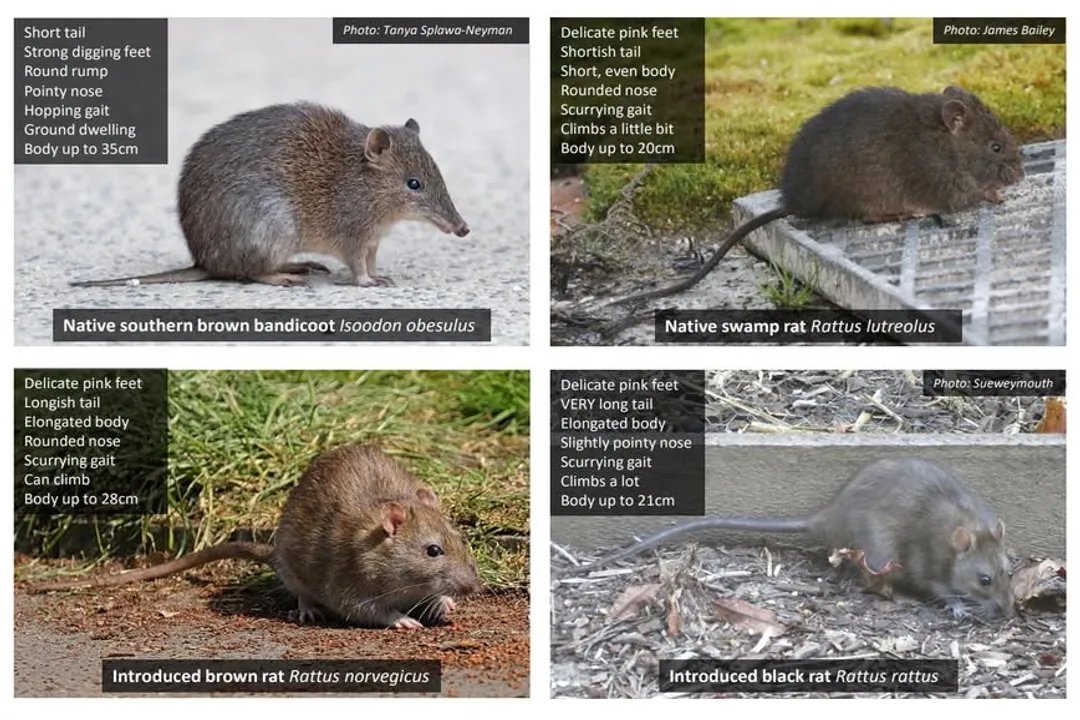
The structure of a bandicoot's limbs offers further clues to identification, especially regarding their locomotion. They possess short forelimbs, which are used for digging, and much longer hind legs. [1][4] This configuration means that when they move quickly, they often do not run like a typical four-legged animal; instead, their movement is characterized by a distinctive bounding or hopping gait, using their powerful hind legs to propel themselves. [1]
Focusing on the feet, bandicoots have four toes on each hind foot. [1] A crucial identifying feature here, common to the Peramelidae family, is that the second and third toes on the hind feet are fused together, or syndactylous. [1] While you might not often see this level of detail in the field, noting the distinct foot structure when looking at tracks or very close-up sightings can be helpful. The front feet are equipped with strong claws suited for excavation. [8]
# Habitat Range
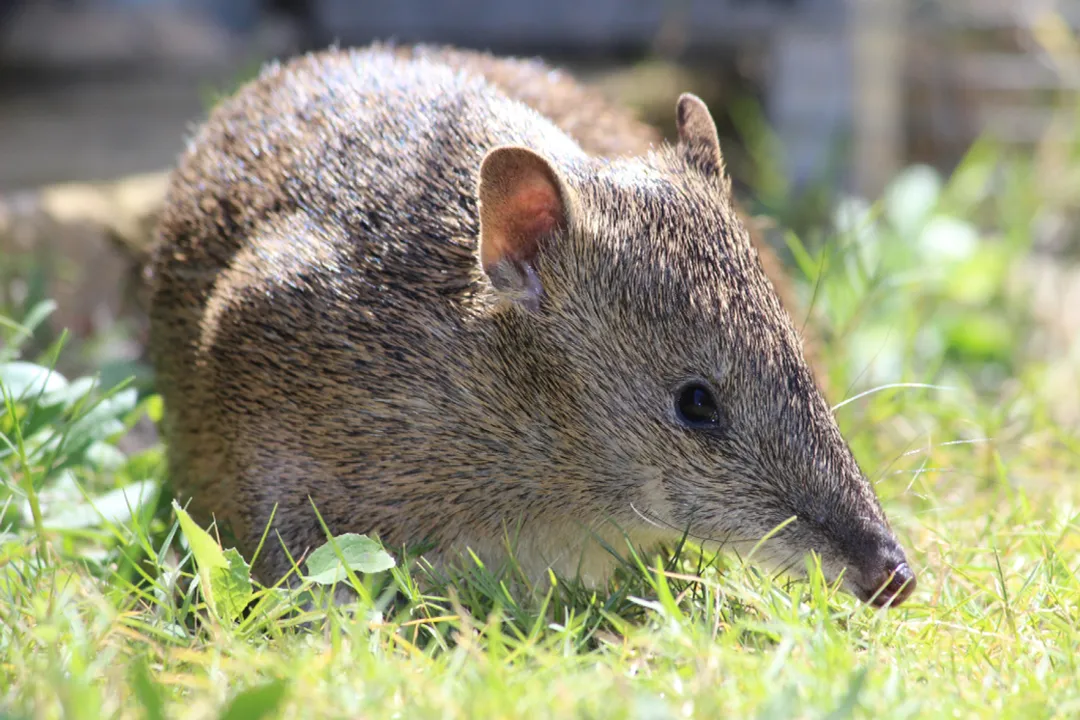
Knowing where you are looking is key, as bandicoots are restricted geographically. They are found in both Australia and New Guinea. [1][7] Within Australia, different species occupy different regions and environments. For instance, the Southern Brown Bandicoot is often associated with coastal heath, woodlands, and even suburban gardens in the southern parts of Western Australia. [3] Meanwhile, the Northern Brown Bandicoot is found in the tropical north. [5]
Generally, bandicoots prefer areas that offer sufficient ground cover for shelter and are moist enough to support the invertebrate populations they rely on for food. [1][6] Look for them in moist forests, dense shrublands, and grasslands. [1] If you are in an arid zone far from coastal areas or wetter forests, the likelihood of encountering one of the common species decreases significantly, though some arid-zone bandicoots do exist. [1] Understanding your local native ecosystem helps narrow down which species you might be trying to identify.
# Nocturnal Signs
Since bandicoots are primarily nocturnal, [4][7] confirming their presence often relies on finding evidence left behind during their nightly foraging activity rather than seeing the animal itself. They are active primarily from dusk till dawn. [4] If you are searching during the day, you are looking for signs that point to last night's activity.
One of the most definitive signs of a bandicoot is the creation of small, characteristic feeding holes or scrapes. [3][8] These signs are not just random holes; they are a direct result of their specialized feeding technique.
# Foraging Patterns
The feeding habits of bandicoots make them important ecosystem engineers, as their digging turns over soil and helps with aeration and nutrient cycling. [3][6] When foraging for insects, grubs, worms, and fungi, they use their strong claws and long snout to excavate the ground in a very specific manner.
The resulting sign is often described as a cone-shaped dig or a feeding crater. [3][8] The soil is pushed up in a distinct, small mound around a central depression where the animal has rooted out its meal. If you are trying to distinguish a bandicoot sign from that of a rabbit or a large rodent, focus on the profile of the disturbance. A bandicoot's dig tends to be deeper relative to its surface diameter, forming a more pronounced, narrow cone, as they probe deeply for invertebrates. [8] Contrast this with a rabbit, which typically creates a shallow scrape to search for surface greens or fallen seeds. A large rat might leave scratch marks but rarely creates the neat, deep, cone-like plug of soil that a bandicoot leaves behind. This focused, deep probing action, powered by that specialized snout, is a critical identifier of their presence. [4][8]
# Tracking Presence
To maximize your chances of identifying a bandicoot presence, you must know when and where to look for these signs. Since they are active at night, signs are often freshest in the early morning before human activity or heavy dew obscures them. [4] A helpful tip for field observation is to check feeding sites shortly after a decent rainfall. Rain softens the soil, making digging easier for the bandicoot, and the moisture helps to keep the disturbed soil structure distinct and visible for a longer period before drying out and blending in.
When examining potential tracks, bandicoot footprints are unique. They typically show four toes on the hind foot, and while the fused second and third toes might be hard to discern, the tracks often appear uneven or slightly asymmetrical due to their peculiar hopping gait. [1] Look for a pattern of small front prints followed by larger hind prints, sometimes close together if the animal was moving slowly, or spaced out after a bound. It is also worth noting scat (faeces), which is usually small, dark, and cylindrical, reflecting their omnivorous diet of insects, seeds, and fungi. [8] If you find a series of these small, pointed cones scattered across a moist, vegetated patch of earth, you can be quite confident that a bandicoot has been working the area recently. [3][6]
# Species Variation
While the general identification points apply across the family, specific species can be distinguished by size, tail length, and subtle coloration shifts. For instance, the Long-nosed Bandicoot (Perameles nasuta) is known for having a longer tail relative to its body size compared to some of its relatives. [1]
| Feature | Southern Brown Bandicoot | Northern Brown Bandicoot | Key Difference |
|---|---|---|---|
| Fur Color | Brownish-grey to reddish-brown [3] | Coarse, dark-brown [5] | Subtle shade and texture variation |
| Habitat | Heath, woodlands, gardens (South WA) [3] | Tropical North Australia [5] | Geographic separation |
| Snout | Long and pointed (typical) [4] | Long and pointed (typical) [4] | Shared defining feature |
It is important to recognize that identification between closely related species often requires expert knowledge or comparing specimens against detailed regional field guides, especially if you are looking at subtle differences in tail length or the exact shade of brown fur. [1] The key for the average observer, however, remains the unmistakable combination of the long, pointed snout, large ears, and the specific cone-shaped digging patterns left in the ground. If you see that characteristic foraging crater, you have successfully identified a bandicoot's recent presence, even if the animal remains hidden. [3][8] Their presence is a positive sign for the local environment, indicating healthy soil and invertebrate populations capable of supporting these active foragers. [6]
Related Questions
#Citations
Bandicoot
Identifying Southern Brown Bandicoots in Victoria
Bandicoots
Bandicoots | Native animals - Environment and Heritage
Northern Brown Bandicoot
Bandicoots (Facts & Photos)
Bandicoot | Habitat & Facts
Have you seen a southern brown bandicoot?