How can you identify a kestrel?
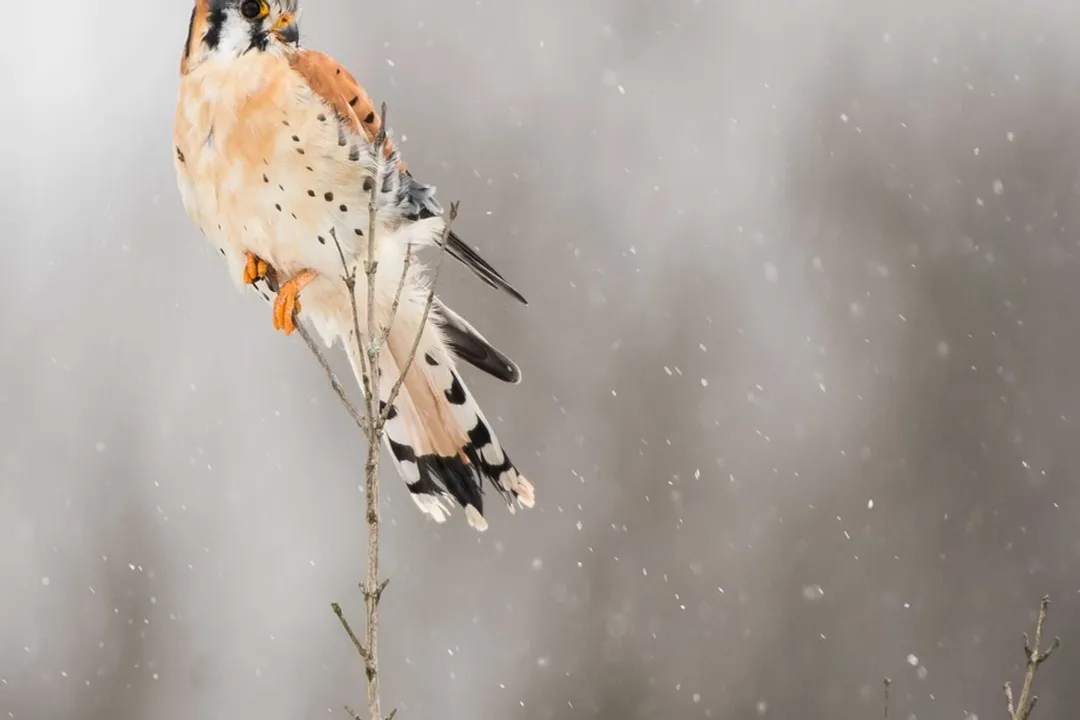
Spotting a kestrel often involves catching a flash of color in an open field or noticing a tiny raptor hovering with impossible stillness against the sky. These birds are magnets for birders because they are North America's smallest falcon, yet they possess markings and behaviors that make them instantly recognizable once you know what to look for. [5] Their striking appearance and relatively common presence in open country mean that paying close attention to a few key details can be the difference between merely seeing a small bird and correctly identifying Falco sparverius. [1]
# Size Scale
Understanding the scale of the kestrel is the first step in identification, especially when they are seen at a distance or in mixed flocks. These falcons are diminutive for a bird of prey. [5] To put their size into context, imagine a bird slightly larger than a common Mourning Dove but with a more upright, falcon posture. [1] If you are observing them from a distance, especially when they are perched or flying low, they can easily be overlooked or mistaken for a large songbird like a robust Robin or a large Sparrow. [6] This small stature means that when one is hunting, it often looks more like a large insect caught in mid-air until you recognize the raptorial profile.
# Flight Style
The way a kestrel moves through the air is perhaps its most defining feature when visual confirmation of color is difficult. While many raptors rely on soaring on thermals, the kestrel frequently exhibits a distinct hovering behavior. [4] They will hang suspended in the air, wings beating rapidly, often facing into the wind while scanning the ground below for prey like large insects or small rodents. [1] If you see a raptor appearing to hang motionless in the sky, like a stationary speck before it drops suddenly, you are likely observing a kestrel actively hunting. [4] This precise aerial control is less common among other small falcons, like the Hobby, which might use a faster, more erratic wing beat when maneuvering quickly. [9]
If you spot a raptor hanging motionless in the air for several seconds before suddenly plunging down, that characteristic "windhover" behavior is a massive clue. Many larger hawks soar or glide passively; the kestrel's energetic, stationary flight is an active search pattern that distinguishes it immediately from slower, gliding hunters in the same vicinity. [1][4]
# Plumage Patterns
Once you are close enough, the intricate patterns on a kestrel offer definitive proof of identity, though separating the sexes requires careful observation of specific areas. [1] Both male and female American Kestrels share some features, such as their overall size and generally slender build. [5] They both sport black vertical streaks on their white or buff undersides. [1] Critically, both sexes typically have two prominent black vertical bars on their cheeks against a white face background, which contrast sharply with the head color, especially in males. [1][5] Additionally, both sexes usually feature a black tail with a terminal black band and a white tip. [4]
# Sex Differences
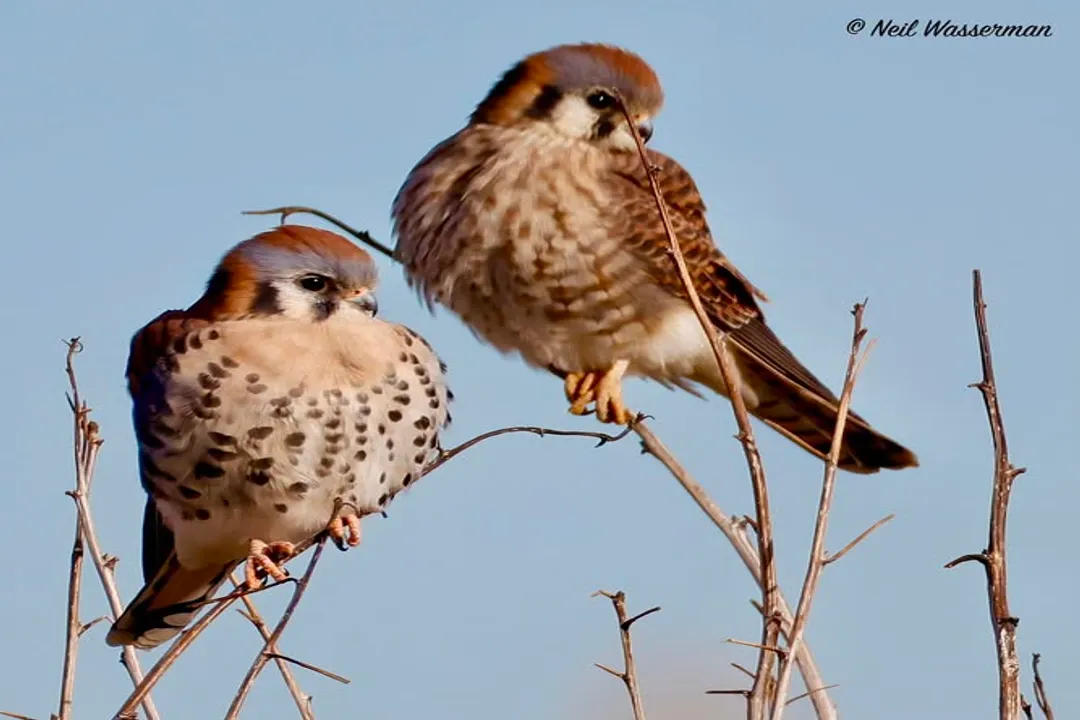
The most reliable way to differentiate between a male and a female kestrel involves checking the color of the wings and the head, as they exhibit striking sexual dimorphism. [1][8]
The male kestrel presents a more colorful and contrasting appearance:
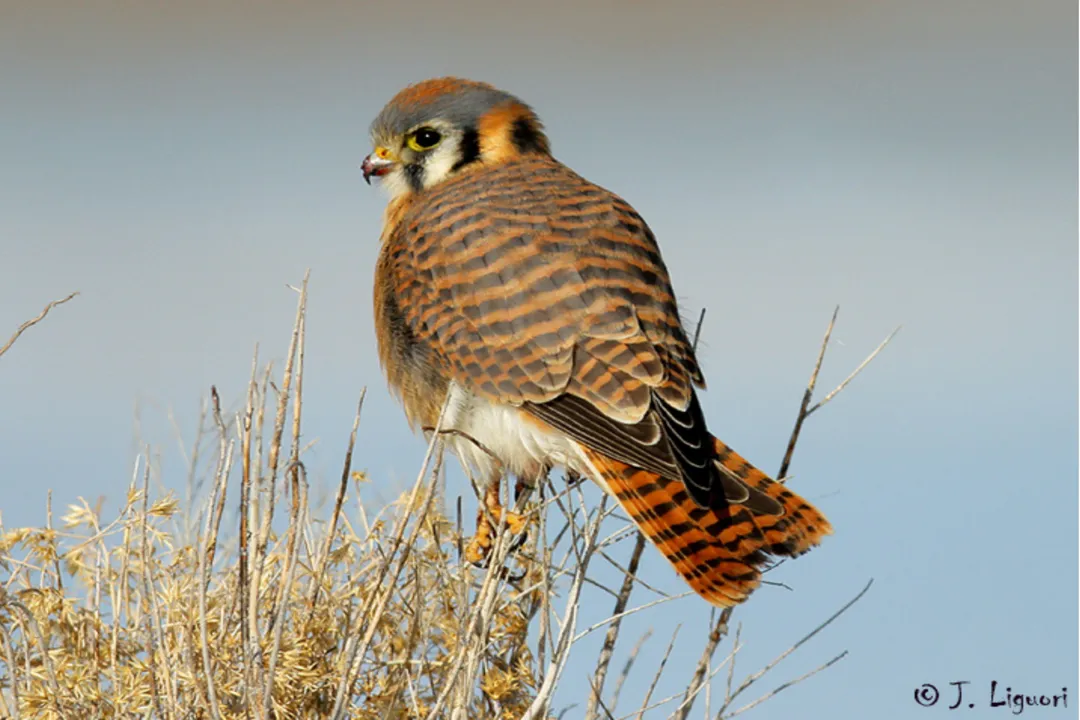
- Wings: The wings are a distinct, slate-blue or blue-gray color. [5][8]
- Head: The head is also blue-gray, offering a cool tone contrast to the body. [5][8]
The female kestrel is generally warmer in tone:
- Wings: Her wings are predominantly rusty-brown or rufous. [5][8]
- Head: Correspondingly, her head is also rusty-brown, lacking the distinct blue-gray cap of the male. [5][8]
When viewing a kestrel, focusing on the primary feather color of the wing when spread—even slightly while perched—will usually resolve the sex. If you are lucky enough to see both a male and female side-by-side, the contrast between the blue-gray wings of one and the rusty wings of the other is unmistakable. [8]
# Vocal ID
Identification isn't limited to what you see; sometimes, what you hear gives the game away. Kestrels have a distinct, high-pitched, and rapid call. It is often described as a sharp, rolling ke-kest-ke-kest or a sharp killy-killy-killy sound. [4] If you hear a short, sharp, repetitive cry coming from a utility pole or an open treetop, pause and listen closely. This vocalization is quite different from the deeper screeches of larger falcons or hawks, making it an excellent secondary identifier when visual confirmation is tricky. [4]
# Habitat Context
Knowing where to look significantly increases your chances of a positive ID. Kestrels prefer open country where they have clear sightlines for hunting and perching. [4] They are commonly found along roadsides, over agricultural fields, in pastures, and in areas with scattered trees or utility poles. [4] You are less likely to find them deep within dense forests. They often perch conspicuously on wires, fence posts, or the tops of tall, dead trees, giving them a good vantage point. [1][4] If you are scanning open, sunny areas, particularly where there are structures that allow for surveying large tracts of ground, you are in prime kestrel territory.
Considering your local environment can help refine expectations. For instance, in areas where the Southeastern subspecies is found, identifying them might involve looking specifically for them in slightly more fragmented habitats compared to their grassland-focused relatives. [5] While they need open space to hunt, they are adaptable and often use man-made structures just as readily as natural ones for perching, which is an important consideration for birders looking along developed corridors. [4]
#Videos
How to Identify Male and Female Common Kestrels - YouTube
Related Questions
#Citations
American Kestrel | Audubon Field Guide
Identifying Male and Female American Kestrels - Facebook
How to Identify Male and Female Common Kestrels - YouTube
American Kestrel Fact Sheet - HawkWatch International
How to Identify Southeastern American Kestrels - FWC
How do I identify this Species? : r/wildlifephotography - Reddit
Kestrel | Identification Guide - Bird Spot
Identifying Hobby and Kestrel - BTO