How can you identify a kite spider?
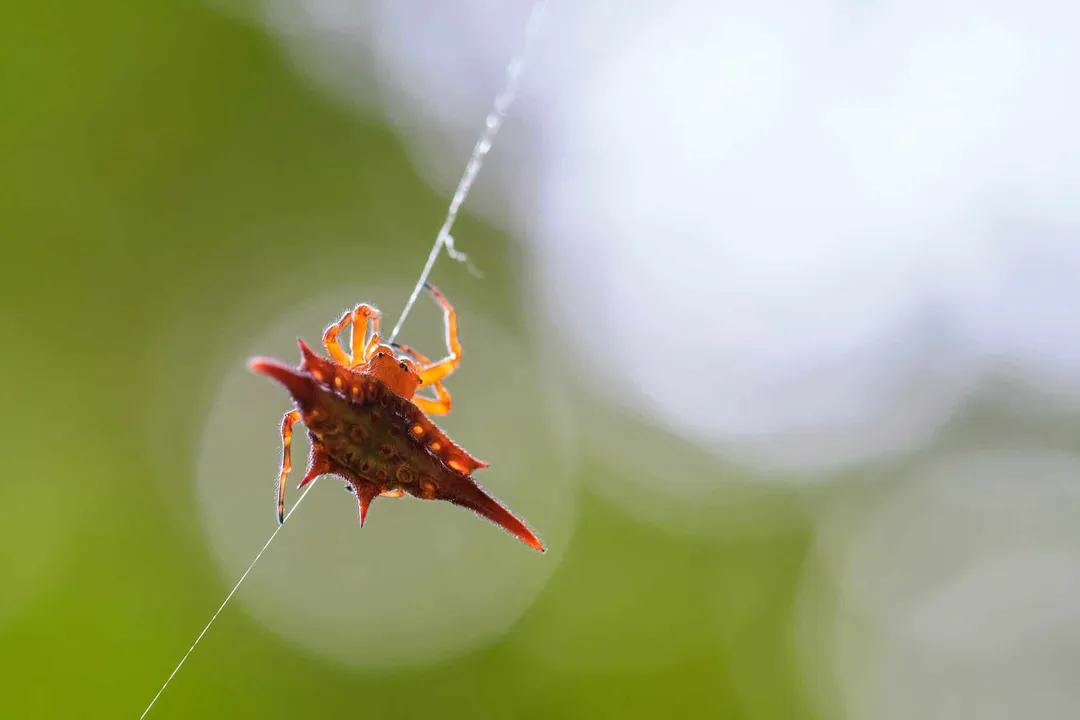
The identification of a kite spider generally leads observers to spiders belonging to the genus Gasteracantha, often recognized for their striking, somewhat flattened, and heavily ornamented abdomens. While the common name might occasionally be applied loosely, focusing on the morphological traits of the Gasteracantha genus provides the most reliable way to confirm if you have encountered one of these distinctive arachnids. They are a type of spiny orb weaver, meaning they construct the classic spiral webs, but their body shape sets them apart from many of their web-building cousins.
# Genus Focus
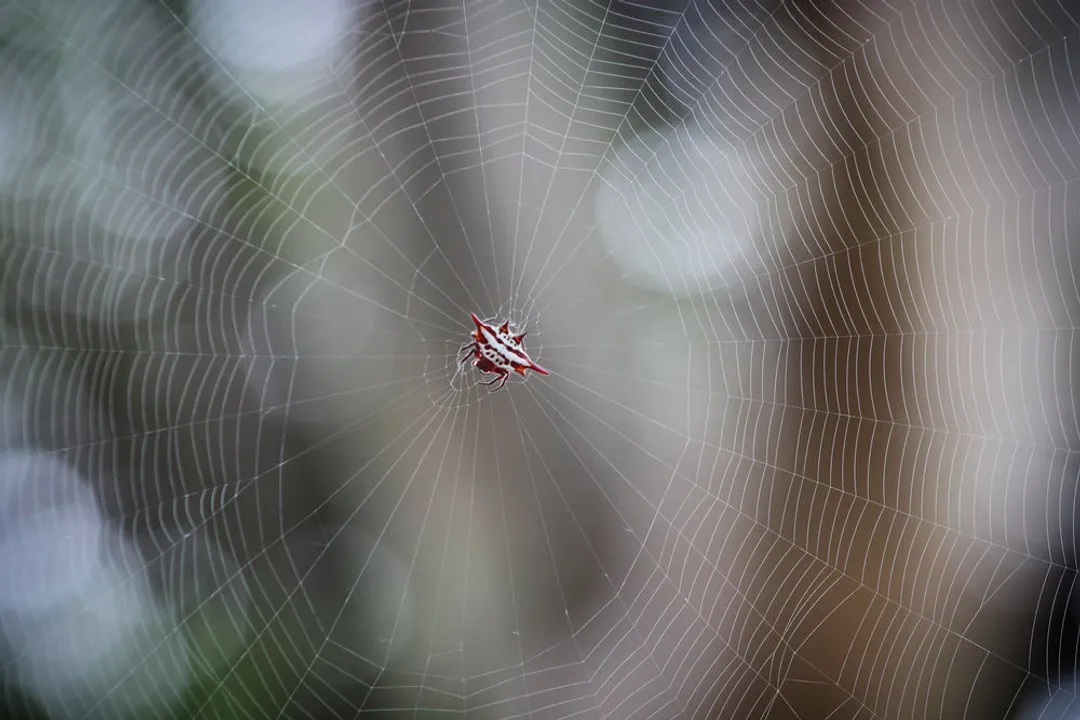
The spiders commonly referred to as kite spiders fall under the family Araneidae, the orb weavers. Two species that frequently receive this common name, or are closely related and exhibit similar features, are Gasteracantha cancriformis and Gasteracantha versicolor. It is important to recognize that "kite spider" is a vernacular term, and the precise species identification often depends heavily on the geographical location where the specimen is found. For example, Gasteracantha cancriformis is well-known across the Americas, while Gasteracantha versicolor is noted in South Africa.
# Body Structure
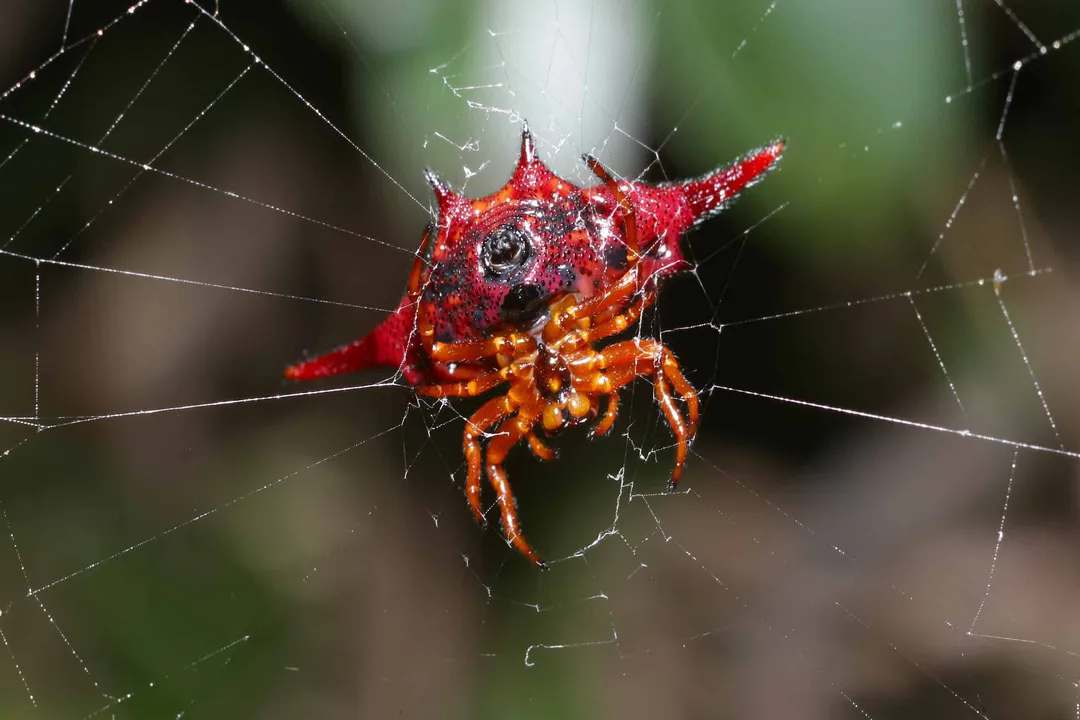
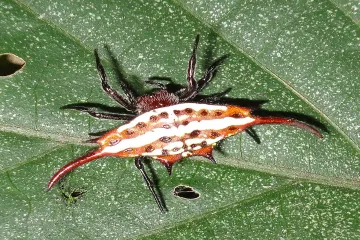
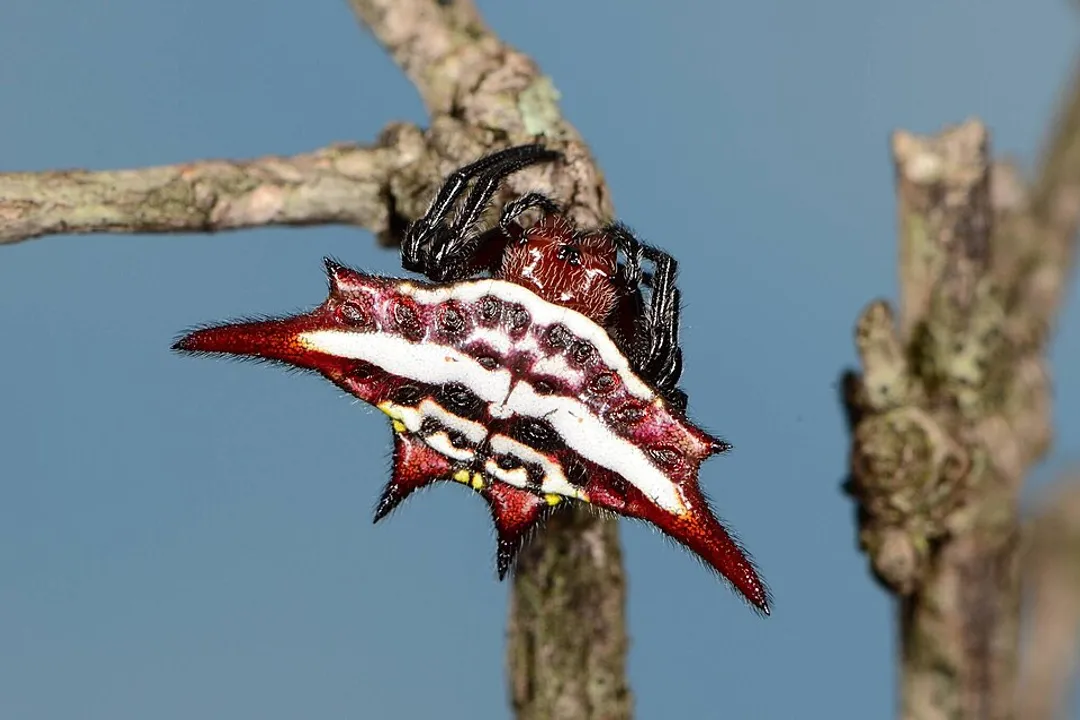
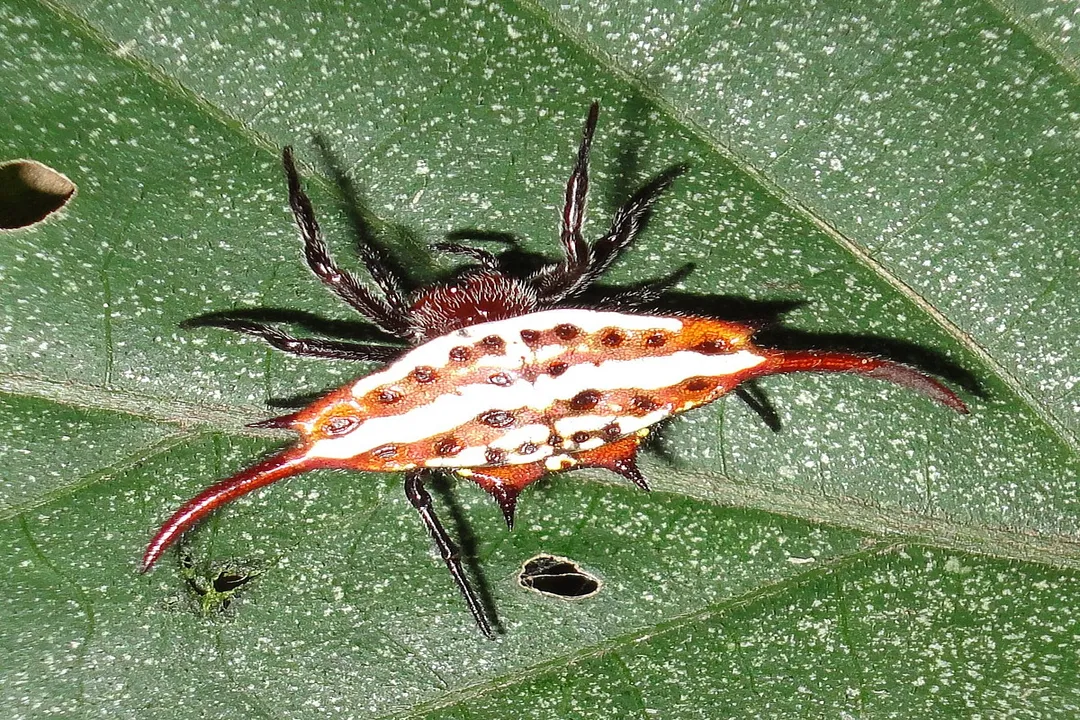
The most immediate way to identify a female kite spider is by observing the shape of her abdomen. It is often described as being somewhat crab-like or shield-shaped, usually wider than it is long, giving it a distinct, almost non-spider-like profile when viewed from above. This unique body structure is usually adorned with prominent, sharp spines projecting outward from the edges of the abdomen.
# Spines and Color
The number of these spines is a key feature. For instance, Gasteracantha cancriformis typically displays six spines, although this number can vary. The coloration is another remarkable feature, designed perhaps to warn potential predators or simply attract mates. Females of G. cancriformis can exhibit a broad spectrum of colors, ranging from brilliant yellows, reds, and oranges to pure white or even black, often with dark markings against the lighter background. This vibrant palette contrasts sharply with the typically drab coloration of many other small orb weavers found in the same habitats.
It is also critical to note the difference between the sexes. While the female kite spider possesses this dramatic, spiky, and colorful appearance, the male is much less conspicuous. Males are generally smaller and often look quite different, lacking the exaggerated spines and bright coloration that characterize the females. If you find a web with a spectacular, spiky spider in the center, you are almost certainly looking at the female of the species.
# Size Estimation
When observing these spiders, comparing their size to surrounding features is helpful for confirmation. The body length of mature females in some species, like G. cancriformis, usually ranges between 5 to 10 millimeters. This measurement excludes the length of the spines, which can make the overall span appear significantly larger. Understanding this scale helps distinguish them from larger, unrelated orb weavers or smaller insects that might mimic their shape.
# Web Signature
Identifying the spider by its web structure is the second crucial step, particularly because orb weavers are defined by their impressive constructions. Kite spiders build classic orb webs, which are circular, arranged in a spiral pattern radiating from a hub. These webs are typically constructed between shrubs or tree branches, often positioned in sunny or semi-open areas to maximize insect capture.
# The Stabilimentum
A feature that frequently accompanies the web of a Gasteracantha spider is the stabilimentum. This is a dense, zigzag pattern of silk woven into the web, usually near the center or hub. While not all kite spiders build a visible stabilimentum, its presence strongly suggests an identification within the spiny orb weaver group. The purpose of this structure is debated—it might serve to stabilize the web, act as a visual barrier to birds, or even attract prey by reflecting UV light, which is invisible to us but highly visible to many insects. If you see a perfect circular web with a thick, bright, structural element running through the middle, you have found evidence of a specialized weaver.
When analyzing a web structure, consider the placement relative to ground cover versus mid-air visibility. Orb webs built low to the ground in dense foliage might suggest a slightly different habit than those strung high between mature tree limbs, although kite spiders generally prefer exposed, open areas for their capture spirals.
# Regional Context Clues
As mentioned, location is an excellent secondary identifier because different Gasteracantha species dominate different continents or regions. If you are conducting your identification exercise in a specific area, you can narrow down the possibilities considerably.
If your observation is in the Southern United States, such as Florida or the Gulf Coast region, the spider is highly likely to be Gasteracantha cancriformis. This species has a well-documented range across the Americas. Conversely, if you are examining an area in South Africa, you might be encountering Gasteracantha versicolor, which is documented in that region. This geographic specificity helps confirm the visual identification. For instance, if a web exhibits the classic orb design and the spider has pronounced posterior spines while situated near a typical high-veld shrub in South Africa, the probability leans heavily toward G. versicolor compared to its North American counterpart.
| Feature | G. cancriformis (Americas) | G. versicolor (South Africa) | General Kite Spider Trait |
|---|---|---|---|
| Body Shape | Shield/Crab-like | Spiny abdomen | Flattened, wide body |
| Spines | Typically 6, variable | Present | Distinct projections |
| Web Feature | Often has a stabilimentum | Associated with orb webs | Spiral capture web |
| Coloration | Highly variable (Red, Yellow, White) | Not specified in detail | Bright/contrasting patterns common in females |

# Distinguishing From Look-alikes
The world is full of spiders, and even distinct body shapes can be mimicked. When confirming a kite spider, you are specifically looking for the combination of the flattened/shielded abdomen and the projecting spines. Many other orb weavers are round, elongated, or hump-backed. For example, some species of Micrathena (spiny orb weavers) also have spines, but their bodies are often more triangular or elongated than the wide, shield-like form typical of Gasteracantha. Furthermore, the spines on many Micrathena species protrude from the sides or rear in a different configuration compared to the generally symmetrical, radiating spikes of the kite spider.
Another point of differentiation is behavior. While the web is the primary trap, the spider’s typical resting position is key. Kite spiders are known for sitting squarely in the hub of their web during the day, waiting for vibrations. If you observe a spider that builds an orb web but rests off to the side or hides in a retreat made of curled leaves, it is likely a different genus, such as Argiope (garden spiders), even if the web contains a large stabilimentum.
The structure of the egg sac can also offer confirmation, although this requires more patience. Kite spiders often produce flat, disc-shaped egg sacs, sometimes covered in silk or debris, which they secure near their capture web or on nearby vegetation. This flat, somewhat reinforced disc contrasts with the spherical or pear-shaped egg sacs produced by many other common orb weavers. Observing the entire life cycle, even just the resulting egg case, provides the highest degree of certainty when documenting an identification in the field.
Related Questions
#Citations
Long-Winged Kite Spider - Gasteracantha versicolor - A-Z Animals
Kite spider species identification in East Central Florida - Facebook
Gasteracantha versicolor - Wikipedia
Gasteracantha cancriformis (Spiny-backed Orb-weaver) - Spider ID
Long-Winged Kite Spider Facts & Photos | Wowzerful
Common Kitespider (Gasteracantha versicolor) - iNaturalist
What kind of Spider is this? - Reddit
Crablike Spiny Orbweaver - a.k.a. Kite Spider - BugGuide.Net
Spiders I Love - The Kite Spider | The Go-To Guy