How many species of potoo are there?
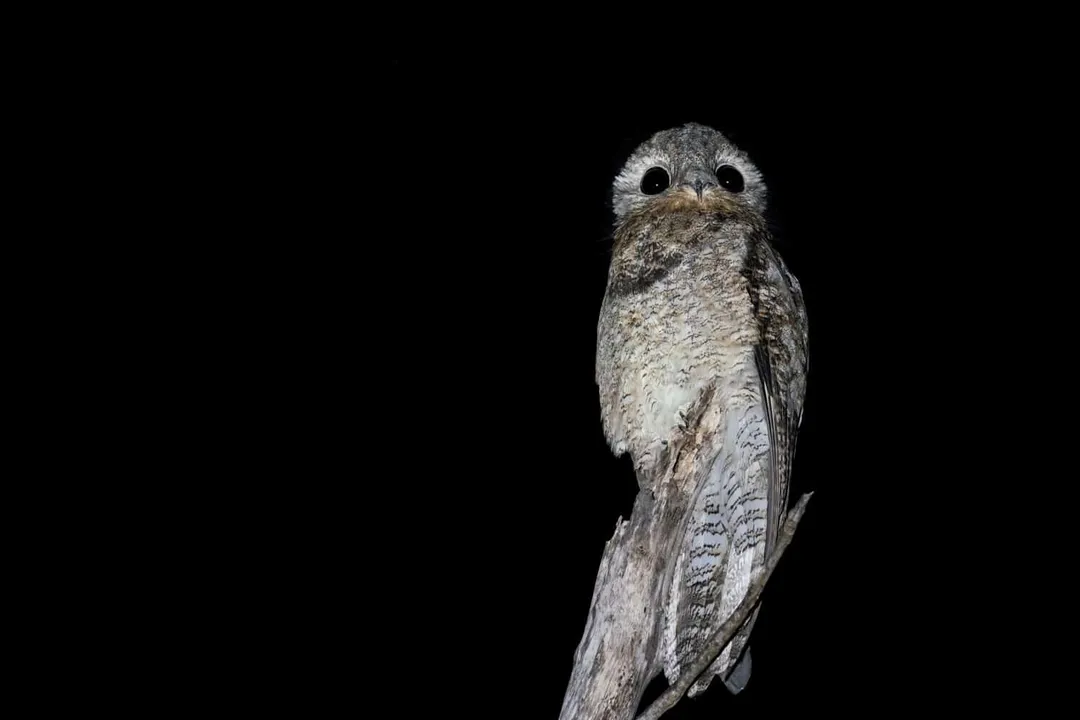
The world of birds holds many surprises, but few creatures capture the imagination quite like the potoo. These strange, nocturnal birds are masters of disguise, perfectly evolved to vanish into the background of the Neotropical forests they inhabit. [3][6] Their silent, motionless vigil, often mistaken for a broken stump or a knot on a tree, is central to their survival against predators during the day. What is less known by the casual observer is just how diverse this cryptic group actually is.
# Species Count
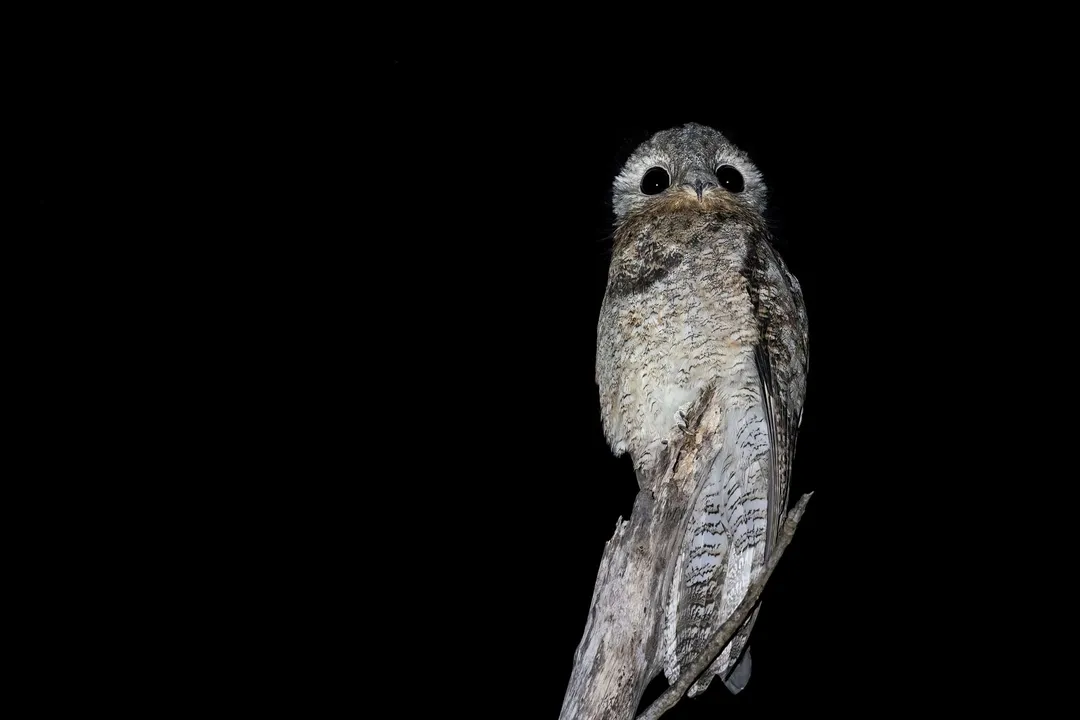
The exact number of officially recognized potoo species generally settles around seven different types belonging to the family Nyctibiidae. [2][4] While the general public might only be familiar with one or two, ornithologists catalog several distinct members within the genus Nyctibius. [1][4] These species are distributed across the tropical and subtropical regions of the Americas, from southern Mexico down through Central America and into South America. [1][7] This relatively small number of species spread across a vast geographic area suggests significant specialization within the group, even given their shared, unique appearance.
Considering that the entire family comprises just one genus, Nyctibius, having seven recognized species is quite concentrated evolution for a group known almost exclusively for one trait: looking like wood. [7] The slight variations in size, plumage pattern, and vocalization are often what separate one species from the next, details that only close observation or acoustic monitoring can confirm. [1]
# Cataloging the Family
To help visualize this small but fascinating group, we can look at some of the recognized members. While a complete, universally agreed-upon list is sometimes subject to taxonomic review, a core set is consistently acknowledged. [1][4]
| Common Name | Potential Range | Distinguishing Feature Summary |
|---|---|---|
| Great Potoo | Widespread Central/South America | Largest species, distinct large bill [8] |
| Common Potoo | Widespread Central/South America | Mid-sized, often confused with others [8] |
| Northern Potoo | Southern Mexico to Northern South America | Generally smaller than the Common Potoo [1] |
| Rufous Potoo | Amazon Basin | Distinctive reddish-brown coloration [1] |
| Spectacled Potoo | South America | Prominent white markings around the eyes [1] |
| Long-tailed Potoo | Amazon Basin | Notable for its long tail feathers [1] |
| Uirapuru Potoo | Limited areas in South America | Often described by its unique call [1] |
Note: Range descriptions here are generalized summaries drawn from systematic listings and may vary slightly depending on the authoritative source at any given time. [1]
This table, while simplified, highlights that the differences between, say, a Long-tailed Potoo and a Rufous Potoo are not always about dramatic size disparity, but often subtle color shifts or proportions that aid in differentiating them across their specific ecological niches. [1]
# Masters of Stillness
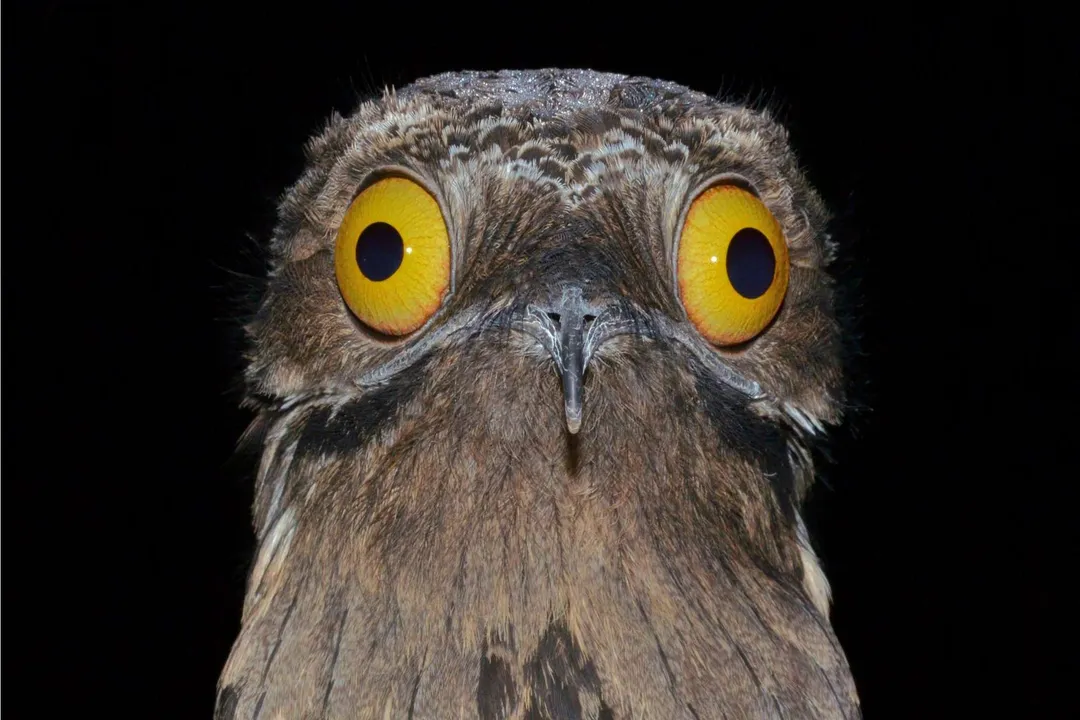
The defining characteristic of Nyctibius birds is their incredible adaptation for daytime concealment. They are crepuscular and nocturnal hunters, meaning they are active from dusk until dawn, feeding almost entirely on flying insects caught in mid-air. [3][7] However, the need to survive the daylight hours has driven their evolution toward extreme crypsis.
When a potoo settles down to rest, it does not simply perch; it becomes the perch. [6] They often perch on the broken top of a snag or a dead stump, stretching their bodies vertically, closing their eyes to slits, and tilting their heads back slightly. [6] Their feather patterns, a mix of mottled grays, browns, and whites, mimic bark textures with startling accuracy. [3] This stillness is so profound that a common pitfall for birdwatchers is walking directly under a bird without ever realizing it was there. [6]
This behavior isn't just about closing their eyes; it's a full-body commitment to immobility. Their large eyes, perfectly adapted for low light hunting, are hidden away, leaving only a narrow, camouflage-breaking line visible to the outside world. [3] It is a testament to evolutionary pressure that a creature needs such extreme measures just to nap safely.
# Size and Sound
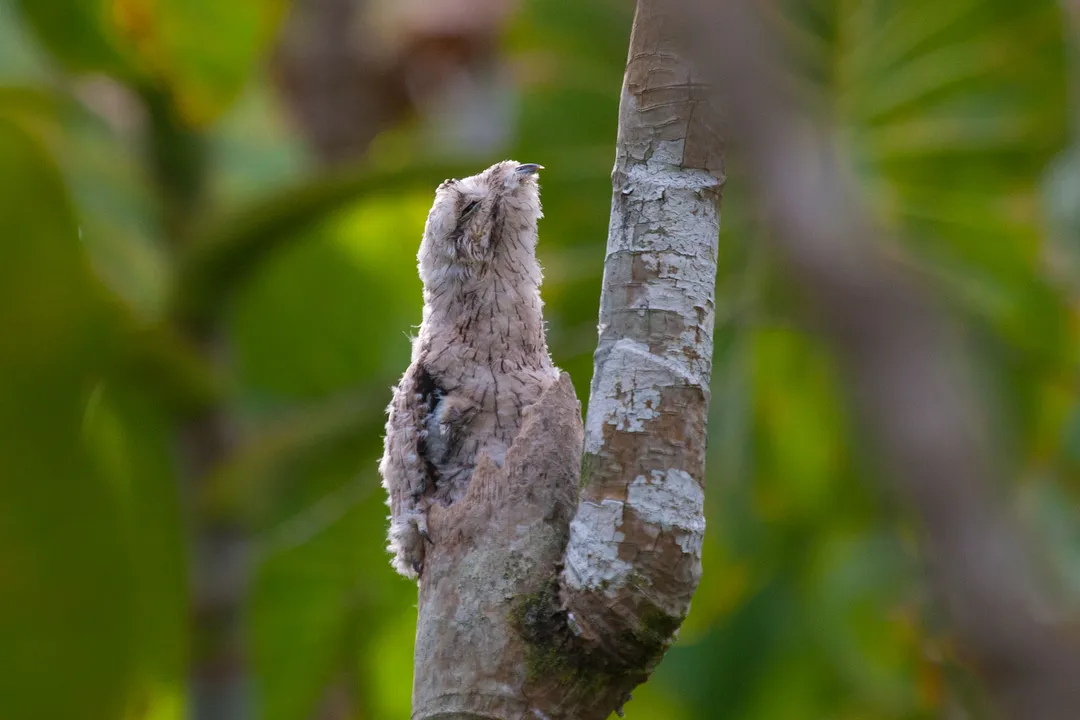
While camouflage unites the family, the species do exhibit differences, most notably in size and vocalizations. For instance, the Great Potoo (Nyctibius grandis) is the largest of the seven species, possessing a more robust build and a significantly larger bill compared to smaller relatives. [8] Its sheer size, while still relying on camouflage, might afford it slightly different resting positions or predator avoidance strategies than its smaller cousins.
The contrast between the Great Potoo and what might be termed the Common Potoo illustrates this spectrum well. [8] The Great Potoo has a powerful presence, even when trying to hide, whereas smaller species might blend into finer details of the branches they select.
Beyond their visual appearance, potoos possess a surprisingly distinct voice. While silent during their day roosts, their night comes alive with eerie calls that cut through the tropical darkness. [1] These calls are often described as mournful, haunting, or wailing, fitting their mysterious demeanor. [7] The differences in these calls—pitch, rhythm, and duration—are critical tools for field researchers to distinguish between species that look nearly identical at a distance. [1] If you are deep in the Amazon basin at night, you might hear a sound that seems far too large or too melancholic for its source, and that is often the potoo announcing its presence after successfully hiding all day.
# The Need for Fine Detail
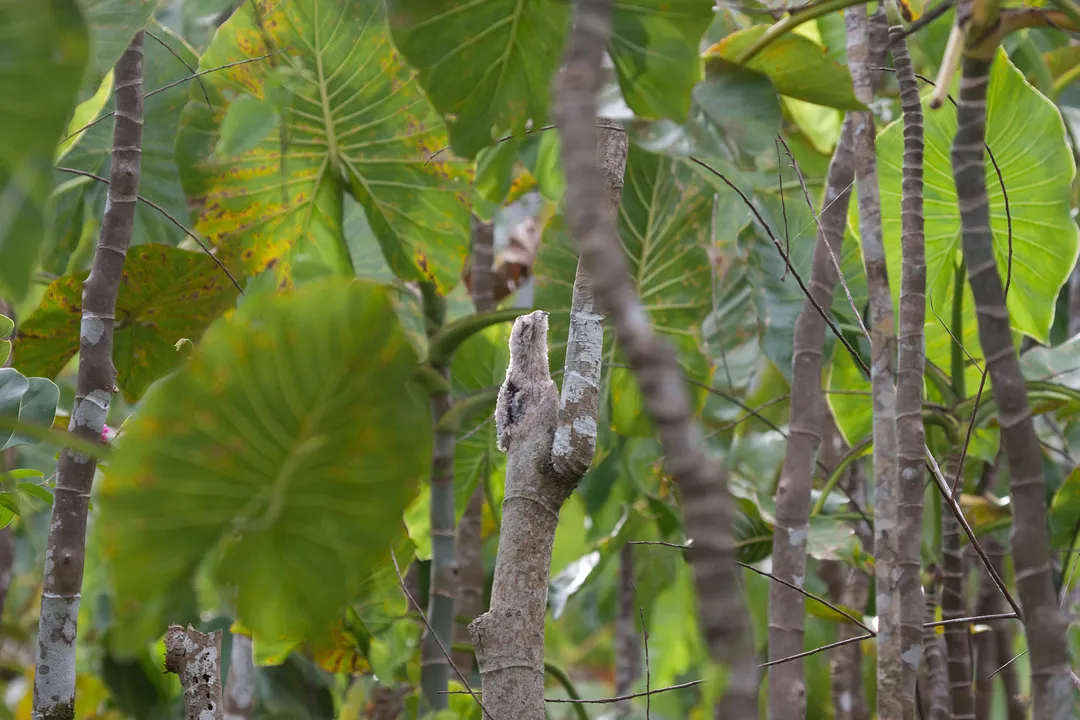
The difficulty in studying potoos often stems from the need to differentiate between closely related species residing in similar areas. A classic example involves comparing the Common Potoo (Nyctibius aethereus) and the Great Potoo (N. grandis). [8] While the Great Potoo is notably larger, in areas where ranges overlap or where juvenile birds are encountered, relying solely on visual ID can be challenging for anyone but an expert. [8]
This is where specialized knowledge comes into play. Researchers must often rely on collecting precise measurements, detailed plumage notes, or, most effectively, recordings of their specific territorial and mating calls. [1] This necessity for fine-grained data collection underscores why their total species count has remained relatively stable but is subject to ongoing scientific scrutiny; subtle genetic drift or behavioral isolation can lead to reclassifications or the splitting of existing species. [4]
Imagine standing in a dimly lit forest in Guyana. You see a bird perched vertically, looking like an extension of the dead wood. If you manage to see the distinctive white facial markings, you might identify it as a Spectacled Potoo. [1] But if those markings are subtle or obscured by shadow, its fate rests on a chance glimpse of its wing bars or, more likely, the sound it makes when you accidentally step too close, causing it to burst into flight with a startled squawk before resettling on another branch fifty feet away, perfectly camouflaged once more.
For the casual observer hoping to tick off a potoo from a life list, understanding this subtle variation is key. Knowing where you are becomes almost as important as what you are looking for, as range maps are often the first line of defense against misidentification when the visual cues are too minimal. [1]
# Ecological Role in the Night
As specialized aerial insectivores, potoos help keep nocturnal insect populations in check throughout their range. [3] They are not generally birds of the forest floor; they hunt on the wing, sallying out from a high, exposed perch to grab moths, beetles, and other flying arthropods that emerge after sunset. [7] Their wide mouths are perfect for snagging these fast-moving targets in the dark.
Their ecological function is intrinsically tied to their highly specialized hunting method. Unlike insectivorous birds that glean insects from leaves during the day, the potoo operates in a completely different, unlit aerial space. This separation of feeding times and methods allows them to exploit a niche without direct competition from the vast number of diurnal insectivores that dominate the daytime canopy. The camouflage, therefore, is not just defense against predators like snakes or hawks, but also a necessary tool for surviving the rest period required between nightly hunts. [6] It's a complete life strategy built around maximizing nighttime activity while minimizing daytime risk.
Related Questions
#Citations
Potoo - Wikipedia
There are seven different known species of Potoo, and some of them ...
Weird & Wonderful Creatures: The Potoo - AAAS
Bird Nyctibiidae - Potoos - Fat Birder
Potoos are a group of birds related to the nightjars and frogmouths ...
The Potoo Bird: Strange Master of Camouflage - Notes from the Road
Potoo | Nocturnal Bird Species, Adaptations & Habits | Britannica
Potoo Vs. Great Potoo: 5 Key Differences About This Strange Bird