How many kingfisher species are there in North America?
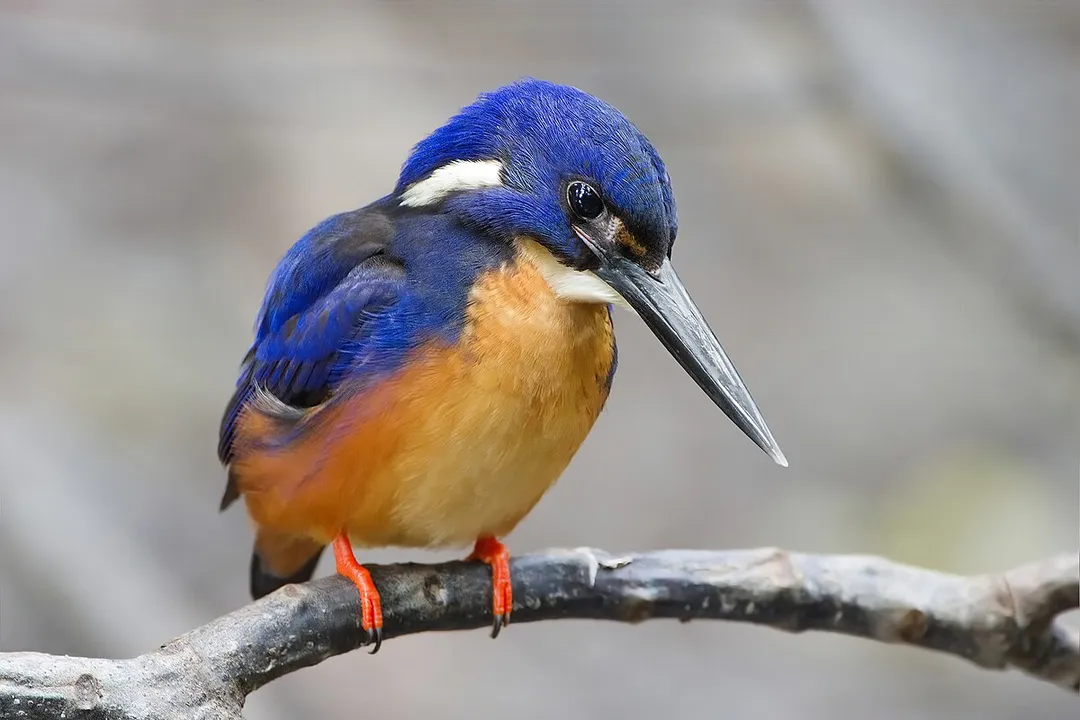
The query of how many kingfisher species grace North America yields an answer that depends entirely on where you draw the boundary line on the map. For the vast majority of the continent—from the northern reaches of Canada down through the contiguous United States—the answer is a definitive one. However, if one expands the definition of North America to include southern Mexico and its adjacent regions, that number quickly increases to four, or even six, depending on the reference used. This small, specialized family, Alcedinidae, presents a fascinating study in range limitation and avian identification.[cite: 2 from first browse]
# Widespread Resident

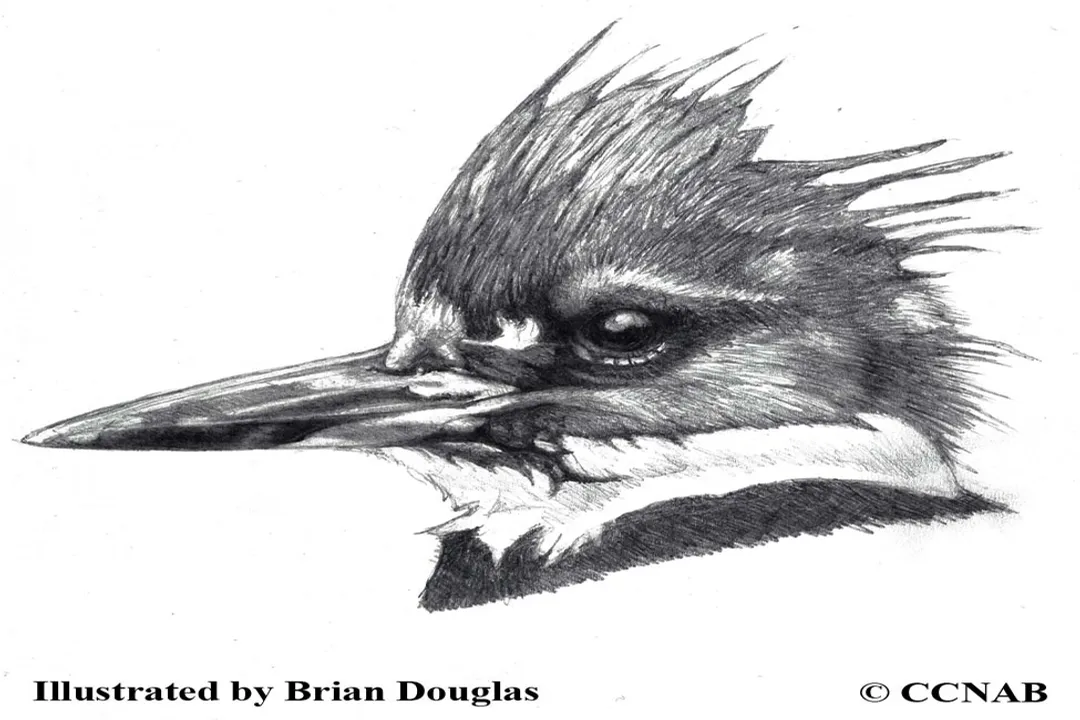
The singular, widely recognized avian jewel across the northern part of the continent is the Belted Kingfisher (Megaceryle alcyon). This species is so dominant in the north that it is the only one recorded breeding in states like New Hampshire, and it is a familiar sight along waterways from Alaska to Labrador[cite: 1 from second browse]. Boaters and anglers often hear them before they see them, alerted by a distinctive, loud, rattling call that echoes down river corridors [cite: 1 from second browse].
The Belted Kingfisher possesses the classic kingfisher look: a stocky body, a disproportionately large head topped with a shaggy, double-pointed crest, and a long, dagger-like bill [cite: 1 from second browse]. Their plumage is generally a striking slate-blue on the back, head, and a breast band, contrasted sharply with a bright white collar and belly [cite: 3 from second browse].
This bird hunts with focused efficiency, usually scanning for prey from an exposed perch such as a branch, post, or utility wire [cite: 1 from second browse]. They can also hover over the water using rapid wing beats, a technique common among some of the water-specialist kingfishers [cite: 3 from second browse]. Once prey is spotted, the dive is swift and vertical, with the eyes protected by a nictitating membrane upon impact [cite: 1 from second browse][cite: 1 from first browse]. Fish are often stunned against the perch before being swallowed headfirst [cite: 1 from second browse]. While famous for catching fish like sticklebacks or trout, the Belted Kingfisher is opportunistic, consuming crayfish, amphibians, reptiles, insects, and even small mammals when conditions demand it [cite: 1 from second browse].
# Gender Marks
One of the most helpful identification features in the field for the Belted Kingfisher is the difference between the sexes, a trait that sets it apart from many of its Old World relatives where genders look nearly identical [cite: 1 from first browse]. In North America, the male sports the slate-blue breast band and white collar. The female, however, wears an additional band—a rusty-orange or rufous band across her sides and breast [cite: 1 from second browse][cite: 3 from second browse]. Interestingly, juvenile birds of both sexes show a faint or spotty rusty band, resembling the adult female, but this orange color typically disappears entirely as the male matures [cite: 3 from second browse]. This sexual dimorphism provides a simple, visual key for anyone observing a pair or an individual near a riverbank, instantly confirming if you are looking at the breeding male or female.
The nesting process is as industrious as their feeding. Both male and female excavate a tunnel, often 3 to 4 inches in diameter, into steep earthen banks near water bodies like rivers, lakes, or gravel pits [cite: 1 from second browse]. This preference for earthen banks is absolute, as the presence of dense tree roots makes the necessary excavation prohibitively difficult [cite: 3 from second browse]. The tunnel slopes slightly upward, ending in an unlined chamber where five to eight white eggs are laid [cite: 1 from second browse].
# Southern Accents
As one moves south, the narrative of the single species breaks down. Six species of kingfisher are found across the New World generally, with the Megaceryle and Chloroceryle genera accounting for the species that venture into or reside in the southern portions of the North American continent [cite: 3 from second browse][cite: 2 from second browse]. For birders in areas like South Texas, Arizona, and southward, the list expands.
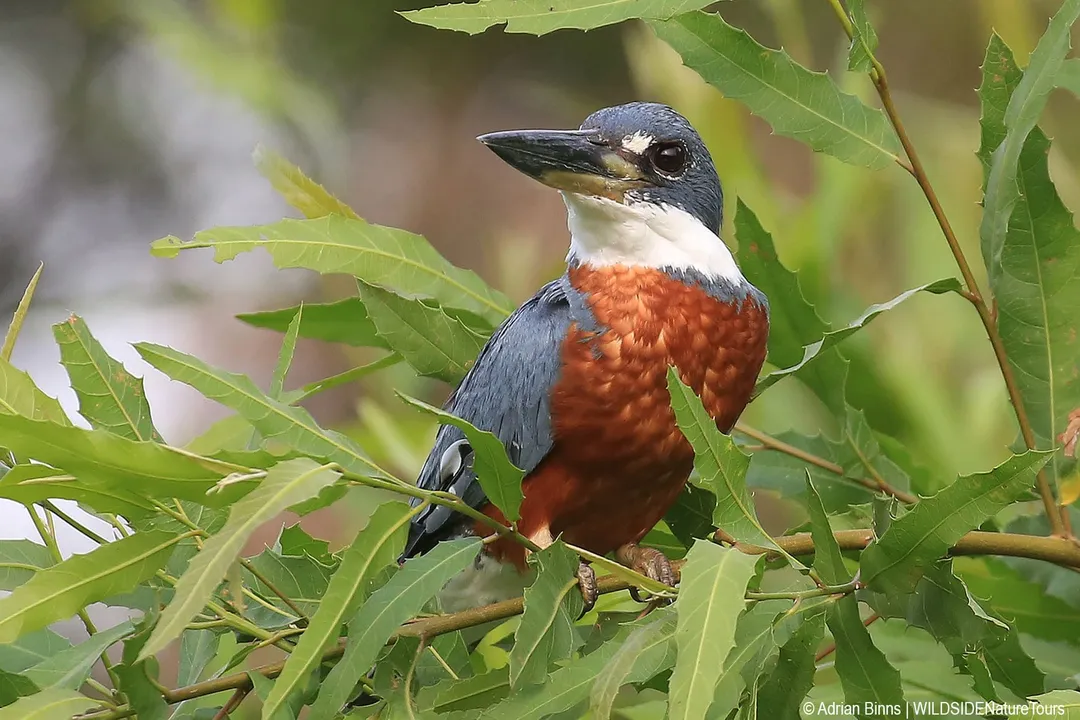
The Ringed Kingfisher (Megaceryle torquata) is the largest of the group found in the region, reaching up to 16 inches in length, and it is present in extreme southern Texas [cite: 2 from first browse][cite: 2 from second browse]. It features impressive slate-blue plumage and a prominent crest, but the sexes are distinguished by the breast: males have a rufous breast and belly, while females are separated by a blue breast band above a rufous belly [cite: 3 from first browse].
Two other key species are the Green Kingfisher (Chloroceryle americana) and the Amazon Kingfisher (Chloroceryle amazona) [cite: 2 from first browse]. Both are from the Chloroceryle genus, characterized by green backs [cite: 3 from first browse]. The Amazon Kingfisher is larger than the Green Kingfisher, often found on larger rivers, and exhibits sexual dimorphism where the male has a rufous breast and the female has white underparts streaked with green [cite: 3 from first browse]. The Green Kingfisher, while smaller, also shows sexual differences, with the male having a rufous breast band and the female having two green bands across her breast [cite: 3 from first browse].
It is worth noting that the species count becomes even more complicated depending on which authority one follows. Some lists recognize up to six species that occur within the broad geographic area loosely defined as the Americas, which include the Green-and-rufous and American Pygmy Kingfishers, though these are usually restricted to Mexico and Central America, not typically reaching the US border states [cite: 3 from first browse][cite: 2 from second browse].
# Family Life Beyond Fish
While the name kingfisher strongly implies a diet composed solely of aquatic fare, the global Alcedinidae family, comprising about 120 species, is incredibly diverse[cite: 2 from second browse]. In fact, the majority of kingfishers worldwide live in forests, often far from large bodies of water, subsisting primarily on insects, invertebrates, reptiles, and small mammals. The fact that North America only has members of the Cerylinae subfamily—the water or river kingfishers—highlights a unique, specialized presence in the Western Hemisphere resulting from just two apparent colonizing events [cite: 1 from first browse].
Even the aquatic specialists in the Americas exhibit varied diets. While they are famous for spearing fish, the Pennsylvania Game Commission noted that when stream waters become cloudy from heavy rains, Belted Kingfishers will readily shift their focus to eating crayfish instead [cite: 1 from second browse].
For those interested in tracking these impressive birds across the southern borderlands, understanding the visual distinctions is key to moving past the initial identification of the ubiquitous Belted Kingfisher. If you are scanning a mangrove edge or a slow-moving stream near the U.S.-Mexico border, the key is scale and color patterning relative to the familiar blue-gray bird of the north. The presence of the large, crested Ringed Kingfisher often indicates a more established, tropicalized environment, whereas the smaller Chloroceryle species require careful study of their breast bands to distinguish between them—a fun challenge for any birder working the southern tier of the continent. This geographic split creates a natural dividing line for birding focus: habitat quality management (steep dirt banks) for the northern breeder versus range expansion monitoring for the southern visitors. [cite: 1 from second browse][cite: 3 from first browse]
Related Questions
#Citations
Kingfishers of the Americas - Wildside Nature Tours
4 Types of Kingfishers (Megaceryle) - Birds of North America
Alcedinidae - Kingfishers - New Hampshire PBS
Belted Kingfisher - Commonwealth of Pennsylvania
Kingfisher - Wikipedia
Meet the Belted Kingfisher - Sacramento Audubon Society