How can you tell the difference between dolphins and porpoises?
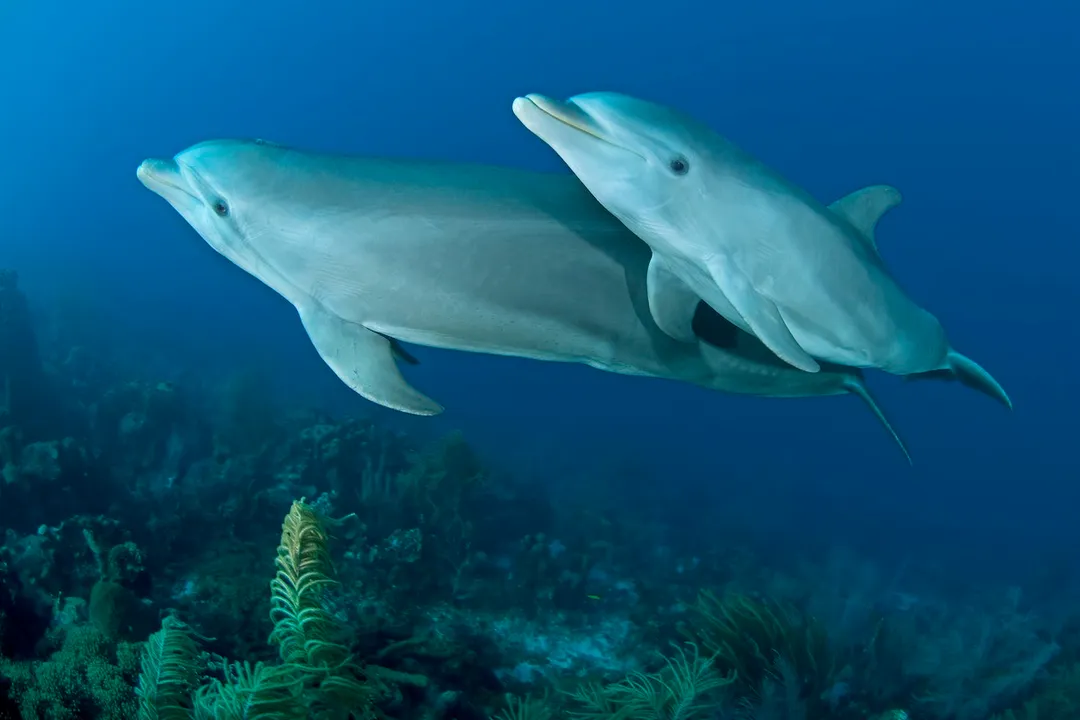
Marine mammals in the ocean often blur into a single category for the casual observer, and few pairs cause as much confusion as the dolphin and the porpoise. Though both are highly intelligent, fully aquatic members of the order Cetacea, these two groups are not interchangeable; they belong to distinct families within the toothed whales suborder, Odontoceti. [3][5][7] While they share traits like echolocation, a single blowhole, and countershading camouflage, subtle—yet consistent—differences in their anatomy and behavior allow for definitive identification. [3][5][7] Knowing these distinctions is not just an exercise in taxonomy; it helps in understanding the varied paths evolution has taken within these charismatic sea creatures. [5]
# Lineage Separation
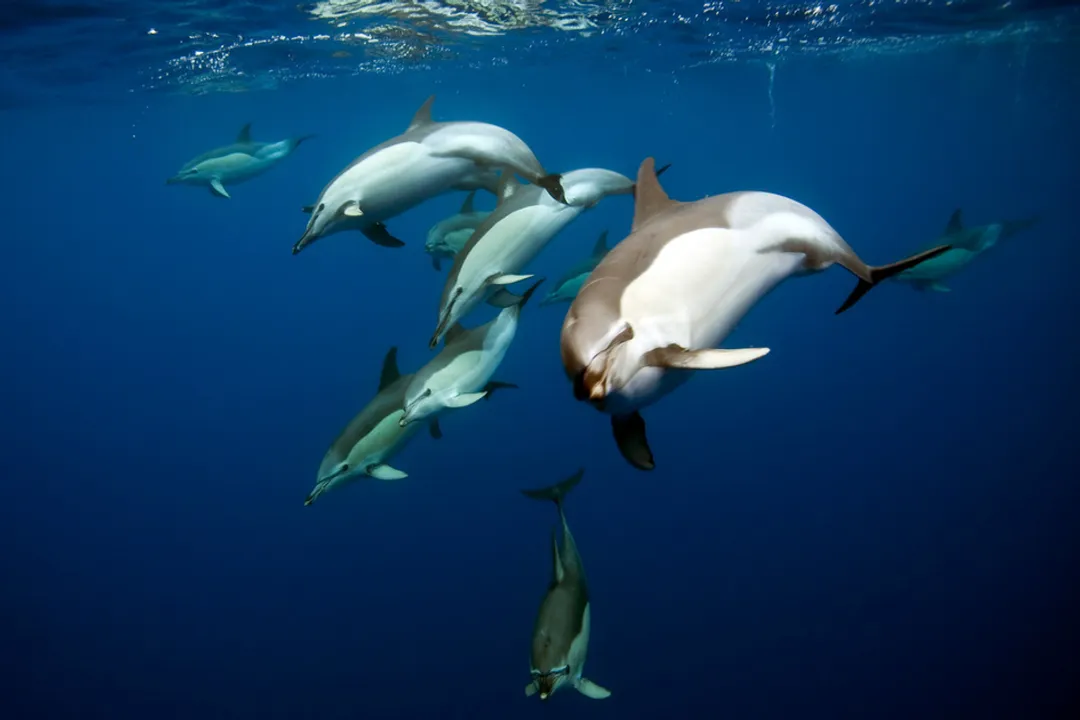
To truly understand the divide, one must look past the surface features to their evolutionary roots. Both dolphins and porpoises descended from deer-like, land-dwelling ancestors roughly 50 million years ago. [5] They both fall under the umbrella of toothed whales, alongside species like sperm whales, belugas, and narwhals. [5][7] However, porpoises belong specifically to the family Phocoenidae. [5] Dolphins, conversely, are spread across several families, including the oceanic dolphins (Delphinidae), various river dolphin families, and the brackish dolphin family. [5] This separation in classification suggests different evolutionary trajectories, which is reflected in their diversity. There is a significant imbalance in species numbers: scientists recognize about 32 dolphin species (plus river dolphins), whereas there are only six or seven recognized species of porpoise. [4][5] The relative lack of diversification in the porpoise family is an interesting evolutionary observation, perhaps suggesting they occupy more specialized niches compared to their more adaptable dolphin cousins. [5]
# Facial Structure
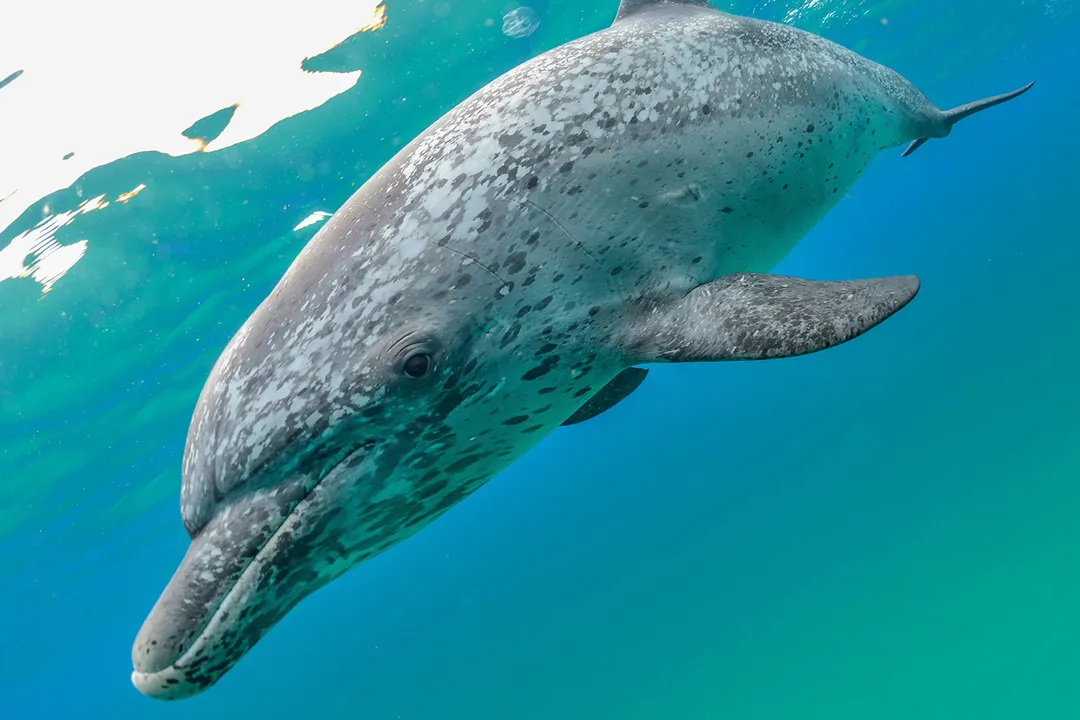
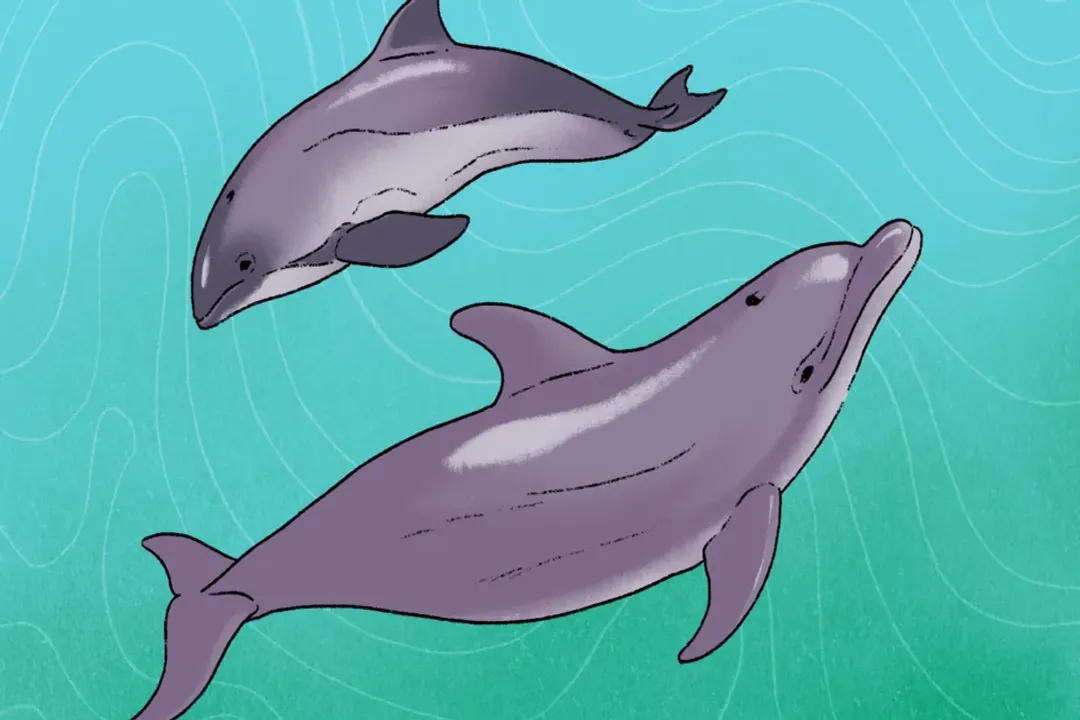
One of the most commonly cited differences relates to the shape of the snout, or rostrum. [3][4] Dolphins generally possess a pronounced, elongated beak which contributes to their often-cited "grin". [4][7][9] Their mouths tend to be larger due to this longer jaw structure. [3][7] Porpoises, on the other hand, are characterized by a much rounder, shorter head and a blunt rostrum, giving them a less pronounced mouth area. [1][3][8][9] It is worth noting that this rule isn't absolute across all species; some larger dolphins, such as orcas (killer whales) and pilot whales, do not have the typical long beak seen on species like the bottlenose dolphin. [6][8] However, for the majority of smaller, more commonly sighted odontocetes, the presence or absence of a distinct beak serves as a strong initial identifier. [9]
# Fin and Body Profile
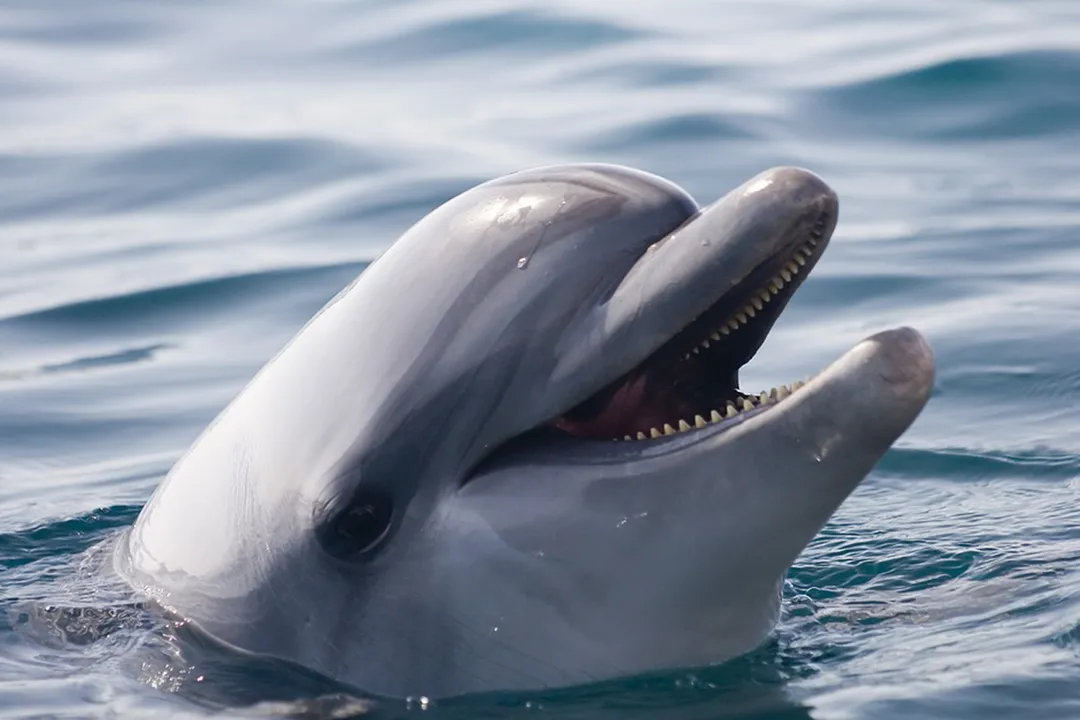
When spotting a cetacean briefly at the surface, the dorsal fin—the vertical fin on the back—can provide a quick clue. [9] Dolphins usually display a dorsal fin that is curved or hooked (falcate). [4][7][9] In contrast, the dorsal fin of a porpoise is typically much more triangular and less swept back. [1][3][4][8][9] Even the body contours differ, which, if a clear view is obtained, can be telling. Dolphins tend to have leaner, more streamlined bodies. [3][4][7][9] Porpoises are often described as more chunky or "portly" compared to dolphins. [4][7][9]
This contrast in body structure is also linked to size. Dolphins are generally much larger than porpoises. [5][7] For instance, a common bottlenose dolphin can reach 8 to 10 feet, while a harbor porpoise usually tops out around 5 to 6 feet. [3] The smallest cetacean overall is the vaquita porpoise, which measures a maximum of about 5 feet in length. [5] While dolphins can weigh up to three times as much as a similarly sized porpoise due to their muscular build, the absolute size difference is stark, with the largest dolphin—the orca—reaching lengths of 32.8 feet. [3][5]
# The Definitive Tooth Test
While assessing fins and facial shape is useful when the animal is somewhat distant, the most reliable anatomical feature for distinguishing between the two families is the shape of their teeth. [5][6] Since both are toothed whales, an examination of their dentition offers the clearest distinction. [5][7] Dolphins possess cone-shaped teeth, sometimes described as needle-like, resembling an upside-down ice cream cone. [1][3][4][7] Porpoises, however, have flatter, spade-shaped teeth. [1][3][5][6][7][8] A quick way to mentally check this is to recall the conical vs. spade shape; if you were close enough to examine this feature, you would know definitively you are looking at either a dolphin or a porpoise, as this characteristic separates the Delphinidae from the Phocoenidae families. [5]
# Vocalization and Social Dynamics
Behaviorally, dolphins and porpoises also present notable differences, particularly in their social habits and the sounds they produce. [3][5] Dolphins are famously social and interactive; they are known for being quite "talkative," communicating frequently using whistles and clicks produced through their blowholes. [4][7] Furthermore, dolphins often exhibit curiosity toward humans, frequently approaching boats and enjoying riding the bow wave created by moving vessels. [3][5]
Porpoises are considerably more reserved. They are generally considered less social, traveling in smaller groups, and are decidedly shy, tending to avoid surfacing near boats. [3][5][9] Acoustically, porpoises are much quieter to human ears. [3] Scientists suspect that some porpoises, such as the harbor porpoise, communicate using clicks at a frequency above human hearing (ultrasonic range). [1] This may be due to structural differences within the porpoise's blowhole, which might prevent them from producing the whistles characteristic of dolphins. [5][7] An interesting behavioral exception to the shy rule is the Dall's porpoise, which is known for swimming alongside fast-moving boats and bowriding. [5]
# Quick Comparison Guide
For easy reference in the field or just for reviewing the key points, condensing these characteristics is helpful. Note that these are general rules, and exceptions within the 30+ dolphin species exist. [9]
| Feature | Dolphin | Porpoise |
|---|---|---|
| Family | Delphinidae (and others) | Phocoenidae |
| Rostrum/Snout | Pronounced, elongated "beak" [7][9] | Rounded, short head, blunt face [1][8] |
| Body Shape | Leaner, more streamlined [7][9] | Thicker, portly [7][9] |
| Dorsal Fin | Curved, hooked (falcate) [4][7] | Triangular [1][8] |
| Teeth | Cone-shaped (pointed) [3][7] | Spade-shaped (flatter/blade-like) [6][7] |
| Sociality | Highly social, often approach boats [5][9] | More solitary, typically avoid boats [5][9] |
| Vocalization | Whistles and clicks (within human range) [4][7] | Clicks (often ultrasonic) [1][3] |
If you are watching a group of sleek animals actively leaping, whistling, and riding the wave off a passing vessel, the odds strongly favor them being dolphins. [3][9] If you spot a smaller, quieter animal showing a distinctively triangular fin, you are likely observing a porpoise. [1][9]

# Global Threats and Conservation
Despite the clear anatomical and behavioral differences, dolphins and porpoises share a common vulnerability in the modern ocean. [5][9] They are both subject to threats arising from human activity, including entanglement in fishing gear (bycatch), vessel strikes, chemical pollution, plastic pollution, and general habitat degradation. [3][5][9] Minimizing single-use plastics, for example, is a direct action that helps protect both groups, as they can easily mistake floating debris for food. [3] The conservation status varies significantly across the species within each group. While many porpoise species are listed as "least concern," the vaquita is critically endangered, with perhaps only about 10 individuals remaining in the wild as of 2025. [5] Among dolphins, two species—the Baiji and the Atlantic humpback dolphin—are also listed as critically endangered, with several others classed as endangered. [5] Supporting organizations that advocate for safer shipping lanes and cleaner waterways directly benefits both dolphin and porpoise populations. [5]
Observing these creatures, whether the curious dolphin or the shy porpoise, offers a tangible connection to the health of our marine environment. The next time you are near the water, you can put your newfound knowledge to the test, moving from merely appreciating a "Flipper"-like creature to accurately identifying the specific family swimming by. [9]
#Videos
What Is The Difference Between Porpoises and Dolphins? - YouTube
Related Questions
#Citations
What's the difference between dolphins and porpoises?
Dolphins vs. porpoises: What's the difference? - IFAW
Mistaken Identities: Dolphins vs. Porpoises - National Aquarium
Porpoises VS Dolphins! What's the Difference? #shorts - YouTube
The most reliable way to distinguish porpoises from dolphins is by ...
What are the differences between whales, dolphins and porpoises?
What is the difference between porpoises and dolphins?
How to Tell the Difference Between Dolphins and Porpoises