What are gators classified as?
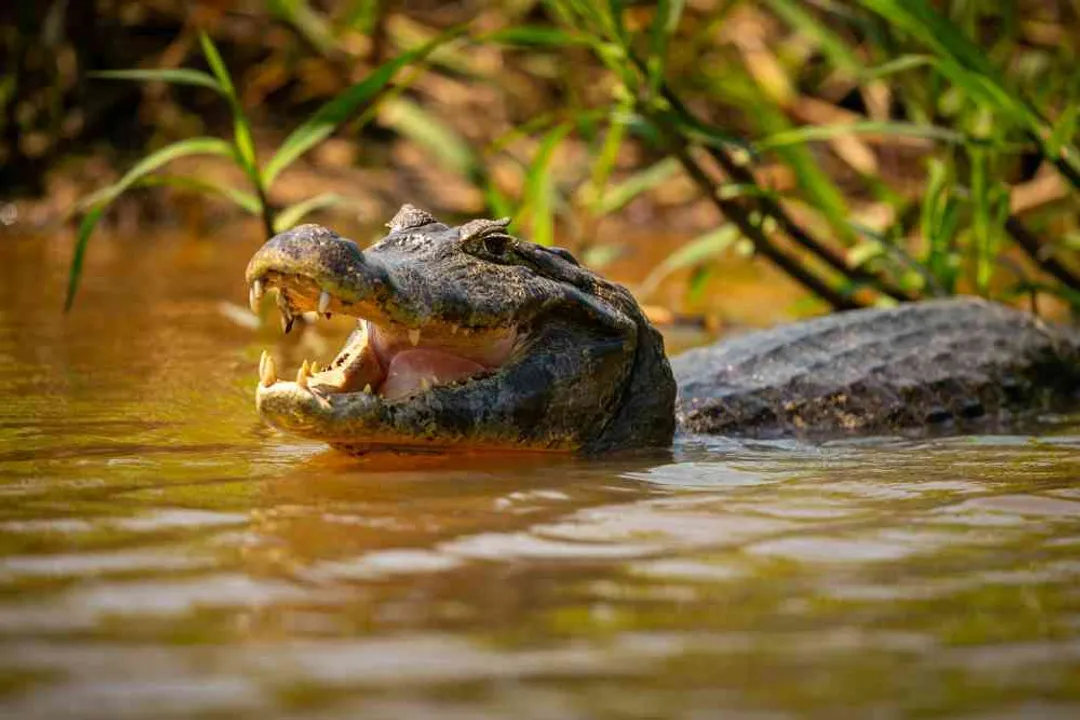
The immediate classification of an alligator places it firmly within the Class Reptilia, distinguishing it from both amphibians and mammals, though its existence is deeply tied to aquatic environments where amphibians thrive. [2][7][10] This placement is not a matter of opinion but a reflection of its evolutionary lineage and distinct physiological characteristics that separate it from other vertebrate groups. [7] To truly understand what a gator is, one must trace its position through the established Linnaean hierarchy, moving from the broad category of reptiles down to its specific family membership. [1]
# Taxonomic Rank
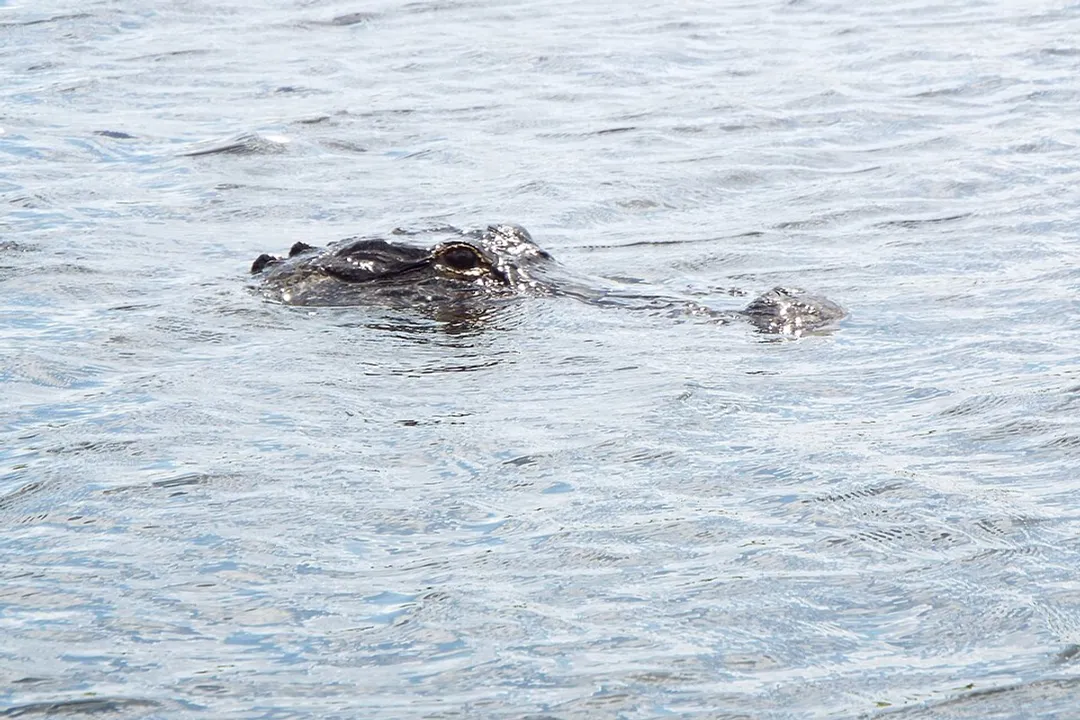
Alligators belong to the order Crocodilia, which groups them with crocodiles, caimans, and gharials. [1][3] This order represents the archosaurs, a group that also includes birds, showcasing a deep evolutionary connection to creatures far removed in modern appearance. [7] Within Crocodilia, alligators fall under the family Alligatoridae, a designation that sets them apart from the Crocodylidae family, which houses true crocodiles. [1][3] In North America, the primary focus is typically the Alligator mississippiensis, the American alligator, which is a well-studied example of this classification. [4]
| Taxonomic Level | Classification Group | Key Distinguishing Feature |
|---|---|---|
| Class | Reptilia | Ectothermic, scales, breathe air with lungs |
| Order | Crocodilia | Large, semi-aquatic, armored reptiles |
| Family | Alligatoridae | U-shaped snout, lower teeth hidden when mouth is closed |
| Genus | Alligator | Two extant species (American and Chinese) |
| Species | A. mississippiensis | American Alligator |
| [1][3][7] |
The structure of their skull, particularly the shape of the snout, is a key morphological feature used by taxonomists to place them precisely within the Alligatoridae family. [1] It is an interesting observation that the broader U-shape of an alligator's snout, compared to the narrower V-shape of a crocodile's, reflects a slightly different feeding specialization and bite force distribution, subtle physical traits codified in their scientific grouping. [1]
# Reptile Identity Confirmed
The determination that gators are reptiles hinges on several non-negotiable biological criteria that amphibians and mammals do not meet. [2][10] Reptiles are defined by their ectothermy, meaning they rely on external heat sources to regulate their body temperature, a characteristic entirely opposed to the homeothermy (warm-bloodedness) of mammals. [7] Amphibians, while also ectothermic, undergo metamorphosis and typically possess moist, permeable skin, unlike the tough, scaly hide of an alligator. [2][10]
Key reptilian characteristics exhibited by alligators include:
- Scales and Scutes: Their skin is covered in tough, horny scales and bony plates called scutes, which offer significant protection and limit water loss. [5][7] This skin structure is fundamentally different from the smooth, glandular skin of amphibians. [10]
- Respiration: Alligators breathe using fully developed lungs throughout their lives, even when submerged, whereas larval amphibians rely on gills. [2][10]
- Reproduction: They lay amniotic eggs with leathery shells that must be incubated on land, a trait that separates them from the jelly-coated, water-dependent eggs of most amphibians. [2][7]
While an alligator spends a significant portion of its life in freshwater environments—a habitat often associated with amphibians—its physiological makeup aligns exclusively with the reptile class. [2] This dual nature, being an ectotherm tied to water but possessing dry, scaly skin and breathing air exclusively with lungs, showcases why distinct biological classification systems are necessary. [2]

# Distinguishing Features

Within the Crocodilia order, distinguishing an alligator from a crocodile is a frequent point of interest, often stemming from their shared "prehistoric" appearance. [3] While both are reptiles, specific anatomical differences justify their separation into distinct families. [1][3]
# Snout Shape
Perhaps the most readily observable difference involves the snout. [1] Alligators possess a broad, rounded, U-shaped snout, which is noticeably wider than that of a crocodile. [3] Crocodiles, conversely, generally have a longer, more pointed, V-shaped snout. [3]
# Dentition
Another crucial diagnostic feature relates to how their teeth align when their mouths are closed. [3] In an alligator, when the jaw is shut, the teeth of the lower jaw fit into sockets in the upper jaw, effectively hiding the lower teeth from view. [3] For crocodiles, the fourth tooth on each side of the lower jaw remains visible, interlocking outside the upper jaw, giving them a more "toothy" grin even when closed. [3]
# Habitat Preference
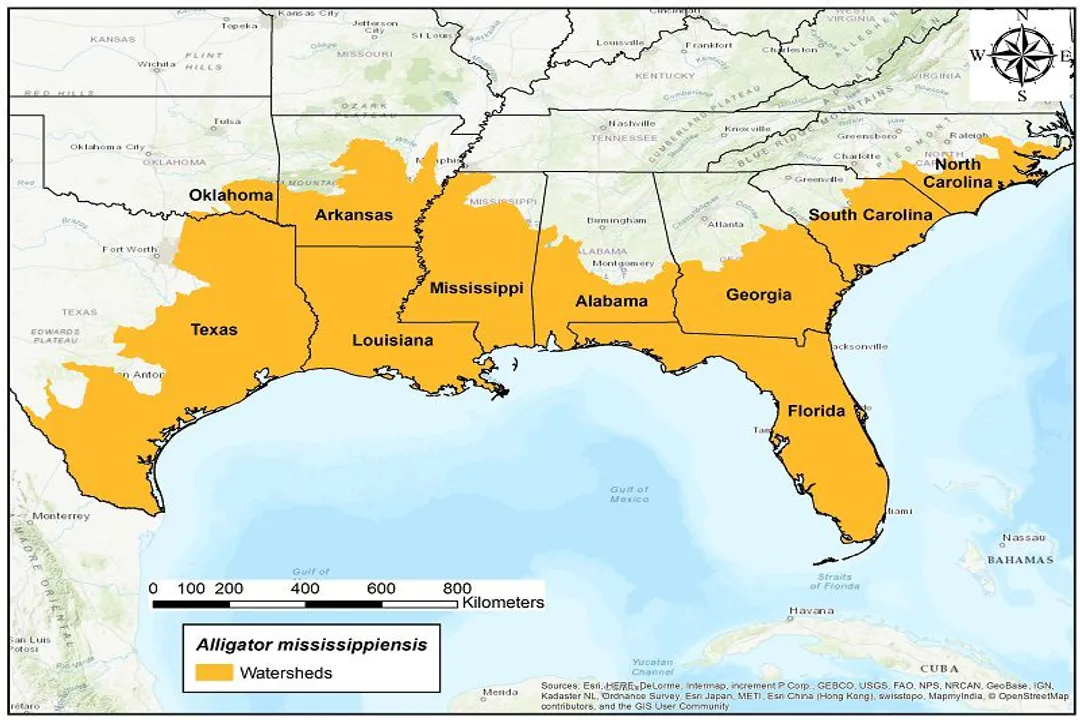
Although there is overlap, alligators tend to prefer freshwater habitats, such as swamps, marshes, rivers, and lakes, whereas many crocodile species are more tolerant of brackish or saltwater environments due to specialized lingual salt glands. [3][5] The American alligator, for instance, thrives in freshwater bodies throughout the southeastern United States. [4][8]
# American Alligator Biology
The Alligator mississippiensis serves as an excellent model for understanding the practical application of these classifications in the wild. [4] These powerful reptiles are found in the southeastern United States, ranging from North Carolina down to Florida and west to Texas. [4][8] They are apex predators within their ecosystems, capable of consuming a wide variety of prey, including fish, turtles, birds, and mammals. [6]
# Thermoregulation Tactics
Because gators are reptiles and rely on external heat, their behavior is dictated by ambient temperatures. [5] They must actively bask in the sun to raise their core body temperature after cool nights or periods of inactivity. [5] Conversely, during the intense heat of midday, they retreat into burrows or the water to prevent overheating. [5] This reliance on environmental conditions means that their feeding schedule and metabolic activity directly correlate with weather patterns, offering a practical example of ectothermy in action. If you observe an alligator lying motionless with its mouth agape on a sunny bank, it is not displaying aggression; it is engaging in essential thermoregulation—essentially, using its mouth as a radiator to cool off while absorbing heat through its dark skin. [6]
# Size and Lifespan
Adult male American alligators can reach lengths of up to 14 feet, though the average size is closer to 11 or 12 feet, while females are generally smaller. [4][6] Their lifespan in the wild can span 50 years or more, indicating a slow rate of growth and maturation typical for large reptiles. [4] They reach sexual maturity around 6 to 8 feet in length. [4]
# Conservation Status Evolution
The history of the American alligator provides a powerful case study in successful conservation efforts, directly tied to its protected status within the classification system. [4] For a period in the mid-20th century, the species was heavily hunted, leading to significant population declines and listing under the Endangered Species Act. [4]
However, due to strict protection, the alligator population rebounded dramatically. [4] Its classification shifted from endangered to threatened in 1967, and by 1987, the American alligator was officially removed from the Federal Endangered Species List, though it remains protected by state laws. [4] This recovery is often cited as one of the greatest conservation successes in U.S. history. [4] In states like Florida, they are now considered a species of special concern, managed by the Florida Fish and Wildlife Conservation Commission (FWC). [8] In North Carolina, while common, their take is regulated through a permit system, acknowledging their protected status even after recovery. [9]
# Comparative Grouping
Beyond just reptiles, it is helpful to place alligators within the broader context of their common relatives, the crocodiles, as confusion is pervasive. [3] While both are in the Order Crocodilia, the distinct family separation (Alligatoridae vs. Crocodylidae) reinforces that the differences observed—snout shape, tooth visibility—are significant enough to warrant separate evolutionary branches. [1][3]
When considering the wider scope of life science, the alligator’s classification highlights an ancient evolutionary split. Reptiles, including dinosaurs, split from the lineage that led to mammals long ago. [10] Amphibians, which represent an earlier stage in vertebrate terrestrial adaptation, diverged even earlier. [10] The alligator, therefore, represents a lineage that perfected terrestrial survival mechanisms—like the amniotic egg and scaly skin—while retaining the ectothermic strategy of its ancient ancestors. [7] This means that while an alligator might look like a relic, its classification confirms it is a highly successful, specialized reptile that adapted to its niche millions of years ago and has remained relatively unchanged in its fundamental blueprint. [1] Understanding this deep biological positioning helps explain why attempts to categorize them as amphibians—creatures transitioning between water and land—are fundamentally incorrect; the alligator completed that transition long ago. [2]
This fundamental biological placement dictates everything from its metabolism to its longevity, separating it entirely from the evolutionary path of a frog or a mammal. [7][10] The regulatory framework surrounding gators—from hunting laws to habitat protection—is built upon this precise scientific classification as a protected, non-amphibious reptile. [4][9] The alligator is not an evolutionary holdover struggling to adapt; it is a stable, classified member of one of Earth's most enduring vertebrate classes [1].The immediate classification of an alligator places it firmly within the Class Reptilia, distinguishing it from both amphibians and mammals, though its existence is deeply tied to aquatic environments where amphibians thrive. [2][7][10] This placement is not a matter of opinion but a reflection of its evolutionary lineage and distinct physiological characteristics that separate it from other vertebrate groups. [7] To truly understand what a gator is, one must trace its position through the established Linnaean hierarchy, moving from the broad category of reptiles down to its specific family membership. [1]

# Taxonomic Rank
Alligators belong to the order Crocodilia, which groups them with crocodiles, caimans, and gharials. [1][3] This order represents the archosaurs, a group that also includes birds, showcasing a deep evolutionary connection to creatures far removed in modern appearance. [7] Within Crocodilia, alligators fall under the family Alligatoridae, a designation that sets them apart from the Crocodylidae family, which houses true crocodiles. [1][3] In North America, the primary focus is typically the Alligator mississippiensis, the American alligator, which is a well-studied example of this classification. [4]
| Taxonomic Level | Classification Group | Key Distinguishing Feature |
|---|---|---|
| Class | Reptilia | Ectothermic, scales, breathe air with lungs |
| Order | Crocodilia | Large, semi-aquatic, armored reptiles |
| Family | Alligatoridae | U-shaped snout, lower teeth hidden when mouth is closed |
| Genus | Alligator | Two extant species (American and Chinese) |
| Species | A. mississippiensis | American Alligator |
| [1][3][7] |
The structure of their skull, particularly the shape of the snout, is a key morphological feature used by taxonomists to place them precisely within the Alligatoridae family. [1] It is an interesting observation that the broader U-shape of an alligator's snout, compared to the narrower V-shape of a crocodile's, reflects a slightly different feeding specialization and bite force distribution, subtle physical traits codified in their scientific grouping. [1]
# Reptile Identity Confirmed
The determination that gators are reptiles hinges on several non-negotiable biological criteria that amphibians and mammals do not meet. [2][10] Reptiles are defined by their ectothermy, meaning they rely on external heat sources to regulate their body temperature, a characteristic entirely opposed to the homeothermy (warm-bloodedness) of mammals. [7] Amphibians, while also ectothermic, undergo metamorphosis and typically possess moist, permeable skin, unlike the tough, scaly hide of an alligator. [2][10]
Key reptilian characteristics exhibited by alligators include:
- Scales and Scutes: Their skin is covered in tough, horny scales and bony plates called scutes, which offer significant protection and limit water loss. [5][7] This skin structure is fundamentally different from the smooth, glandular skin of amphibians. [10]
- Respiration: Alligators breathe using fully developed lungs throughout their lives, even when submerged, whereas larval amphibians rely on gills. [2][10]
- Reproduction: They lay amniotic eggs with leathery shells that must be incubated on land, a trait that separates them from the jelly-coated, water-dependent eggs of most amphibians. [2][7]
While an alligator spends a significant portion of its life in freshwater environments—a habitat often associated with amphibians—its physiological makeup aligns exclusively with the reptile class. [2] This dual nature, being an ectotherm tied to water but possessing dry, scaly skin and breathing air exclusively with lungs, showcases why distinct biological classification systems are necessary. [2]
# Distinguishing Features
Within the Crocodilia order, distinguishing an alligator from a crocodile is a frequent point of interest, often stemming from their shared "prehistoric" appearance. [3] While both are reptiles, specific anatomical differences justify their separation into distinct families. [1][3]
# Snout Shape
Perhaps the most readily observable difference involves the snout. [1] Alligators possess a broad, rounded, U-shaped snout, which is noticeably wider than that of a crocodile. [3] Crocodiles, conversely, generally have a longer, more pointed, V-shaped snout. [3]
# Dentition
Another crucial diagnostic feature relates to how their teeth align when their mouths are closed. [3] In an alligator, when the jaw is shut, the teeth of the lower jaw fit into sockets in the upper jaw, effectively hiding the lower teeth from view. [3] For crocodiles, the fourth tooth on each side of the lower jaw remains visible, interlocking outside the upper jaw, giving them a more "toothy" grin even when closed. [3]
# Habitat Preference
Although there is overlap, alligators tend to prefer freshwater habitats, such as swamps, marshes, rivers, and lakes, whereas many crocodile species are more tolerant of brackish or saltwater environments due to specialized lingual salt glands. [3][5] The American alligator, for instance, thrives in freshwater bodies throughout the southeastern United States. [4][8]
# American Alligator Biology
The Alligator mississippiensis serves as an excellent model for understanding the practical application of these classifications in the wild. [4] These powerful reptiles are found in the southeastern United States, ranging from North Carolina down to Florida and west to Texas. [4][8] They are apex predators within their ecosystems, capable of consuming a wide variety of prey, including fish, turtles, birds, and mammals. [6]
# Thermoregulation Tactics
Because gators are reptiles and rely on external heat, their behavior is dictated by ambient temperatures. [5] They must actively bask in the sun to raise their core body temperature after cool nights or periods of inactivity. [5] Conversely, during the intense heat of midday, they retreat into burrows or the water to prevent overheating. [5] This reliance on environmental conditions means that their feeding schedule and metabolic activity directly correlate with weather patterns, offering a practical example of ectothermy in action. If you observe an alligator lying motionless with its mouth agape on a sunny bank, it is not displaying aggression; it is engaging in essential thermoregulation—essentially, using its mouth as a radiator to cool off while absorbing heat through its dark skin. [6]
# Size and Lifespan
Adult male American alligators can reach lengths of up to 14 feet, though the average size is closer to 11 or 12 feet, while females are generally smaller. [4][6] Their lifespan in the wild can span 50 years or more, indicating a slow rate of growth and maturation typical for large reptiles. [4] They reach sexual maturity around 6 to 8 feet in length. [4]
# Conservation Status Evolution
The history of the American alligator provides a powerful case study in successful conservation efforts, directly tied to its protected status within the classification system. [4] For a period in the mid-20th century, the species was heavily hunted, leading to significant population declines and listing under the Endangered Species Act. [4]
However, due to strict protection, the alligator population rebounded dramatically. [4] Its classification shifted from endangered to threatened in 1967, and by 1987, the American alligator was officially removed from the Federal Endangered Species List, though it remains protected by state laws. [4] This recovery is often cited as one of the greatest conservation successes in U.S. history. [4] In states like Florida, they are now considered a species of special concern, managed by the Florida Fish and Wildlife Conservation Commission (FWC). [8] In North Carolina, while common, their take is regulated through a permit system, acknowledging their protected status even after recovery. [9]
# Comparative Grouping
Beyond just reptiles, it is helpful to place alligators within the broader context of their common relatives, the crocodiles, as confusion is pervasive. [3] While both are in the Order Crocodilia, the distinct family separation (Alligatoridae vs. Crocodylidae) reinforces that the differences observed—snout shape, tooth visibility—are significant enough to warrant separate evolutionary branches. [1][3]
When considering the wider scope of life science, the alligator’s classification highlights an ancient evolutionary split. Reptiles, including dinosaurs, split from the lineage that led to mammals long ago. [10] Amphibians, which represent an earlier stage in vertebrate terrestrial adaptation, diverged even earlier. [10] The alligator, therefore, represents a lineage that perfected terrestrial survival mechanisms—like the amniotic egg and scaly skin—while retaining the ectothermic strategy of its ancient ancestors. [7] This means that while an alligator might look like a relic, its classification confirms it is a highly successful, specialized reptile that adapted to its niche millions of years ago and has remained relatively unchanged in its fundamental blueprint. [1] Understanding this deep biological positioning helps explain why attempts to categorize them as amphibians—creatures transitioning between water and land—are fundamentally incorrect; the alligator completed that transition long ago. [2]
This fundamental biological placement dictates everything from its metabolism to its longevity, separating it entirely from the evolutionary path of a frog or a mammal. [7][10] The regulatory framework surrounding gators—from hunting laws to habitat protection—is built upon this precise scientific classification as a protected, non-amphibious reptile. [4][9] The alligator is not an evolutionary holdover struggling to adapt; it is a stable, classified member of one of Earth's most enduring vertebrate classes. [1]
Related Questions
#Citations
Alligator - Wikipedia
Are Alligators Reptiles, Amphibians, or Mammals?
Crocodiles & Alligators Facts and Information | United Parks & Resorts
American Alligator (Alligator mississippiensis) | U.S. Fish & Wildlife ...
Alligators | Internet Center for Wildlife Damage Management
American Alligator - Saginaw Children's Zoo
Is an Alligator a Reptile? | American Alligator Facts - Britannica
Alligator Facts - FWC
[PDF] General Description Taxonomy - NC Wildlife
Is an alligator classified as a reptile? - CK-12