Which management strategy is suggested to help mitigate feed contamination impacting the long tail feathers of ornamental Yokohama birds?
Answer
Using elevated feeders or placing feed dishes in areas with excellent drainage and ventilation
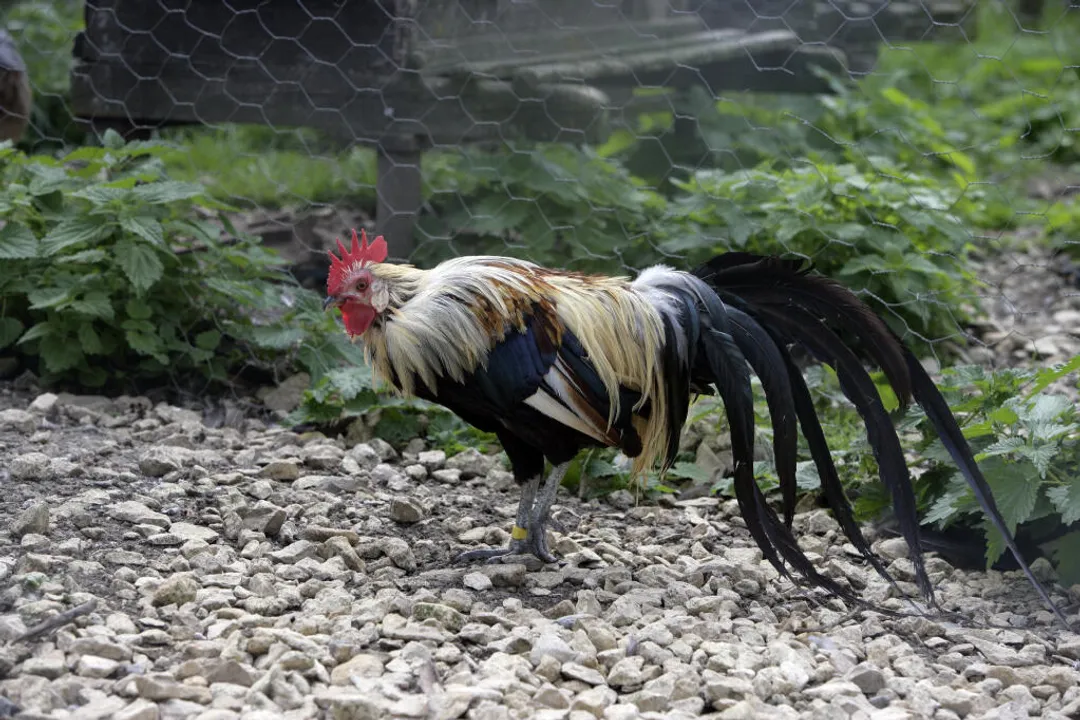
To protect the delicate, long plumage from becoming soiled or wet from spilled food or water, keepers of ornamental breeds often employ environmental modifications. Elevating the feeding stations lifts the food source above the level of the lower tail feathers. Additionally, positioning these stations away from common congregation spots like roosts or dust bathing areas minimizes the chance of the feathers coming into contact with spilled rations or water, thereby promoting better hygiene.
Related Questions
From which port city were the original Japanese birds imported that led to the Yokohama chicken breed?What unique physical trait, especially prominent in roosters, characterizes the Yokohama chicken?What metabolic demand related to their appearance requires slightly elevated protein levels for long-tail Yokohama roosters post-juvenile stage?What environmental concern is directly related to the cleanliness of the feeding and drinking areas for long-tailed Yokohama roosters?When feeding scratch grains or supplements to Yokohama chickens, what percentage of their total daily intake should they ideally not exceed?Which management strategy is suggested to help mitigate feed contamination impacting the long tail feathers of ornamental Yokohama birds?Which fundamental dietary component is emphasized as necessary for Yokohama layer hens to maintain strong eggshells?What specific outcome signals that the foundational diet of a Yokohama chicken might need re-evaluation regarding its feather health?Besides commercial feed, what natural dietary sources do good foraging Yokohama chickens typically seek out and consume?Why should obesity be carefully avoided in Yokohama chickens, particularly those possessing long tails?In what kind of climate do Yokohama chickens generally exhibit their best hardiness and well-being?