What was the primary engineering purpose of the sturdy legs of Arsinoitherium?
Answer
Carrying great weight
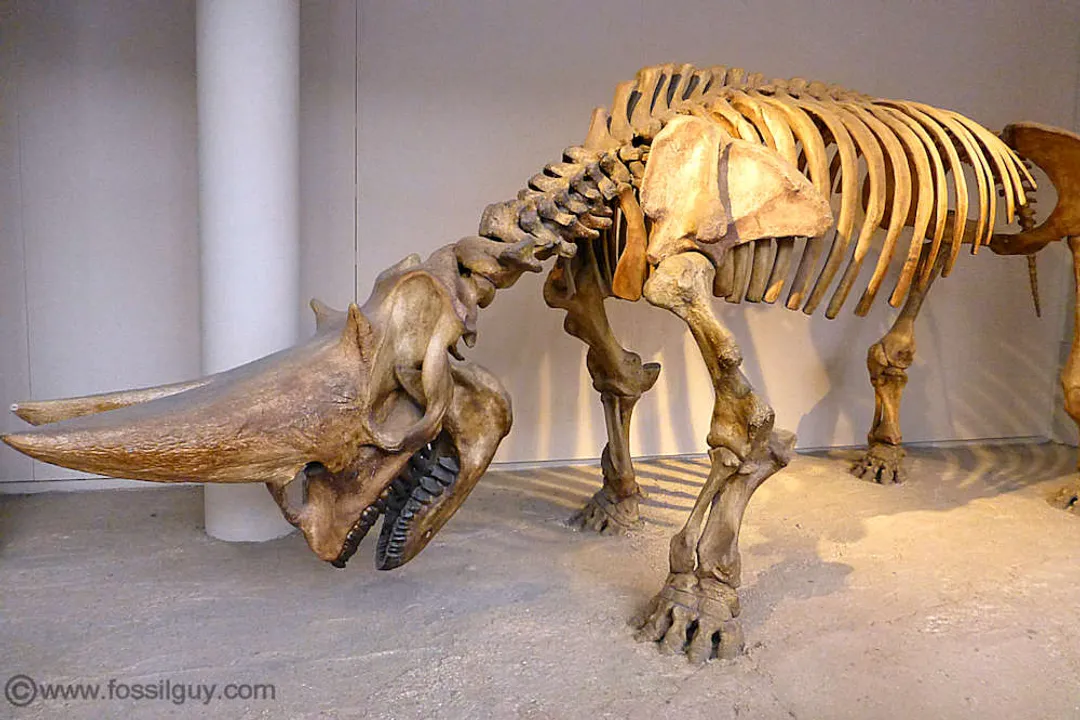
The musculoskeletal system of Arsinoitherium was clearly optimized for supporting extreme mass rather than achieving speed or agility. The evidence points to legs that functioned essentially as sturdy, load-bearing columns. Their robust structure and relatively short stature were perfectly engineered to handle the estimated weight, which could exceed 2,600 kilograms. This contrasts sharply with the long, slender limbs found in cursorial (running) animals. The emphasis on sturdy support reflects the creature's lifestyle as a dense browser requiring strong foundations to manage its immense bulk and the considerable leverage exerted by its heavy skull and horns.
Related Questions
During which geological epochs did Arsinoitherium roam the ancient world?How did the horns of Arsinoitherium differ in material from modern rhinoceros horns?What was the estimated maximum shoulder height for Arsinoitherium?What was the estimated upper limit for the weight of Arsinoitherium?What distinction did Arsinoitherium hold regarding mammal size in Eurasia during the Oligocene?What structural characteristic contributed to Arsinoitherium looking bulkier than its height suggested?How does Arsinoitherium's mass compare to the modern African bush elephant and modern rhinoceroses?What feature of Arsinoitherium, combined with density, created a visual impression of monumental size?What major climatic shift characterized the Oligocene epoch following the Eocene?What was the primary engineering purpose of the sturdy legs of Arsinoitherium?