How big was the Arsinoitherium?
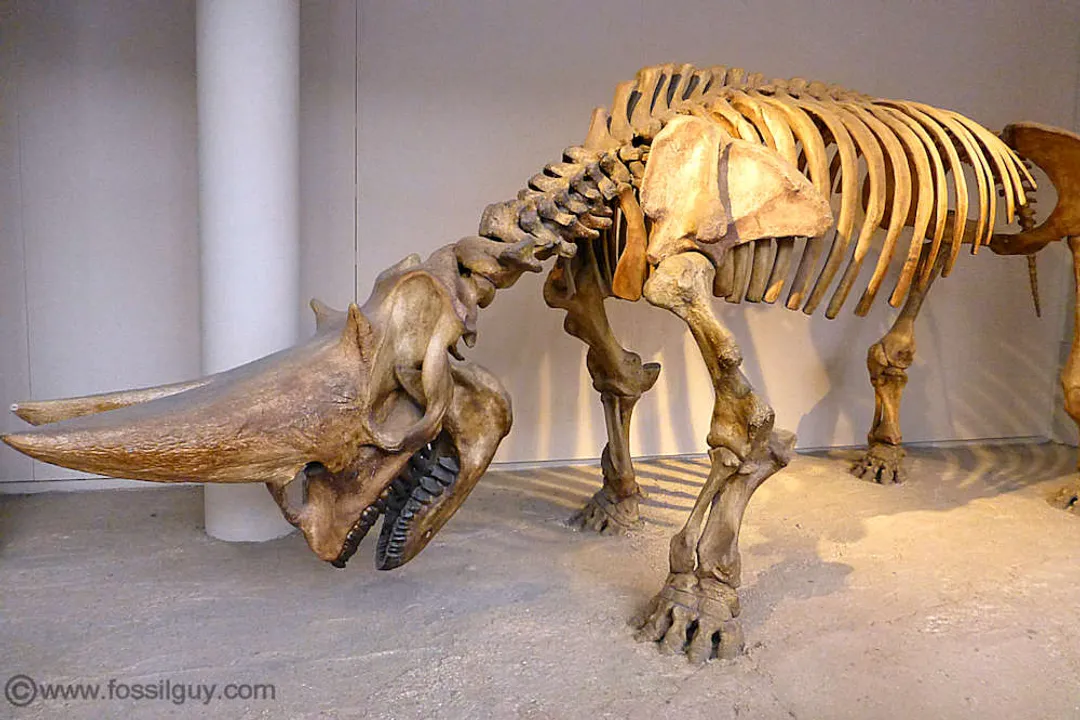
When attempting to visualize the Arsinoitherium, it is easy to get lost in the image of its enormous, twin-pronged horns, perhaps picturing something akin to a prehistoric rhinoceros. While the resemblance to a modern rhino is strong in overall body plan, grasping its true dimensions requires looking at the fossil evidence, which suggests an animal of considerable heft for its time. [8][9] This creature, which roamed the ancient world during the late Eocene through the early Oligocene epochs, was certainly no lightweight.
# Gigantic Scale
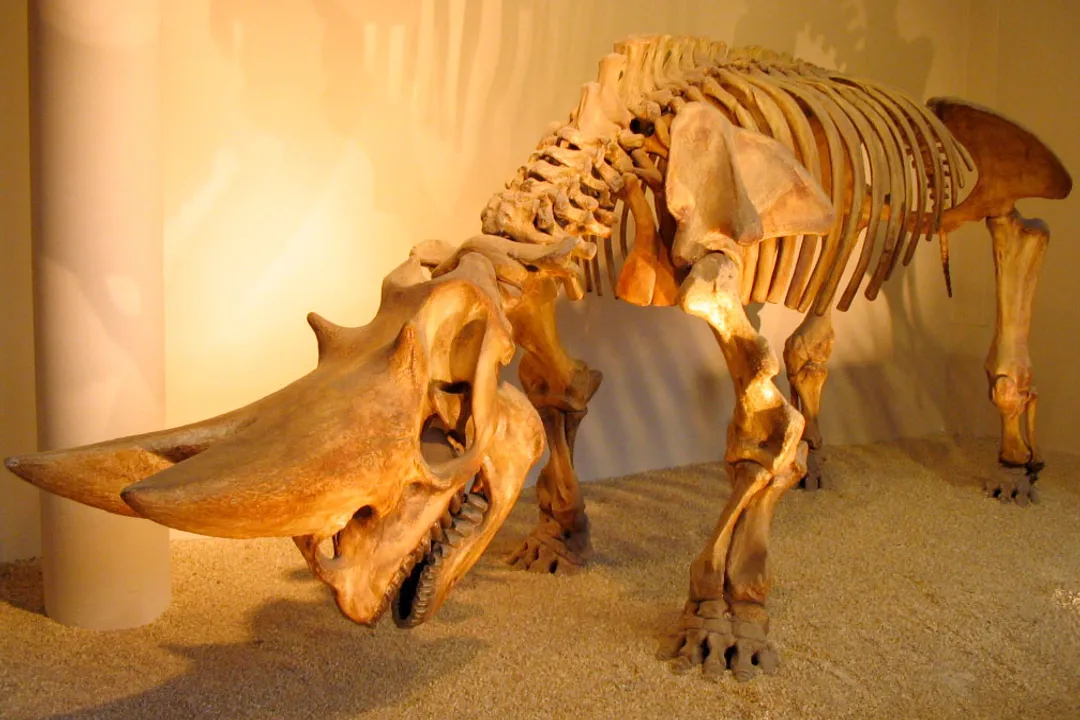
The primary difficulty in pinning down the exact size of Arsinoitherium lies in comparing it to known modern animals. Descriptions often default to saying it was about the size of a modern rhinoceros, [4][5] or perhaps even a large elephant. [1] However, researchers have established some more concrete estimates for its stature. It is generally estimated to have stood up to about 1.5 meters (approximately 5 feet) high at the shoulder. [1][3][5] This places it squarely in the realm of very large modern browsing mammals.
If we consider the modern white rhinoceros, which is the largest species today, a large male can stand between 1.5 and 1.8 meters tall at the shoulder. The Arsinoitherium appears to have been firmly in that range, maybe slightly stockier given the weight estimates. [1][4] The comparison to an elephant, while perhaps used to convey sheer bulk, might be an overstatement in terms of height, though not necessarily in terms of mass. [1]
Imagine walking through a landscape populated by creatures the size of a modern rhino, but knowing that this particular beast—the Arsinoitherium—was one of the largest things around. If you were to place a modern large bull African elephant next to the reconstructed skeletal mount of Arsinoitherium, the elephant would tower over it, yet the ancient beast would still command immense respect due to its density and frontal profile, dominated by those massive horns. [1][8]
# Epoch Ruler
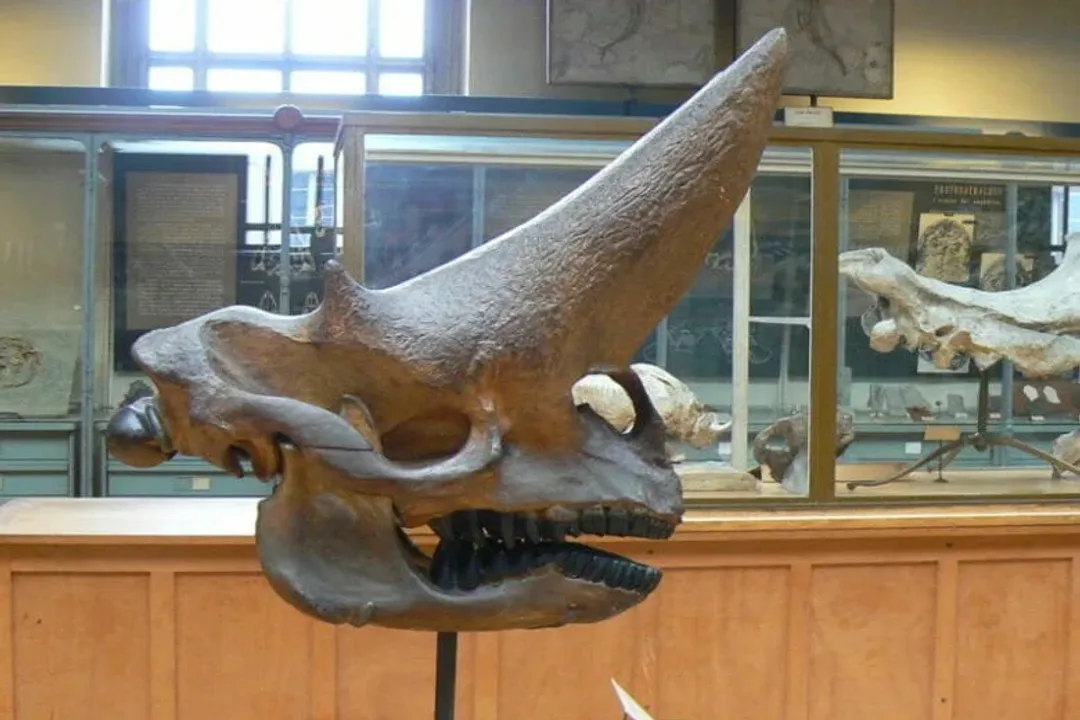
The significance of the Arsinoitherium's size becomes clearer when we look at its place in the ancient ecosystem. This mammal held a notable position as the largest mammal found in Eurasia during the Oligocene epoch. [1] This context is important because the Oligocene marked a period of significant climatic shift, generally becoming cooler and drier globally following the warm Eocene. [1] To maintain such a massive body size during a transitional time suggests it was extremely well adapted to the available flora, likely as a dedicated browser.
This creature represents a high watermark for mammalian size in its region before other lineages, like the ancestors of modern elephants, would later dominate the megafauna niche in terms of sheer linear scale. In its specific time and place, however, it was the behemoth. [1]

# Mass Figures
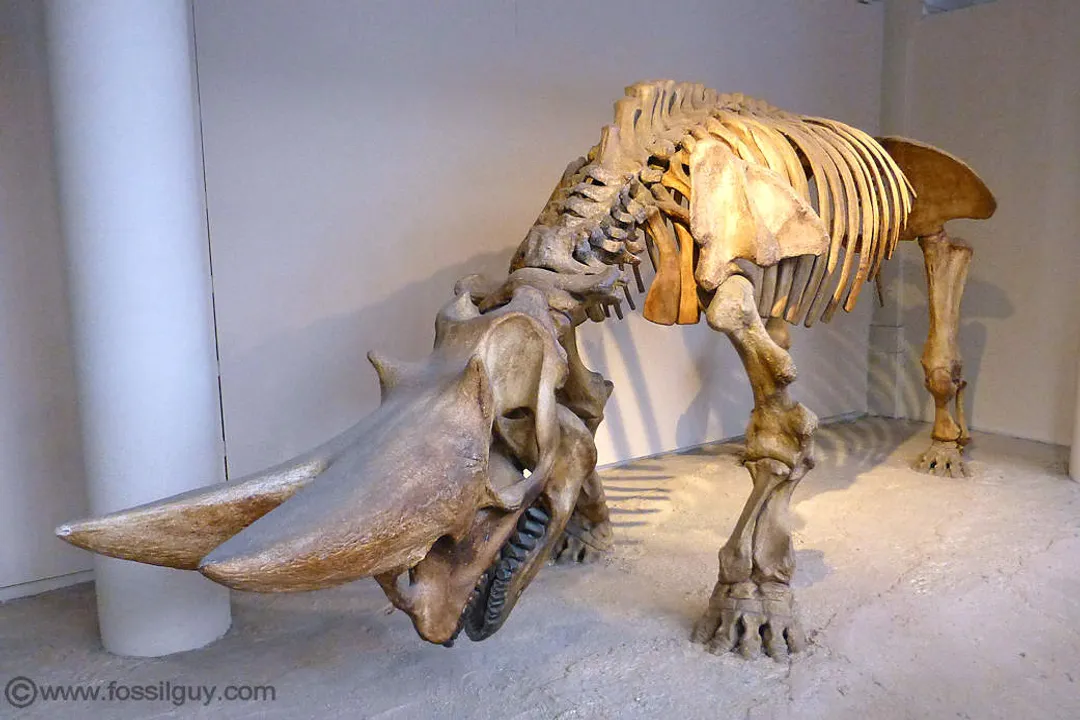
While the shoulder height gives a good vertical measure, the true sense of its bigness comes from its estimated weight. Figures suggest that Arsinoitherium could weigh upwards of 2,600 kilograms, which translates to roughly 5,700 pounds. [1]
To put that mass into perspective for a modern reader: 2,600 kilograms is roughly the weight of two mid-sized modern SUVs or perhaps a fully grown, very large male saltwater crocodile (though crocodiles are reptiles, the weight comparison illustrates bulk). [1] This level of mass requires significant skeletal reinforcement and a specialized digestive system to process enough low-nutrient vegetation to sustain it day to day. If we assume a conservative density similar to a modern large mammal, the sheer volume of the animal—supported by its relatively short, sturdy legs—would have made it an incredibly imposing sight. [1]
Consider this comparison: the largest living land mammal, the African bush elephant, can weigh over 6,000 kg. Arsinoitherium was clearly below that top-tier weight class, but it was certainly much heavier than any modern land rhinoceros, making the elephant comparison understandable in terms of sheer poundage, even if the height didn't match. [1][4]
# Thick Build
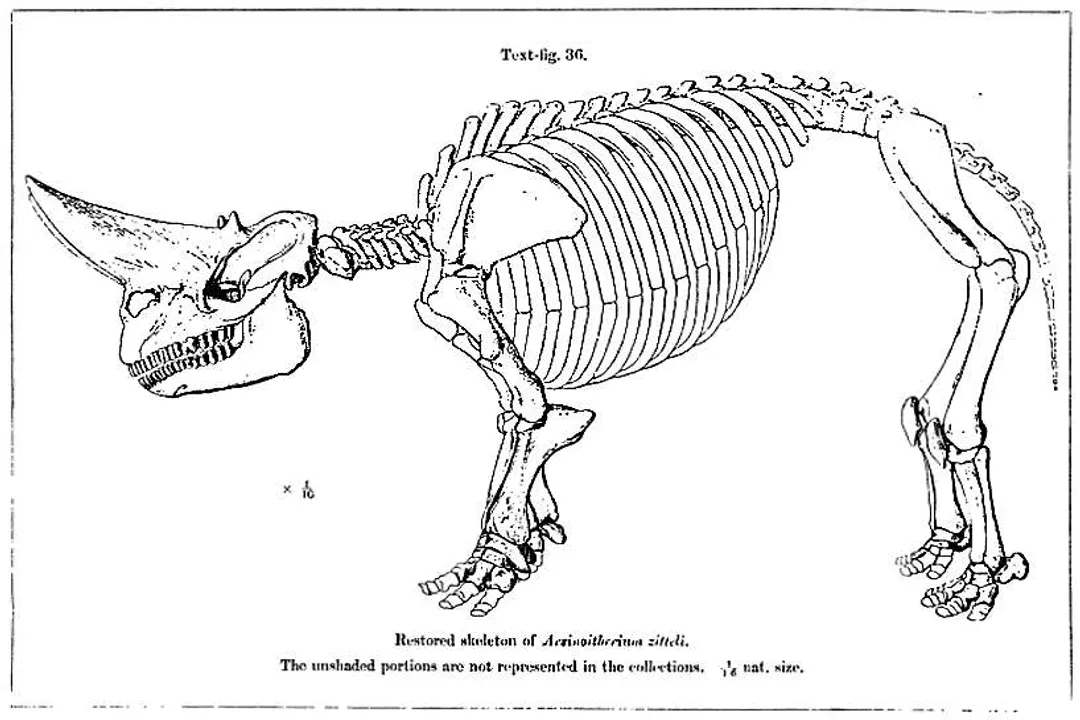
The overall structure of Arsinoitherium contributed significantly to its perceived size, arguably making it look bulkier than its direct height measurements suggest. It possessed a heavy skull, naturally supporting those distinctive, massive horns. [8] Unlike modern rhinos, whose horns are made of keratin, the horns of Arsinoitherium were bone projections growing from the frontal bones of the skull, which added considerable solid weight to the front end of the animal. [8]
This bony structure, combined with the likely stocky build necessary to support the estimated 2,600 kg, meant the animal presented a very deep chest and broad back relative to its height. [1] The legs were sturdy columns, perfectly engineered for carrying great weight rather than speed. This combination of height, density, and the striking horn architecture created a visual impression of monumental size that often exceeds simple measurements. It was a creature built low and powerfully, a living tank of the Oligocene landscape. [1][8]
Related Questions
#Citations
Arsinoitherium - Wikipedia
Arsinoitherium - The Twin Horned Mammal - Fossilguy.com
Arsinoitherium | Dino Hunter-Deadly Shores Wiki | Fandom
Arsinoitherium - A-Z Animals
arsinoitherium : r/Naturewasmetal - Reddit
Arsinoitherium skull in the Paris museum of natural history - Facebook
Arsinoitherium Facts for Kids
Arsinoitherium: Ancient Elephant Relatives But The Body Is A Giant ...