What distinction did Arsinoitherium hold regarding mammal size in Eurasia during the Oligocene?
Answer
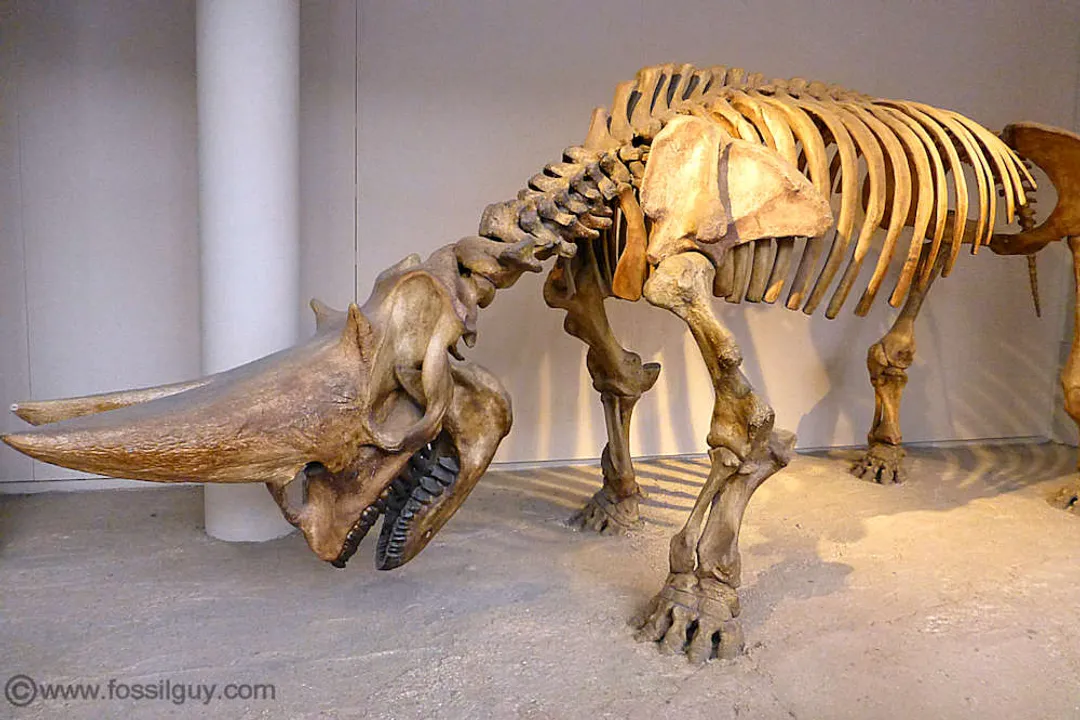
It was the largest mammal found in Eurasia during the Oligocene epoch
The context of the Oligocene epoch is crucial for understanding the significance of Arsinoitherium's bulk. While subsequent epochs saw lineages like the ancestors of modern elephants grow to surpass Arsinoitherium in absolute linear scale (height and length), during its time in Eurasia, Arsinoitherium occupied the pinnacle of mammalian size. It stood unmatched as the largest mammal in that region throughout the Oligocene. This status implies it was perfectly adapted to the cooler, drier conditions setting in after the Eocene warmth, dominating the available ecological niche reserved for the largest herbivores until later evolutionary radiations introduced larger forms.
Related Questions
During which geological epochs did Arsinoitherium roam the ancient world?How did the horns of Arsinoitherium differ in material from modern rhinoceros horns?What was the estimated maximum shoulder height for Arsinoitherium?What was the estimated upper limit for the weight of Arsinoitherium?What distinction did Arsinoitherium hold regarding mammal size in Eurasia during the Oligocene?What structural characteristic contributed to Arsinoitherium looking bulkier than its height suggested?How does Arsinoitherium's mass compare to the modern African bush elephant and modern rhinoceroses?What feature of Arsinoitherium, combined with density, created a visual impression of monumental size?What major climatic shift characterized the Oligocene epoch following the Eocene?What was the primary engineering purpose of the sturdy legs of Arsinoitherium?