What feature of Arsinoitherium, combined with density, created a visual impression of monumental size?
Answer
Its density, striking horn architecture, and short, sturdy legs
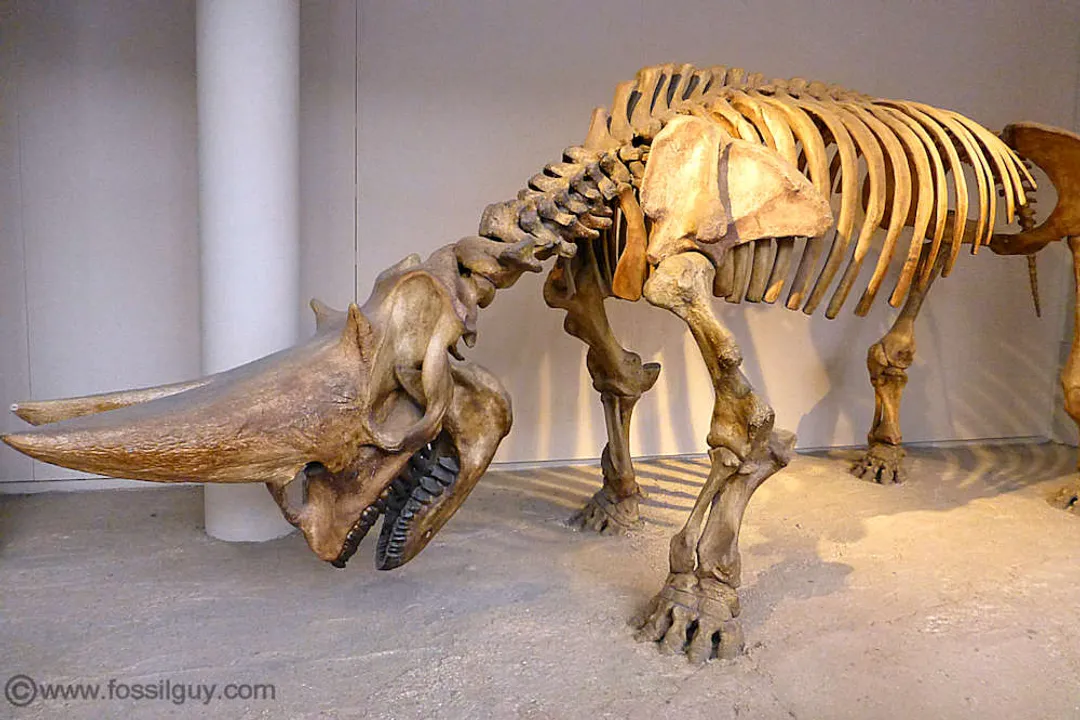
The overall perception of Arsinoitherium’s monumental size stemmed from a synergy of physical attributes rather than a single dimension. Its sheer density, derived from its thick build and heavy skull (which supported massive bone horns), provided an undeniable sense of bulk. The 'striking horn architecture' added significant visual mass to the front of the animal. Finally, the relatively short and sturdy nature of its legs anchored this mass low to the ground, emphasizing its depth and creating the impression of an incredibly imposing, powerful presence, often making it seem larger than standard height measurements alone would suggest.
Related Questions
During which geological epochs did Arsinoitherium roam the ancient world?How did the horns of Arsinoitherium differ in material from modern rhinoceros horns?What was the estimated maximum shoulder height for Arsinoitherium?What was the estimated upper limit for the weight of Arsinoitherium?What distinction did Arsinoitherium hold regarding mammal size in Eurasia during the Oligocene?What structural characteristic contributed to Arsinoitherium looking bulkier than its height suggested?How does Arsinoitherium's mass compare to the modern African bush elephant and modern rhinoceroses?What feature of Arsinoitherium, combined with density, created a visual impression of monumental size?What major climatic shift characterized the Oligocene epoch following the Eocene?What was the primary engineering purpose of the sturdy legs of Arsinoitherium?