What major climatic shift characterized the Oligocene epoch following the Eocene?
Answer
It became generally cooler and drier globally
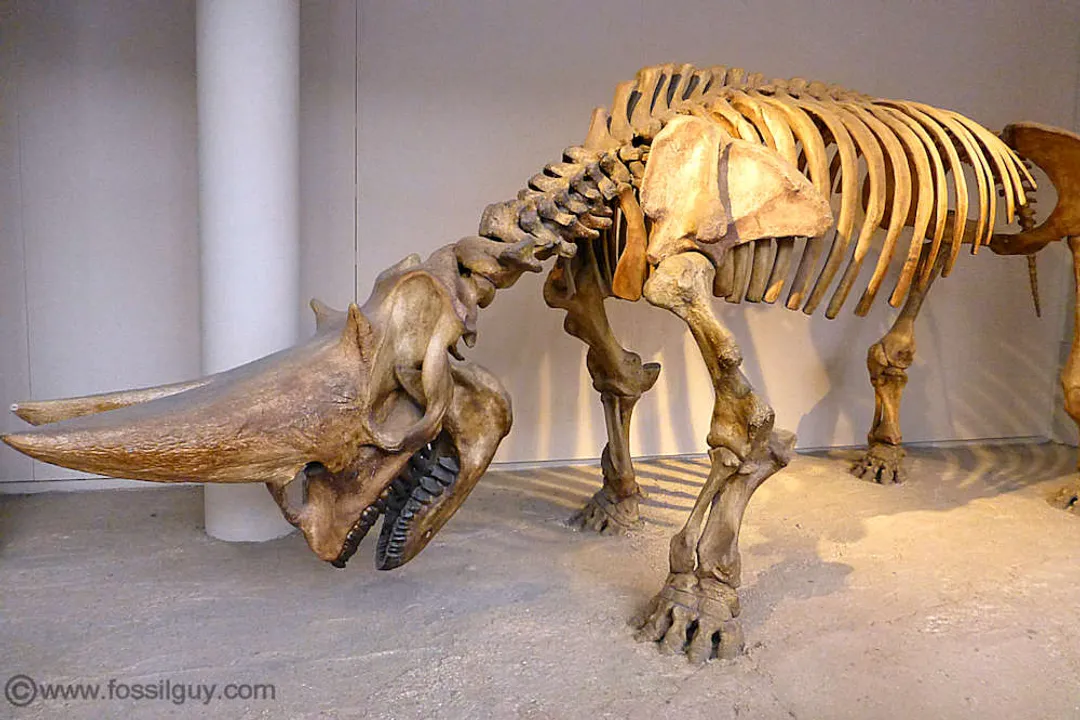
The Oligocene epoch represents a significant turning point in global climate history, marking a departure from the consistently warm conditions that prevailed during the preceding Eocene epoch. As Arsinoitherium was transitioning between these periods, the prevailing environmental trend involved global temperatures cooling down and overall atmospheric moisture decreasing, leading to drier conditions across many regions. The ability of a massive herbivore like Arsinoitherium to thrive and remain the dominant megafaunal size under these shifting conditions speaks to its excellent adaptation to the available, possibly lower-nutrient, flora present during this cooler, drier climate phase.
Related Questions
During which geological epochs did Arsinoitherium roam the ancient world?How did the horns of Arsinoitherium differ in material from modern rhinoceros horns?What was the estimated maximum shoulder height for Arsinoitherium?What was the estimated upper limit for the weight of Arsinoitherium?What distinction did Arsinoitherium hold regarding mammal size in Eurasia during the Oligocene?What structural characteristic contributed to Arsinoitherium looking bulkier than its height suggested?How does Arsinoitherium's mass compare to the modern African bush elephant and modern rhinoceroses?What feature of Arsinoitherium, combined with density, created a visual impression of monumental size?What major climatic shift characterized the Oligocene epoch following the Eocene?What was the primary engineering purpose of the sturdy legs of Arsinoitherium?