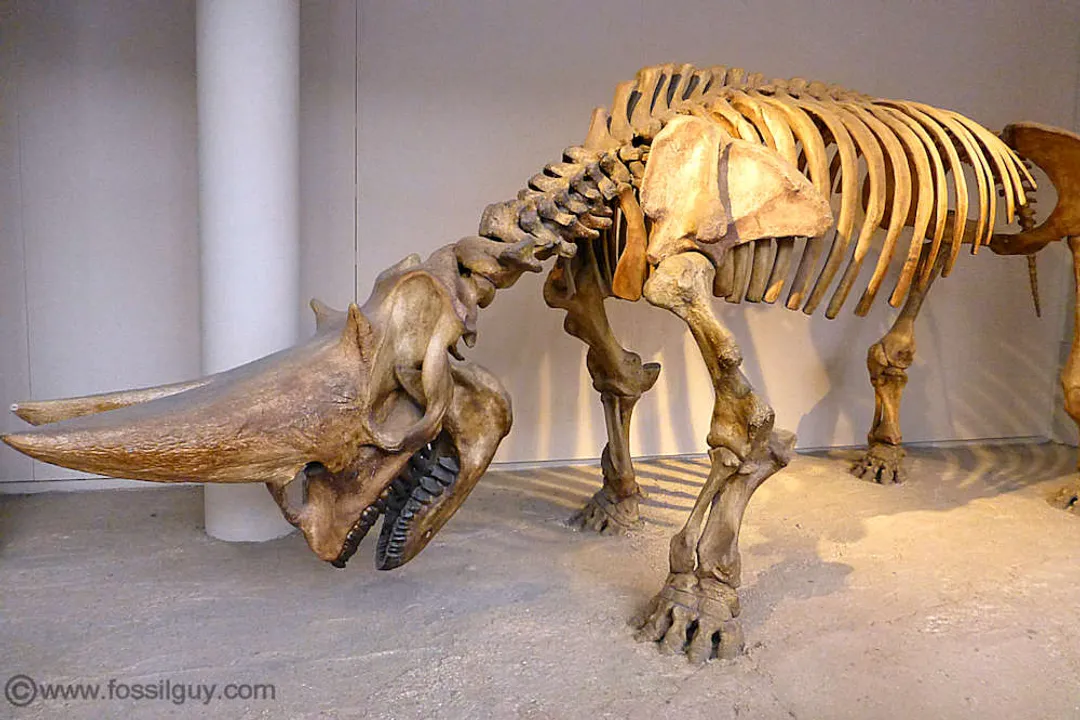
How did the horns of Arsinoitherium differ in material from modern rhinoceros horns?
They were bone projections growing from the frontal bones of the skull
A key anatomical distinction separates the formidable headgear of Arsinoitherium from that of modern rhinoceroses. Modern rhinos possess horns composed primarily of keratin, the same protein found in human hair and nails, which grows from the skin. In contrast, the massive twin prongs atop the Arsinoitherium skull were solid bone structures. These bony projections grew directly from the frontal bones of the skull itself. This fundamental difference in composition meant that the horns of Arsinoitherium contributed substantial, solid mass directly to the skull structure, heavily influencing the animal's overall density and frontal profile, unlike the lighter, fibrous keratin horns of contemporary rhinos.