What unique physical action do freshwater drums sometimes use to find prey hidden beneath bottom materials?
Answer
Flipping over stones and bottom materials using their snout and forehead.
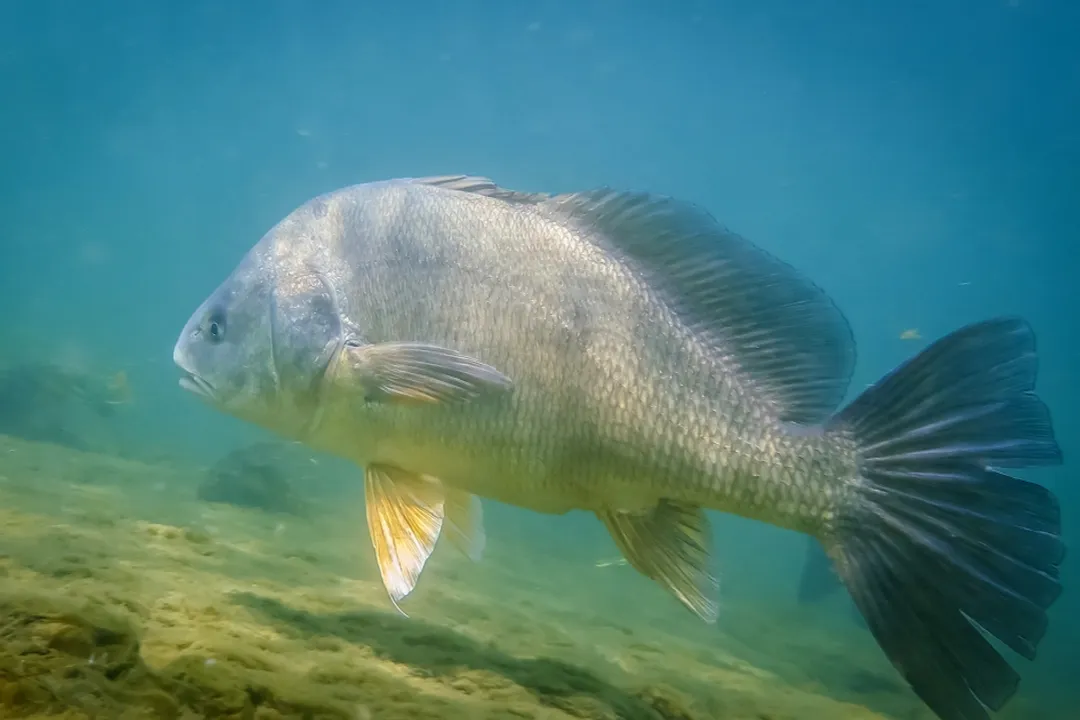
Freshwater drums actively forage by using their high snout and forehead to physically turn over stones and other materials on the bottom, exposing buried insect larvae or small invertebrates.
Related Questions
To which fish family does the freshwater drum belong, and what is its distinction within that group?How do mature male freshwater drums produce their distinctive rumbling sounds?What substance are the freshwater drum's large otoliths, or "ear stones," composed of?Which notable physical feature extends through the rounded caudal fin of the freshwater drum?What unique physical action do freshwater drums sometimes use to find prey hidden beneath bottom materials?What is the Greek meaning derived from the freshwater drum's generic name, *Aplodinotus*?According to culinary advice, what specific part of the freshwater drum fillet must be trimmed away to maintain optimal flavor?What is the maximum recorded age cited for the freshwater drum in some Minnesota populations?What does the French common name Gaspergoo roughly translate to mean?What significant change typically occurs in the freshwater drum's diet during the autumn months?