What specialized sensory arrays allow walruses to locate buried prey?
Answer
Vibrissae
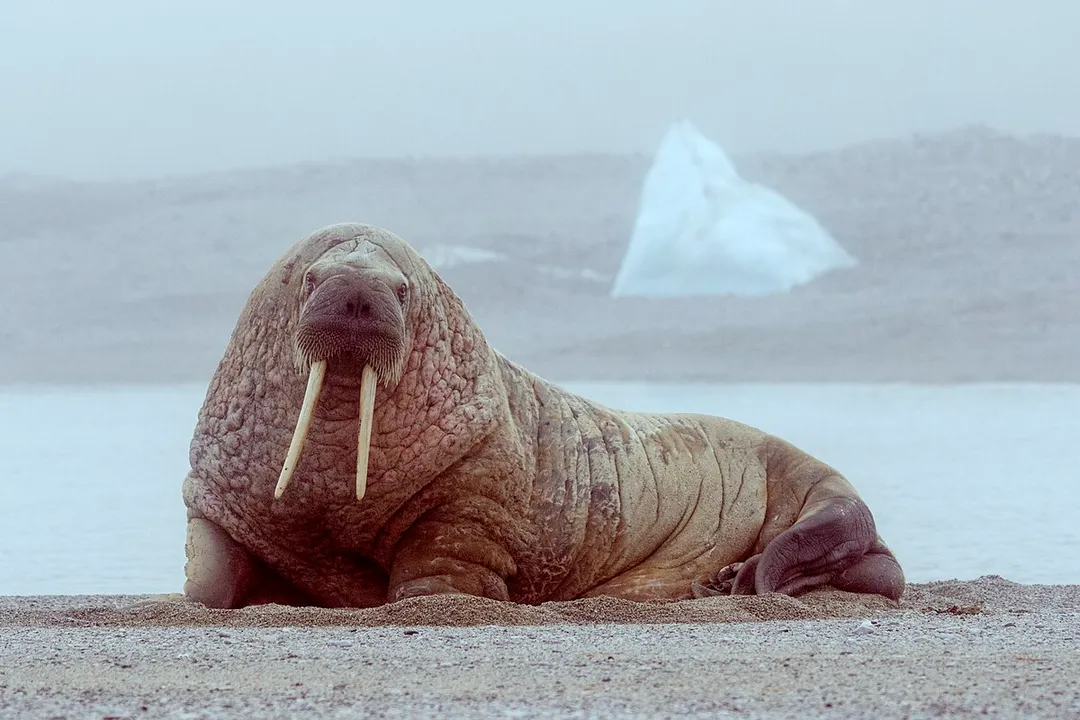
The walrus possesses highly specialized whiskers known as vibrissae, which serve a critical sensory function during foraging. These vibrissae function as sophisticated sensory arrays located on their snout. They are instrumental in detecting and locating prey, such as buried clams, even when the water is murky or completely dark. This tactile sense allows the walrus to precisely map the seafloor environment and identify the exact location of the benthic invertebrates they consume.
#Videos
How Walruses Really Eat Clams - YouTube
Related Questions
What constitutes the overwhelming foundation of the walrus diet?What specialized sensory arrays allow walruses to locate buried prey?What visual testament results from walruses discarding prey remains?What is the suggested maximum daily food consumption estimate for a wild walrus?How do walruses efficiently extract soft tissue from a clam shell?What role does the walrus act as for its primary food sources?In what specific seas might clams constitute over 90 percent of the walrus annual diet?Why is the suction feeding mechanism paramount for walrus survival in the Arctic?Besides bivalves, what other specific invertebrates are listed as part of the walrus menu?What drastically increases the energy expenditure when sea ice retreats far from feeding grounds?What predatory behavior involving vertebrates demonstrates walrus dietary flexibility?