Walrus Diet
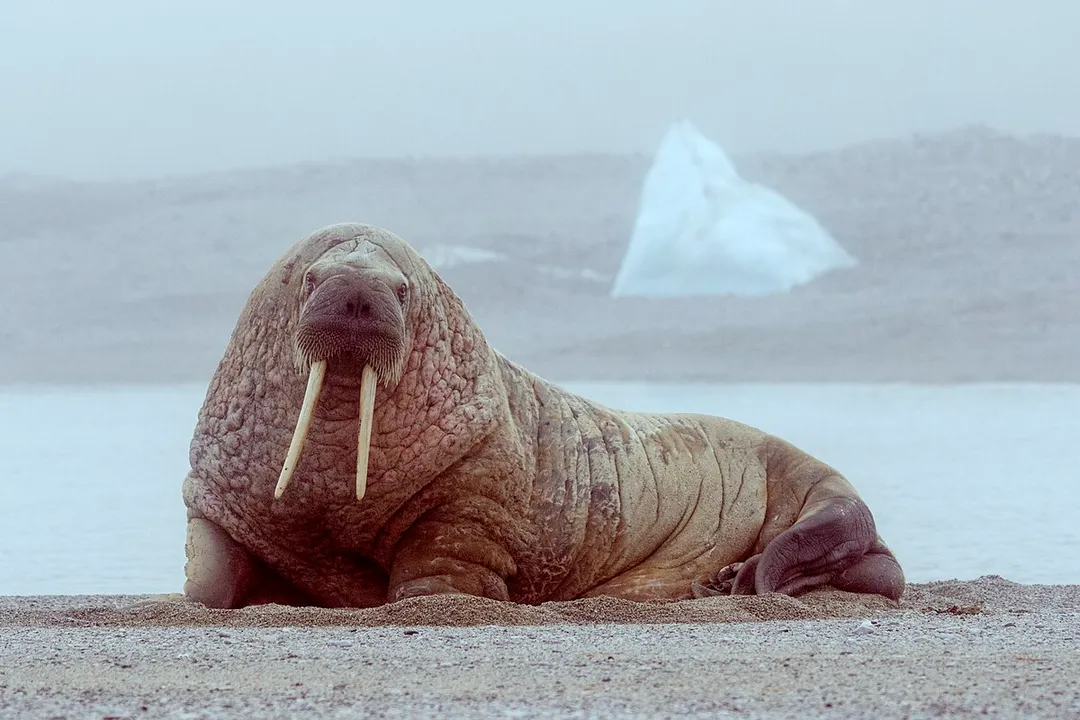
The diet of the walrus is intrinsically linked to the icy seafloors of the Arctic and sub-Arctic regions, making them specialists in consuming the dense, slow-moving life found along the bottom. [2][9] While they are often pictured as general feeders, their primary sustenance comes almost exclusively from benthic invertebrates—creatures living on or in the seafloor substrate. [1][10] The foundation of this diet consists overwhelmingly of bivalve mollusks, such as various species of clams and mussels. [1][3]
# Primary Staples
Walruses are renowned for their efficiency in processing large quantities of relatively low-energy food sources. [10] Their main targets are these bottom-dwelling shellfish, which they forage for systematically across the continental shelves. [2][4] In some areas, such as the Bering and Chukchi Seas, clams might constitute over 90 percent of their annual diet. [4]
The sheer volume of food required to sustain these large marine mammals is considerable. Estimates vary on the precise daily intake, but the demands are immense regardless of the exact figure. Some sources suggest that a wild walrus can consume up to 180 pounds of food per day, [1] while other observations point to an average intake closer to 50 pounds daily. [3] This massive consumption rate suggests that local benthic communities must be incredibly rich to support stable walrus populations. [10]
A striking aspect of their feeding is the evidence they leave behind. After consuming their prey, walruses often discard the shells of bivalves, leading to the creation of significant shell mounds or beaches near their haul-out sites. [4] These discarded piles offer a visual testament to the intensive localized foraging efforts of the herd. [4]
# Feeding Mechanics
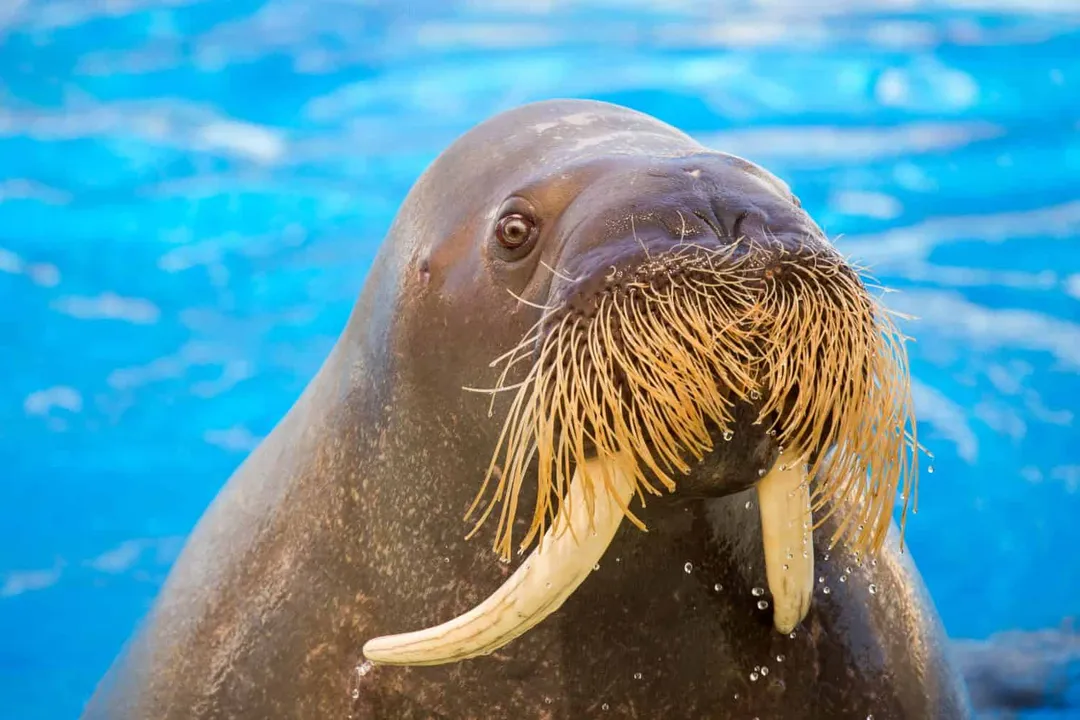
The process by which a walrus extracts a clam from the mud or sand, and then separates the soft tissue from the shell, is a specialized biological feat requiring unique anatomy. [2][4] Their sensitive vibrissae, which are highly specialized whiskers, act as sophisticated sensory arrays on the seafloor, allowing them to locate buried prey even in murky, dark water. [4]
Once prey is located, the walrus engages in a powerful suction process. [4] They use their highly muscular cheeks and palate to create negative pressure, effectively sucking the soft body of the mollusk out of its protective shell. [4] This method is incredibly fast and efficient, often leaving the shell intact or merely cracked. [4] This suction ability is a critical adaptation for a predator that relies on harvesting thousands of small organisms rather than pursuing large, active prey. [10] While the process is usually swift, it is possible for them to consume the entire organism, shell and all, though swallowing the shell is less common. [3]
If we consider the energy expenditure for a large male walrus, which can weigh well over a ton, requiring perhaps 10 to 15 percent of its body mass in energy daily just for basic maintenance in cold water, the efficiency of this high-volume, low-effort suction feeding is paramount for survival in the Arctic. [10] The mechanism bypasses the need for crushing shells with molars, which would require significantly more energy and slower processing times.
# Dietary Range
While bivalves dominate the menu, walruses are opportunistic feeders whose diet reflects what is seasonally and locally available on the substrate. [1][3] Their menu extends to a variety of other invertebrates that share the Arctic seabed. [3] These additions include sea cucumbers, which are often numerous in certain regions, [3] snails, crabs, shrimp, and starfish. [1][3] They are also known to consume tunicates and polychaete worms. [1]
However, the description of the walrus diet shifts significantly when one considers individuals that have access to different habitats or are driven by exceptional circumstances. Some research indicates that walruses are capable of consuming vertebrates, suggesting a dietary flexibility not always highlighted in descriptions focusing solely on clams. [7][10] There are documented instances of walruses preying upon sea birds, such as eiders, which they may capture at the surface or near colonies. [7] More remarkably, some individuals have been observed preying on seals. [7][10] This predatory behavior, though perhaps infrequent, demonstrates a capacity for high-protein, high-fat acquisition when the opportunity arises, potentially supplementing or replacing the benthic invertebrates during times of scarcity or for specific energy needs. [10] In captive settings, for instance, walruses have been known to consume various fish species. [5]
# Habitat and Depth
The walrus's feeding ecology is entirely dependent on the presence of ice over shallow, productive seafloors. [4][9] They primarily forage in relatively shallow waters, often less than 80 meters deep, though they are capable of much deeper dives when necessary. [4][2] These shallow areas, typically on the continental shelf, are where the richest beds of clams and other bottom-dwelling organisms thrive. [4]
Their relationship with sea ice is crucial for feeding efficiency. [9] Walruses often use the edge of the pack ice as a resting platform from which to launch their feeding dives. [9] This allows them to access diverse feeding grounds without expending excessive energy swimming long distances to shore for rest. [4] When ice coverage is sparse or retreats far from productive feeding grounds, walruses are forced to haul out on land. This terrestrial haul-out requires significantly longer and more energy-intensive foraging trips, as they must swim much farther to reach the benthic feeding zones, which can place stress on the population. [4]
If we chart the typical foraging range relative to the ice edge, it becomes clear that a healthy ice platform serves as a vital mobile base station. A walrus resting on an ice floe 50 miles from shore might only need to make a few dives to fill its daily quota. In contrast, if that floe has melted or retreated 150 miles away, the animal must swim 300 miles round trip before it can even begin to gather the necessary calories, essentially turning feeding into a long-distance swim punctuated by short foraging efforts. [4] This environmental pressure highlights how changes in sea ice directly translate into changes in foraging success and overall energy balance.
# Ecological Impact
The consistent, large-scale consumption of bottom-dwelling life by walruses has a noticeable impact on the Arctic benthic environment—an effect that mimics a large-scale, natural dredging operation. [10] By rooting through the sediment and vacuuming up vast numbers of clams, they physically alter the composition and structure of the seafloor community. [10]
This intense activity serves as a form of ecological mixing. The constant disturbance means that the sediment layers are turned over, affecting nutrient cycling and the community structure of the remaining organisms. [10] While this sounds destructive, this level of bioturbation—the mixing of substrate by organisms—is a natural process in highly productive, soft-bottom environments. It prevents one or two species from completely dominating the area by constantly exposing new resources or burying others. [10]
For instance, if a specific bed of large clams becomes too dense, a pod of walruses can quickly reduce its biomass by orders of magnitude. This opens up space for smaller, faster-reproducing species to settle. In essence, the walrus acts as a density regulator for its primary food sources, ensuring that while individual clams are decimated, the overall productivity of the feeding ground is maintained over the long term by preventing monocultures. [10] Observing the shell mounds provides scientists with direct data on which species are most abundant in that specific location at that time, offering a quick snapshot of local invertebrate health. [4]
#Videos
How Walruses Really Eat Clams - YouTube
Related Questions
#Citations
All About the Walrus - Diet & Eating Habits - Seaworld.org
Walrus - Wikipedia
What Do Walruses Eat? 14 Foods in Their Diet - A-Z Animals
Pacific Walrus (Odobenus rosmarus divergens) Printer Friendly
How Walruses Really Eat Clams - YouTube
Walrus Diets in Bristol Bay - Alaska Sealife Center
TIL walruses are capable of eating birds and seals by using their ...
Walrus - Polar Latitudes Expeditions
Contemporary diets of walruses in Bristol Bay, Alaska suggest ... - NIH