What specialized anatomical features do Oenpelli pythons use to locate prey in dark or confined spaces?
Answer
Heat-sensing pits along its jaws
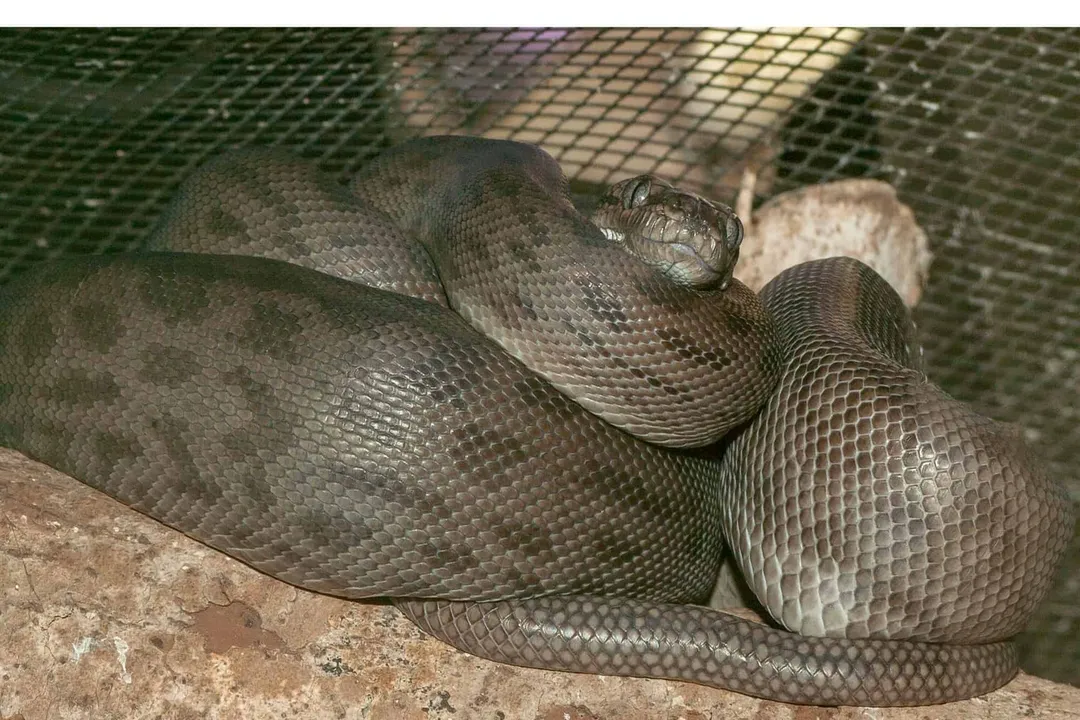
Like many pythons, this species possesses specialized heat-sensing pits situated along its jaws, which function as crucial tools for detecting prey hidden in darkness or within crevices.
Related Questions
What is the official scientific designation for the Oenpelli python?In which primary geographical area is the Oenpelli python confirmed to inhabit?What is the approximate known global captive population figure for the Oenpelli python?What specific terrain characterizes the confirmed habitat of the Oenpelli python?Besides Oenpelli python, what is another common local name referenced for this species?What is the typical maximum length rarely exceeded by the Oenpelli python?What specialized anatomical features do Oenpelli pythons use to locate prey in dark or confined spaces?Which categories of prey items make up the documented diet of the Oenpelli python?How many Oenpelli pythons has the Australian Reptile Park publicly stated housing?What behavioral characteristic does the scientific genus classification, *Nyctophilopython*, suggest about the species?