How many Oenpelli pythons are there?
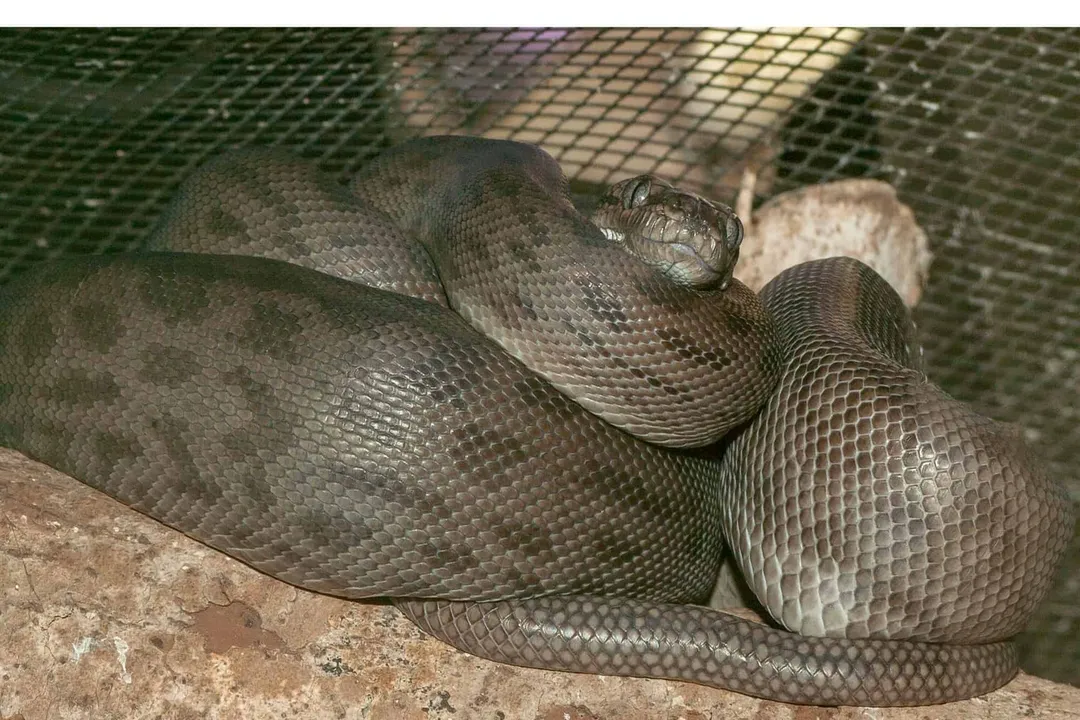
The sheer scarcity surrounding the Oenpelli python makes pinning down an exact population figure an exercise in futility, even for seasoned herpetologists. This secretive reptile, known by several names, exists largely within the remote, rugged landscapes of Australia’s Northern Territory, leading to a significant gap between what is known about its ecology and any official census data. [1][4] Instead of a simple number, what we find is a compelling story of a species whose survival seems intrinsically tied to its isolation and elusiveness. [2]
# Names and Taxonomy

This particular snake carries a few different monikers depending on who is discussing it. Officially, its scientific designation is Nyctophilopython oenpelliensis. [1][9] However, it is more commonly referenced as the Oenpelli python. [1] Adding to the descriptive layer, it is also known as the Nawaran, [7] or sometimes the rough-scaled python. [1] The use of multiple local and common names highlights a localized familiarity, suggesting that while the species might be rare in global scientific literature, it holds distinct recognition within its native range. [7] The genus classification itself, Nyctophilopython, points toward its nocturnal habits, though its specific ecological needs still present many unknowns. [8]
# Distribution Range
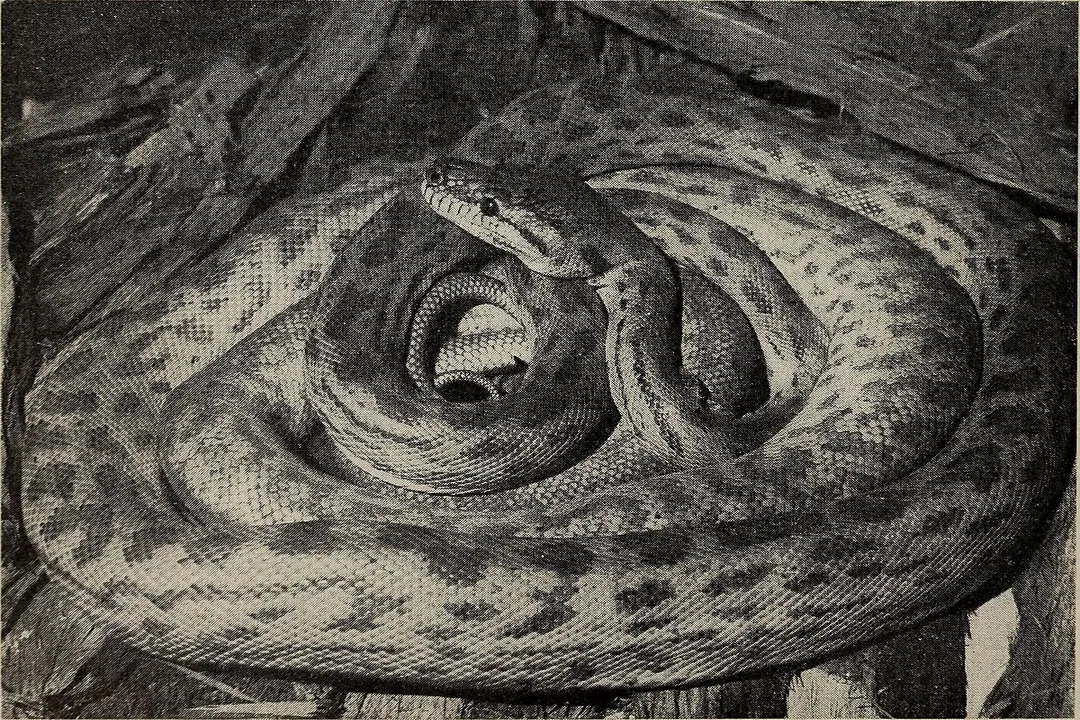
Geographically, the Oenpelli python is highly restricted. Its confirmed habitat is confined almost exclusively to the Top End region of Australia's Northern Territory. [1][4] Specifically, these pythons are associated with the rocky escarpments and associated rocky outcrops found there. [4] This specialization in habitat—opting for steep, broken terrain rather than broad, flat plains—is a key factor influencing both its behavior and our ability to count it. [2] The known distribution map, derived from data aggregators, shows clusters of observation records, but these likely represent only the most accessible or frequently visited areas within its range. [6]

# Captive Documentation
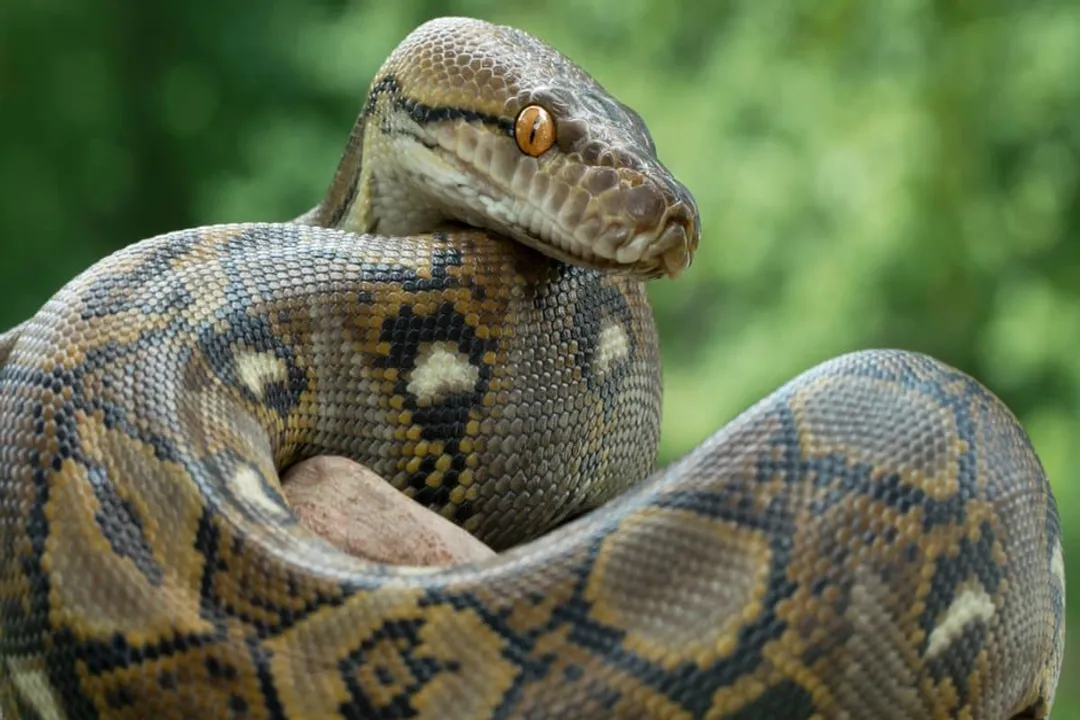
While definitive wild population statistics remain elusive, the conservation status is often judged by its extreme rarity in human care. A notable data point suggests that there may be less than 100 Oenpelli pythons in captivity globally. [10] This low captive figure immediately flags the species as exceptionally rare within the pet trade and zoological institutions, a situation that suggests significant difficulty in sourcing, breeding, or perhaps even locating individuals in the wild for collection. [10] To put this rarity into context, a facility like the Australian Reptile Park has publicly stated they house three of these rare pythons. [3] This small number in a major zoological setting underscores how few examples of this species are accessible for study or assurance colony maintenance. [3]
The discrepancy between the total wild population (unknown) and the captive population (documented as extremely low) creates a unique conservation challenge. If the wild population is experiencing decline due to habitat pressure or disease, the small captive assurance colony offers minimal genetic insurance against total loss. [10]
# Physicality and Lifestyle
The Oenpelli python is described as a relatively slender and small snake, rarely exceeding one meter in length. [5] Its coloring tends to be muted, ranging from olive-brown to greyish-brown, which allows it to blend exceptionally well into the rocky, sparsely vegetated terrain it calls home. [2][5] Like many pythons, it possesses specialized heat-sensing pits along its jaws, which are vital tools for locating prey in the dark or within deep rock crevices. [2]
Dietary records indicate a preference for smaller prey items typical of its environment, including lizards, frogs, and small native mammals. [2] This reliance on a specific micro-ecosystem within the escarpments means that any negative impact on those local food sources could cascade rapidly through the python population. [5] The snake's relatively small size compared to its larger Australian python relatives—such as the Reticulated Python or Carpet Python—might also affect its vulnerability to predation when young, adding another layer of complexity to survival rates. [1]
# Population Uncertainty Insights
The question of "how many" leads us directly to the inherent difficulty of wildlife assessment in this region. When a species is restricted to steep, rugged escarpments—terrain that is physically demanding and time-consuming to survey systematically—the reported sightings will naturally be sparse. [4] Survey data, such as that aggregated by biological databases, relies heavily on incidental encounters. [6] It stands to reason that for every Oenpelli python an experienced field researcher manages to locate and document on a cliff face, there might be several more that remain entirely undetected year after year due to the sheer inaccessibility of their primary refuge. [4] Therefore, the extremely low documented captive number should be viewed not just as evidence of extreme rarity, but also as a reflection of the challenges involved in monitoring a species that excels at remaining hidden in its harsh, natural fortress. [10]
Furthermore, the dual naming structure—Oenpelli Python versus Nawaran—suggests a potential gap in localized ecological knowledge transfer. If researchers rely too heavily on one nomenclature, they might miss anecdotal or observational data collected by local communities who exclusively use the other name. [7] A truly insightful population assessment would involve integrating traditional ecological knowledge with modern survey techniques, acknowledging that population density might fluctuate significantly between easily accessible and completely inaccessible rocky sections of the territory. [1][7] This localized understanding could be the key to finding more reliable pockets of populations, even if the overall number remains low.
# Conservation Outlook
Given the limited information and the very low figures reported for captive populations, the Oenpelli python occupies a precarious status. [3][10] While the sources do not explicitly assign a current IUCN Red List category here, the documented scarcity strongly implies a need for careful monitoring. [1] The species is an endemic Australian reptile, meaning it exists nowhere else on Earth, which places the responsibility for its long-term survival squarely on Australian conservation efforts focused on the Northern Territory's unique geological features. [1][4] For those involved in herpetology or captive breeding programs, the goal is clear: to establish a secure and genetically diverse population outside the wild to buffer against unforeseen environmental catastrophes affecting their narrow native habitat. [10] The reptile's survival relies on preserving not just the animal itself, but the integrity of the rocky, arid zones that define its entire existence. [2][4]
Related Questions
#Citations
Oenpelli python
Oenpelli python Animal Facts
Australian Reptile Park Houses Three Pythons Described ...
Oenpelli python Facts for Kids
Oenpelli Python - Facts, Diet, Habitat & Pictures
Nyctophilopython oenpelliensis (Gow, 1977)
NAWARAN: Australia's Rarest Python, Oenpelli Python
Oenpelli Rock Python (Nyctophilopython oenpelliensis)
Nyctophilopython oenpelliensis - The Reptile Database
With less then 100 in captivity the Oenpelli python has to be ...