What result can dietary stagnation lead to in captive wrasses over time?
Answer
Dull coloration or suppressed immune function
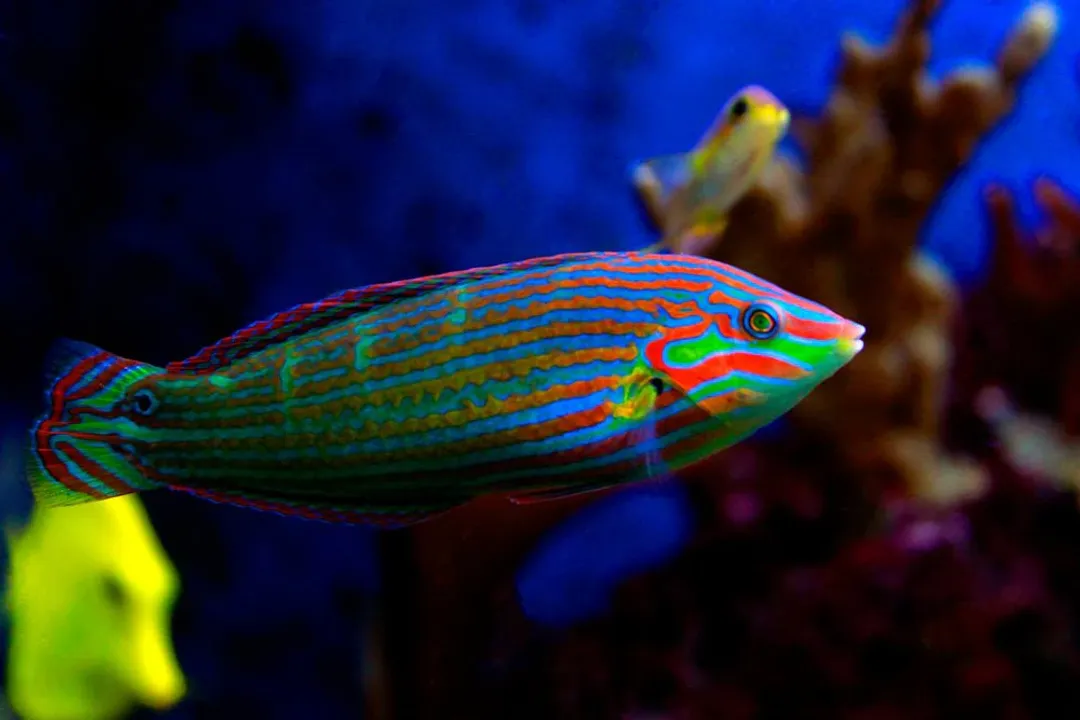
Maintaining a consistent, unchanging diet—known as dietary stagnation—is detrimental to the long-term well-being and health of captive wrasses. When fish are repeatedly fed the same limited spectrum of nutrients, they invariably develop deficiencies. These deficiencies do not always manifest immediately as outright illness; rather, they often show up subtly through physical decline, specifically leading to the dulling of their normally vibrant coloration. Furthermore, compromised nutritional status weakens the internal defense systems, resulting in suppressed immune function, making the fish more vulnerable to diseases.
Related Questions
Which food item often ranks higher than brine shrimp as a staple for most wrasses?What is paramount for Fairy Wrasses regarding their food particle size?What inherent trait directly correlates with the frequency of feeding a wrasse?What specific feeding demand does a constantly swimming Six-Line Wrasse have?What issue arises if frozen food is simply defrosted without enrichment consideration?What specific attention might Leopard Wrasses require during quarantine?What are wrasses predominantly classified as regarding their captive diet?Once acclimated, what is the Melanurus Wrasse known to have?What result can dietary stagnation lead to in captive wrasses over time?How can a keeper ensure slower eaters get food when larger predators like Melanurus are present?