What is the primary function of the tree-kangaroo's long tail while maneuvering in the canopy?
Answer
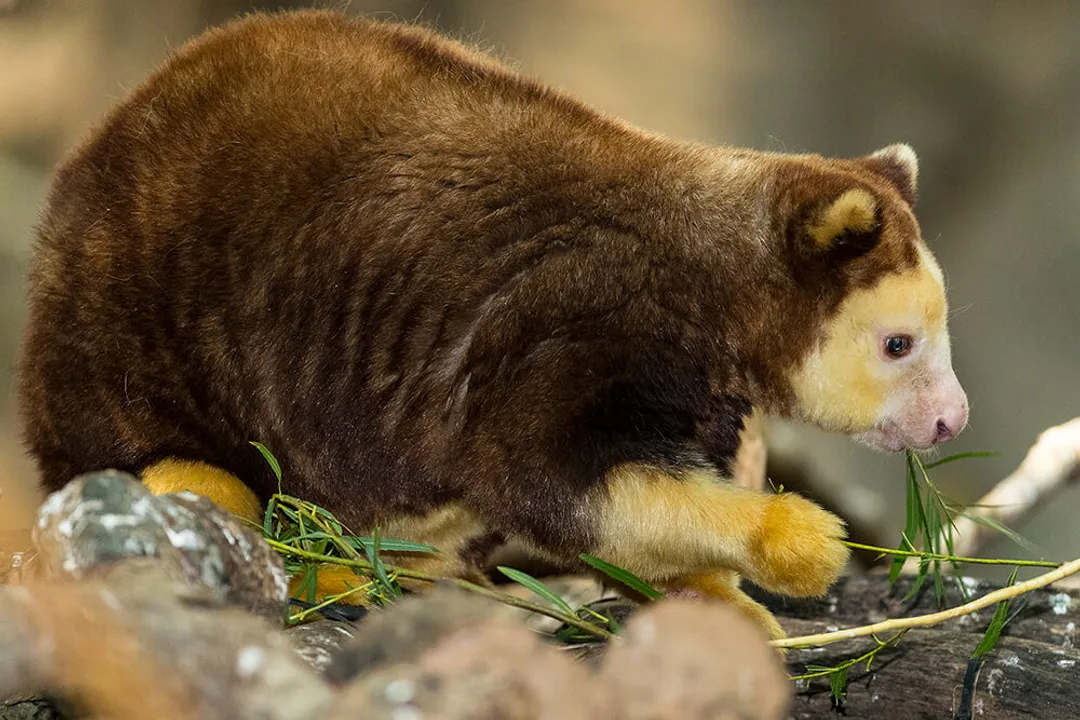
As a counterbalance to aid stability on narrow branches
For tree-dwelling members of Macropodidae, the long tail primarily functions as a counterbalance, enhancing stability when moving along narrow branches in the canopy.
Related Questions
To which genus do all tree-kangaroos belong within the Family Macropodidae?What defining dental characteristic names the Order Diprotodontia?How do the forelimbs of a tree-kangaroo generally compare in length to their hind legs?What specialized feature on the hind feet of tree-kangaroos aids in gripping tree bark?What type of digestive strategy do tree-kangaroos utilize to process large quantities of low-nutrient leaves?What activity pattern does recent research suggest for Lumholtz's tree-kangaroo?Which two tree-kangaroo species found in Australia are considered more basal within the genus *Dendrolagus*?What is suggested to be the lifestyle of the common ancestor from which all macropodids originated approximately 50 million years ago?What unique adaptation helps Matschie's tree-kangaroo shed water when it crouches during rain?What is the primary function of the tree-kangaroo's long tail while maneuvering in the canopy?