Is the tree-kangaroo a mammal?
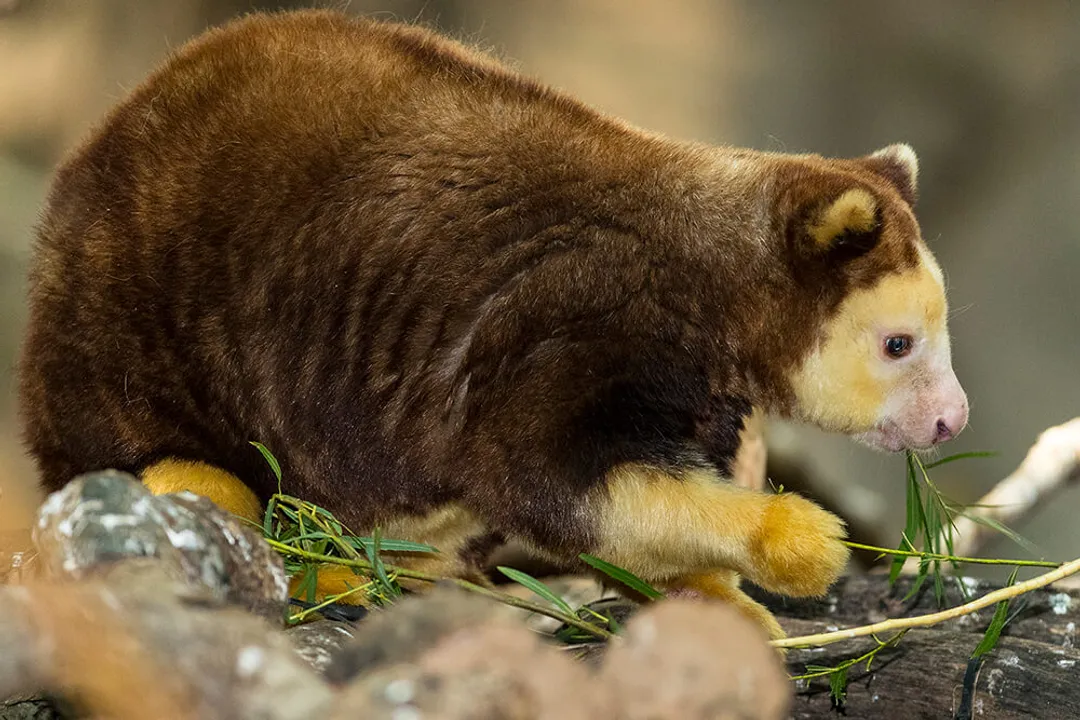
The simple answer to whether the tree-kangaroo is a mammal is an emphatic yes. As members of the vast class Mammalia, they share fundamental biological traits with humans, whales, and their terrestrial cousins, the hopping kangaroos. However, to categorize them merely as mammals misses the fascinating story of how this group evolved to conquer the forest canopy, becoming one of nature’s most striking examples of adaptation within the marsupial lineage. [1][3][7] They belong to the family Macropodidae, the same family as kangaroos and wallabies, but their lifestyle has sculpted them into something quite distinct from their ground-dwelling relatives. [1]
# Marsupial Identity
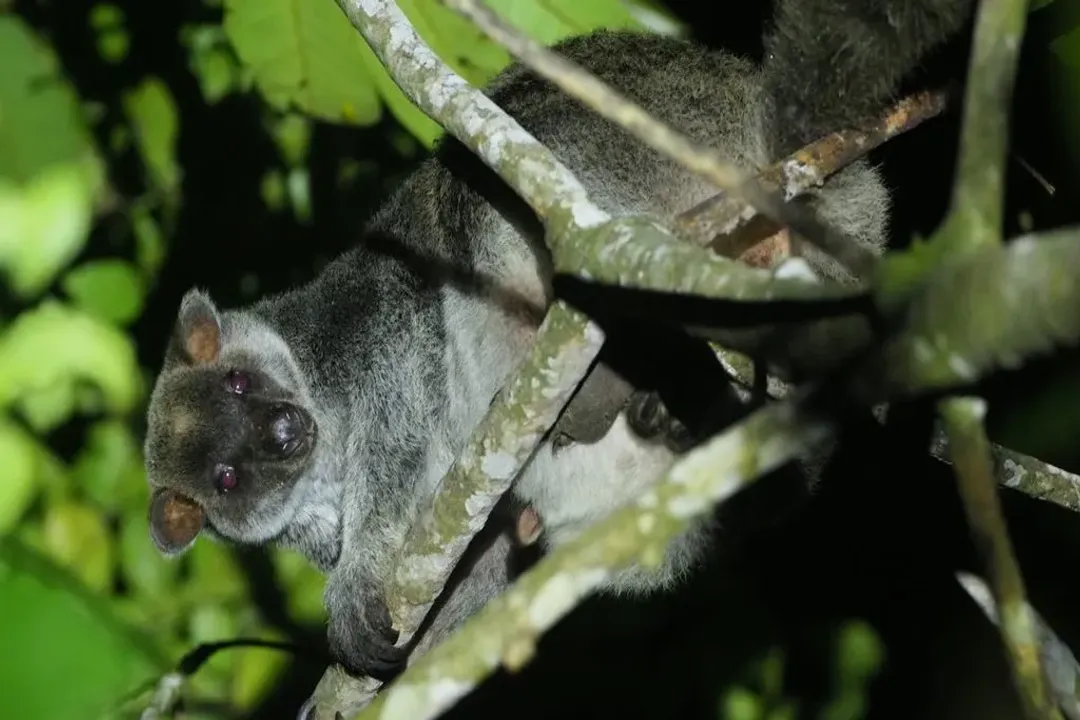
Like all kangaroos, tree-kangaroos are marsupials, meaning the females possess a pouch where their underdeveloped young, or "joey," complete their development after birth. [9] This mode of reproduction is a defining characteristic of this mammalian subclass. Furthermore, like all mammals, tree-kangaroos are warm-blooded, possess hair or fur for insulation, and nurse their young with milk produced by mammary glands. [1] These are the cornerstones of mammalian classification, firmly placing the tree-kangaroo within the group, specifically within the order Diprotodontia. [1] Their classification confirms their identity as mammals, yet their divergence from the classic macropod form highlights the plasticity of mammalian evolution. [1][7]
# Canopy Clues

The defining feature that sets the tree-kangaroo apart is its habitat and the physical modifications required to thrive there. While many species of kangaroos are specialized for hopping across open ground, tree-kangaroos have largely abandoned the bounding gait in favor of navigating the branches of tropical rainforests. [3] This change in environment necessitated radical shifts in anatomy. [1]
One key difference lies in their limbs and posture. Terrestrial kangaroos rely on powerful hind legs for propulsion and use their forelimbs for grasping and balance; tree-kangaroos, conversely, have forelimbs that are relatively longer and stronger than those of their ground-dwelling relatives, making them more adept at climbing. [1][3] Their feet have evolved too; they possess broader soles and sharper, curved claws perfect for gripping bark. [1][8] Perhaps the most visually obvious adaptation is the tail. Where a terrestrial kangaroo's tail acts as a counterbalance for hopping, the tree-kangaroo's tail is long, thick, and muscular, serving as a crucial stabilizing rudder while moving through the branches. [1][3] They can even rotate their hind ankles to grip branches effectively, a capability largely absent in ground kangaroos. [1]
Considering the mechanics of climbing versus bounding, one might observe that the power-to-weight ratio required for a sudden, forceful leap across open ground differs significantly from the sustained grip strength needed to ascend a slick, wet trunk in dense canopy. The muscular development in the forequarters and the increased prehensile capacity of the hind feet represent a trade-off, favoring arboreal maneuverability over terrestrial speed. [8] This evolutionary divergence within a single family is quite remarkable.
# Species Diversity

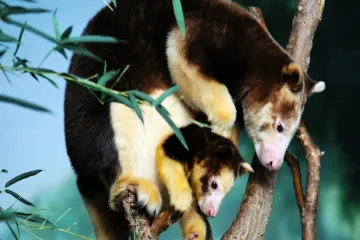
The tree-kangaroo group is not a single entity but comprises several distinct species spread across a limited geographic range in northeastern Australia and the island of New Guinea. [7][1] There are generally considered to be 12 species, though taxonomy can sometimes vary slightly depending on the authority consulted. [6][1] The distribution is fascinating, with a significant split: some species reside in Australia, while the majority are found in the rainforests of Papua New Guinea (PNG). [7]
For instance, the Matschie's tree-kangaroo, often highlighted for its vibrant orange coloration, is endemic to a small, restricted area in the Huon Peninsula of PNG. [8][7] In contrast, the Lumholtz's tree-kangaroo and the Bennett's tree-kangaroo are the species most often associated with the higher-altitude rainforests of Queensland, Australia. [7][1] This geographic separation means that while they share the "tree-kangaroo" moniker and the fundamental mammalian biology, local adaptations and specific ecological pressures have shaped each species differently. [1]
A comparison of their size also reveals variation within the group:
| Feature | Smaller Species (e.g., Pygmy/Goodfellow's) | Larger Species (e.g., Bennett's) |
|---|---|---|
| Weight Range (Approx.) | 5 - 10 kg | Up to 15 kg or more |
| Primary Habitat | Varied forest levels | Often higher canopy |
| Distribution Focus | More New Guinea specific | Stronger Australian representation |
| Tail Function | Balance and braking | Balance and braking |
This inherent diversity suggests that the "tree-kangaroo" is a successful adaptation to an arboreal niche, not a single, monolithic creature. [6]
# Habitat Dependence
Tree-kangaroos spend the vast majority of their time in the treetops, sometimes descending to the forest floor only briefly to move between feeding areas or individuals. [3] Their diet consists mainly of leaves, fruits, flowers, and bark, which they forage from the canopy. [2][3] This dependence on the forest structure places them in a precarious position when that structure is threatened. [2]
Their primary homes are wet tropical and subtropical forests. [2] The health of these dense, often high-altitude environments is directly linked to the survival of the animals living within them. [3] The ability to navigate the complex three-dimensional space of a rainforest—leaping between branches that may be several meters apart—requires exceptional agility and spatial awareness. [1]
# Facing Threats
Despite being biologically well-equipped for their environment, tree-kangaroos face severe challenges to their existence, making many species threatened or endangered. [2][5] Their classification as mammals does not grant them immunity from habitat loss, which is the overarching danger. [2]
Major threats include:
- Deforestation: Logging, agricultural expansion, and human settlement lead to the fragmentation and destruction of their forest homes. [2][5] When forests are cleared, the remaining patches may be too small or too isolated to support viable populations. [5]
- Hunting: In some areas, particularly in New Guinea, tree-kangaroos are hunted for bushmeat. [2]
- Disease and Predation: While natural predators exist, increased interaction with domestic animals or altered environments can sometimes increase vulnerability to new diseases or non-native predators. [5]
Conservation efforts often require specific, localized strategies due to the distinct locations of the species. For instance, addressing threats in the geographically isolated pockets of PNG rainforest requires different national and community-level engagement than efforts focused on protected areas in Queensland, Australia. [7] It underscores that understanding their mammalian biology is only half the story; ecological survival depends on preserving the context in which that biology evolved.
# Conclusion
Tree-kangaroos are unequivocally mammals, possessing fur, suckling their young, and retaining their marsupial pouch for early development. [1][9] Their significance lies not just in confirming their place within the mammalian class, but in demonstrating how adaptable that class can be. They represent a highly specialized branch of the macropod family that successfully filled an arboreal niche, evolving unique physical tools—from clawed feet to balancing tails—to thrive high above the ground. [3][8] Their story serves as a powerful reminder that even common family traits, like those shared by all mammals, can be radically reshaped by ecological pressure, turning a ground-dweller's blueprint into a canopy acrobat. [1]
Related Questions
#Citations
Tree-kangaroo - Wikipedia
Tree Kangaroo | World Wildlife Fund
Meet the Kangaroos That Live in Trees - Cool Green Science
Tree kangaroo facts and characteristics - Facebook
Tree Kangaroos: Facts, Habitat, Threats, & Conservation | IFAW
All tree kangaroo species : r/australianwildlife - Reddit
Tree-kangaroo overview
Matschie's Tree Kangaroo | San Diego Zoo Animals & Plants
Tree Kangaroo Facts For Kids | AstroSafe Search - DIY.ORG