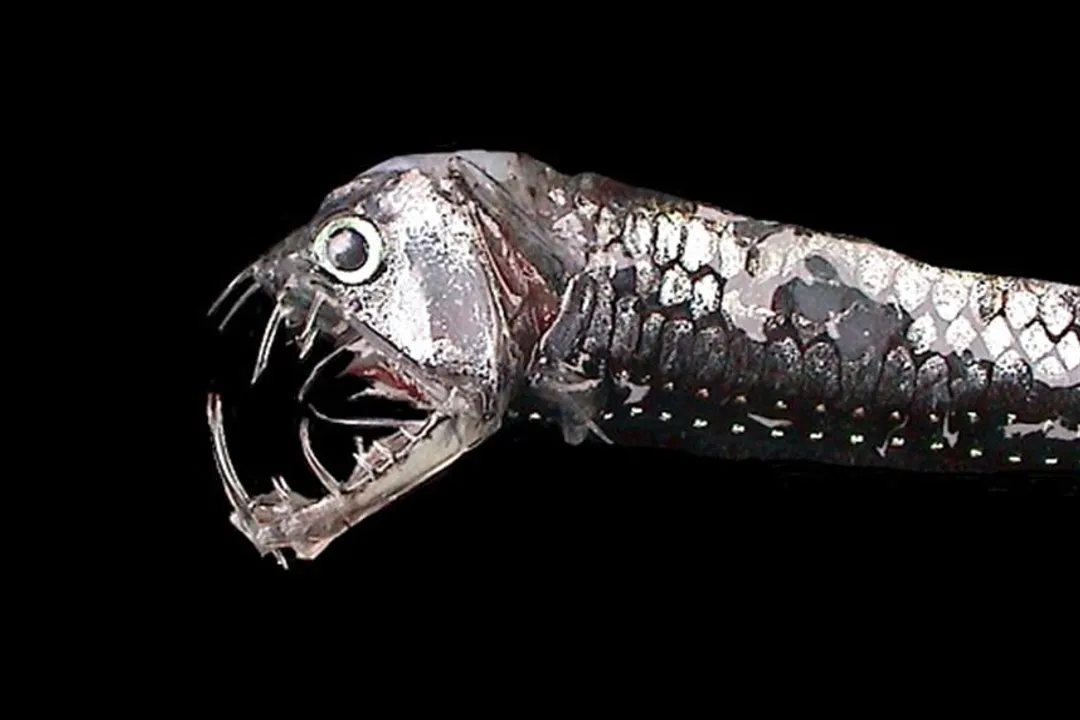
What is the primary evolutionary purpose of the hinged teeth in viperfish?
Answer
To allow the mouth to open wide and engulf large prey without obstruction
The hinged or depressible nature of the teeth is critical for the viperfish. It allows the jaws to open wide enough to capture prey that is often larger than the fish itself. The hinges prevent the long, needle-like teeth from getting stuck or breaking against the predator's own skull or the prey when the mouth closes.
Related Questions
Which two specific viperfish species are explicitly identified in the documentation?What primary hunting strategy do viperfish utilize to capture prey?What is the primary evolutionary purpose of the hinged teeth in viperfish?What are the two main food sources for viperfish in the deep ocean?What is a major advantage of the viperfish jaw structure regarding prey size?In which specific ocean zones do viperfish typically dwell?How do the long fangs of a viperfish position themselves when the mouth is closed?Which ecological role does the viperfish occupy in the deep-sea food web?Why do viperfish avoid engaging in prolonged, high-speed chases?How does the viperfish feeding behavior adapt to the scarcity of food?