Viperfish Diet
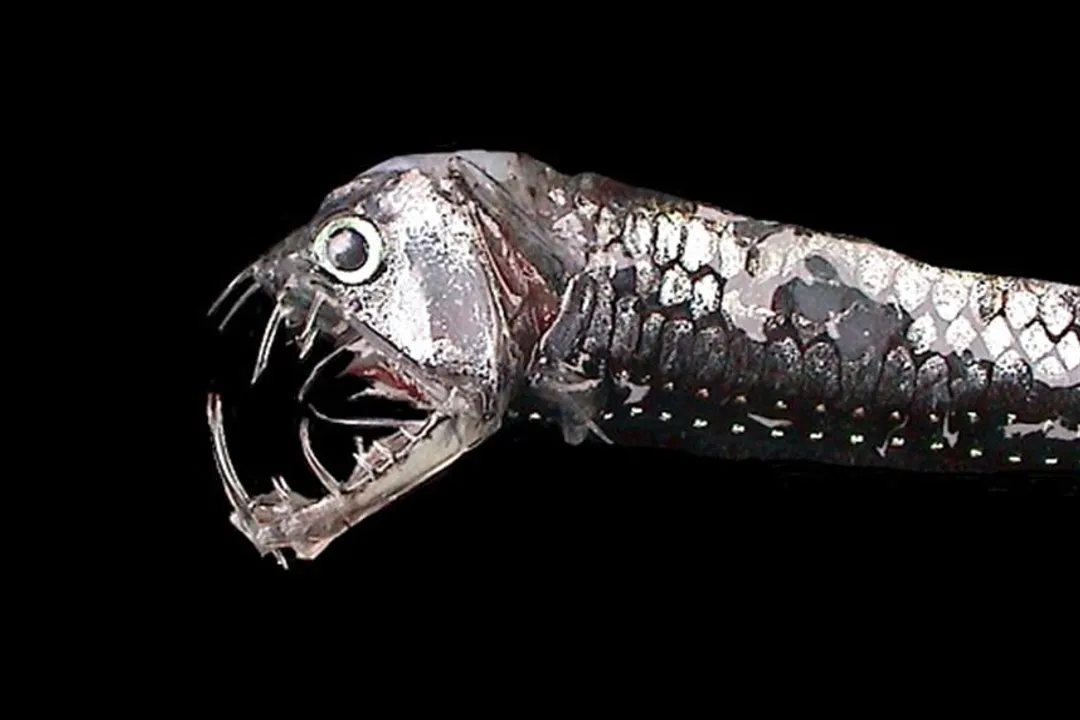
The deep ocean, a realm of perpetual darkness, hosts creatures adapted to an existence far removed from the sunlit surface, and among them, the viperfish stands out as a fearsome, albeit small, predator. Whether observing Sloane’s Viperfish (Chauliodus sloani) or the Pacific Viperfish (Chauliodus pacificus), the fundamental aspect of their lives revolves around securing scarce meals in the vast, cold abyss. [1][5][7] These fish are masters of surviving in the mesopelagic and bathypelagic zones, where food is a rare commodity, shaping every aspect of their feeding ecology. [1][5][7][9]
# Deep Sea Fare
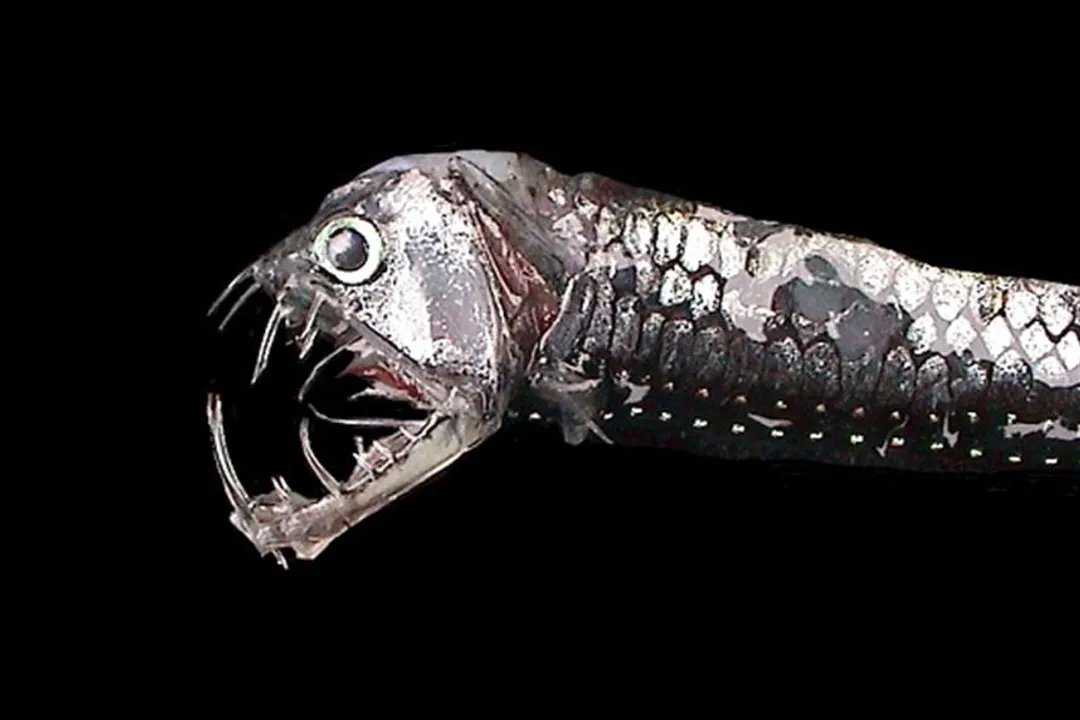
The diet for viperfish species, including both the well-studied Sloane’s variety and the Pacific one, centers predominantly on readily available, smaller organisms found within the water column. [1][2][4][5][7] The primary components of their intake consist of small fish and various crustaceans, such as shrimp-like species. [1][2][4][5][7][10] These prey items represent the most common living matter drifting through their midnight habitat. [6]
While the general description points to small fish and crustaceans, the specific ecological niche might cause slight variations between the two species mentioned. For example, the Pacific Viperfish is known to patrol depths where its target prey congregates, suggesting a diet heavily tailored to the specific faunal composition of the Eastern Pacific deep scattering layer. [2][4] Similarly, Sloane's Viperfish, found across broader regions, likely exhibits a slightly more generalized diet across the Atlantic and Indian Oceans, though the staple categories remain consistent: small fish and shrimp. [1][5][7] The key takeaway is that viperfish are not scavenging; they are active hunters targeting moving prey that is smaller than themselves. [7]
# Hunting Style
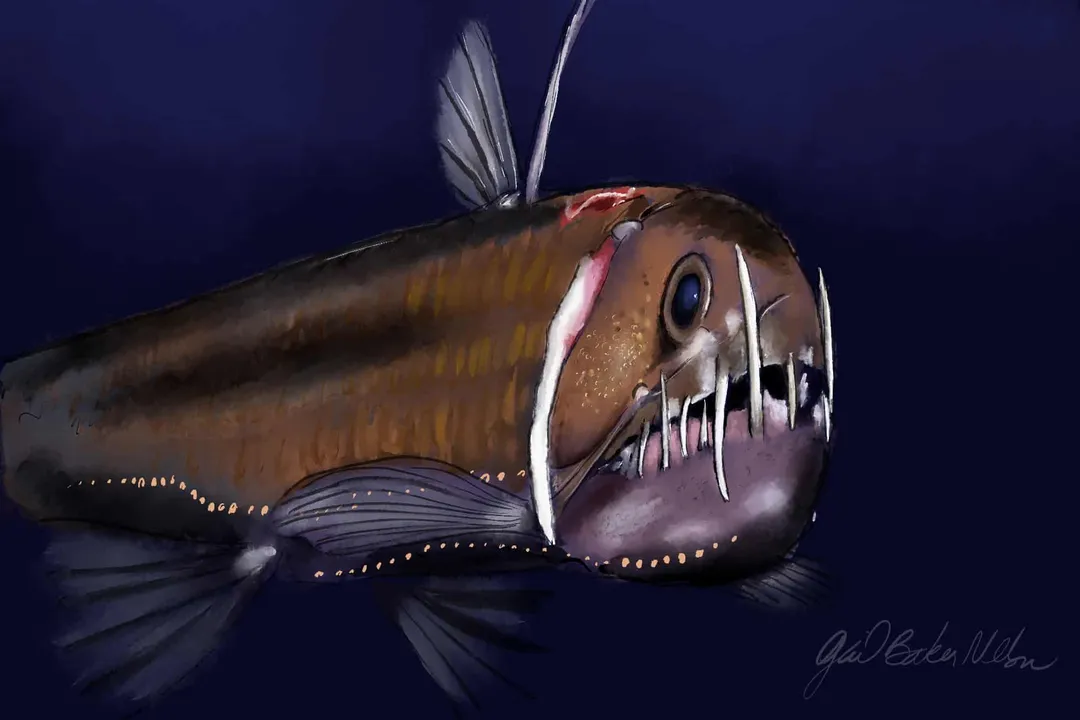
To secure a meal in an environment where energy expenditure must be minimal, the viperfish relies heavily on a strategy of patience and surprise. [5][7] They are characterized as ambush predators. [5][7] This method involves remaining relatively still in the water, often using the darkness as natural camouflage, and waiting for unsuspecting prey to wander within striking distance. [7]
This low-energy approach is essential because the deep ocean is not a place for prolonged, high-speed chases, which burn precious calories that are difficult to replenish. [5] Their lives depend on efficiently capitalizing on the few opportunities that arise. Unlike some surface predators that hunt in schools or aggressively pursue prey, the viperfish is the silent sentinel, trusting its specialized anatomy to close the gap quickly when the moment is right. [7]
# Jaws Mechanism
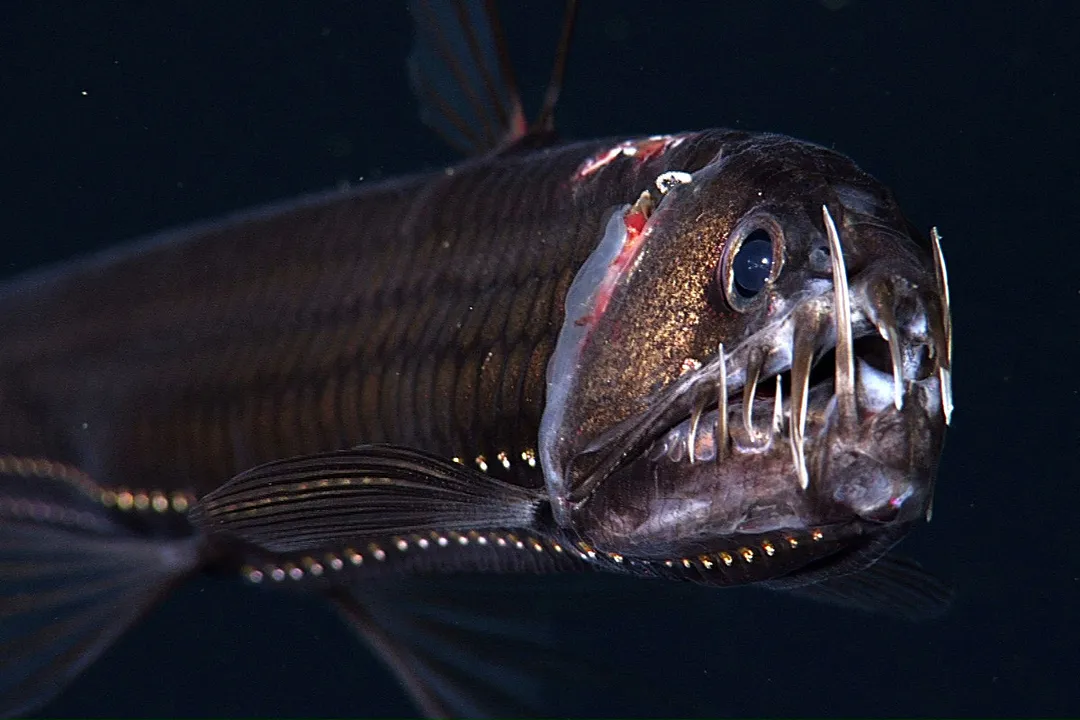
The true marvel of the viperfish's predatory capability lies in its extraordinary oral anatomy, which dictates what, and how much, it can consume. [1][4] Viperfish possess disproportionately large mouths relative to their body size. [1][2][4] Extending from this massive jaw structure are long, needle-like teeth that are perhaps their most iconic feature. [1][4][7]
These teeth are not merely large; they are specialized. They are described as being so long that when the jaw is closed, the fangs may actually rest outside of the mouth cavity itself, potentially hooking onto the roof of the mouth or skull area. [7] Crucially, these teeth are often hinged or depressible. [1] This hinging mechanism is vital because it allows the mouth to open extremely wide to engulf a target without the long teeth obstructing the closing motion or breaking off against the prey or the predator's own skull. [1][7] Once the prey is inside, the backward-pointing nature of the teeth ensures that escape is virtually impossible. [7]
# Prey Size Dynamics
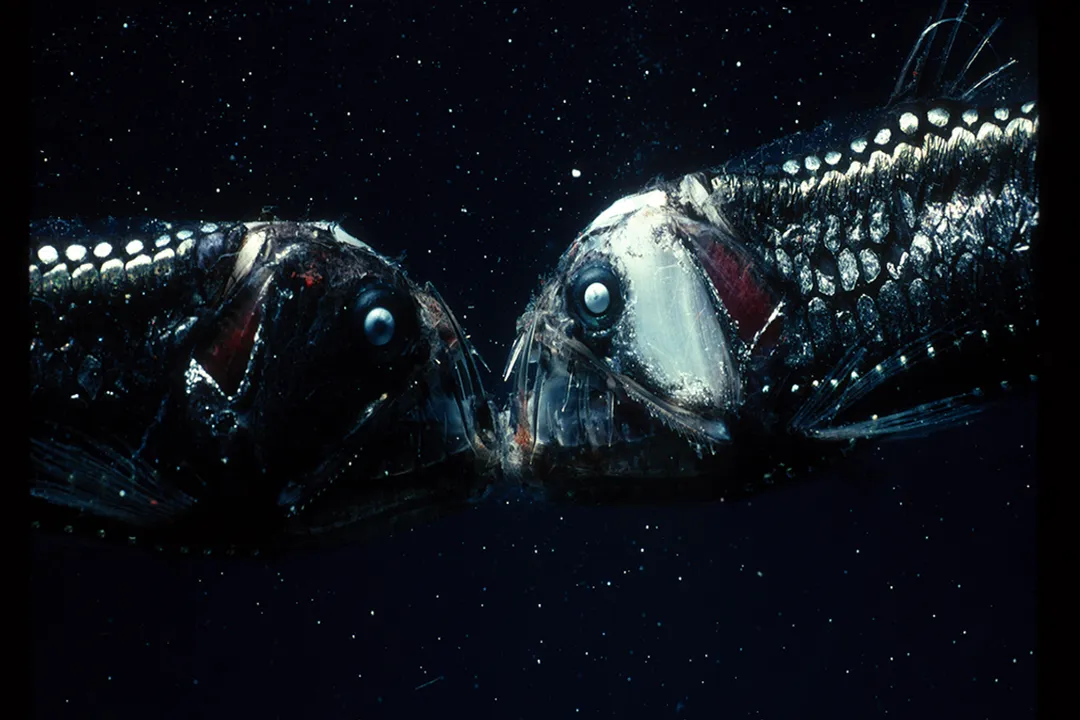
The remarkable jaw structure facilitates a feeding behavior that allows the viperfish to overcome the typical constraint of predator-prey size ratios. A significant insight into their success is their ability to consume prey items that are larger than themselves. [2][4] For a fish in the dimly lit mid-water zones, being able to secure a meal larger than average represents a massive caloric windfall, one that might sustain it for an extended period until the next successful hunt. [2][4]
Consider the energetic cost versus reward. In the sparsely populated deep ocean, an encounter with prey might be rare. If a small predator can only manage to eat things half its size, it might need ten such successful hunts to achieve the energy equivalent of one large meal. The viperfish, however, has engineered its body to gamble on fewer, higher-yield encounters. This suggests that their evolutionary pressure favored maximizing the intake of any viable, substantial target over increasing the frequency of small catches. This structural adaptation essentially turns every successful strike into a potential feast, a necessary buffer against the general scarcity of the environment. [5][7]
# Ecosystem Role
The viperfish, spanning species like C. sloani and the Pacific variant, occupies an important middle ground in the deep-sea food web. [3][6] They are neither the apex predators nor the primary consumers; rather, they function as secondary consumers, converting the energy stored in smaller crustaceans and fish into biomass that can potentially be accessed by larger predators dwelling deeper or migrating vertically. [6]
The fact that they actively consume small fish means they are participating in the transfer of energy up the food chain in the dark zone. [7] Although viperfish themselves are subject to predation—perhaps by larger deep-sea sharks or larger predatory fish—their efficient, massive-gaped feeding style ensures they remain a vital link in the deep ocean's cycling of biomass. Their presence, and their dietary habits, help structure the population dynamics of smaller, more numerous invertebrates and fish in their environment. [3][6] While they do not inhabit the very deepest trenches, inhabiting the twilight and midnight zones means their feeding activities directly impact the vertical distribution of nutrients within the water column before that biomass eventually sinks to the seafloor. [1][5]
Related Questions
#Citations
Creature Feature: Sloane's Viperfish - The Ocean Twilight Zone
Pacific viperfish - Wikipedia
Pacific viperfish | Animals - Monterey Bay Aquarium
Pacific viperfish - MBARI
Creature Feature: Sloane's Viperfish
SCIplanet - Monsters of the Ocean: The Grotesque Pacific Viperfish
Chauliodus sloani (Manylight viperfish) - Animal Diversity Web
Viperfish Fish Facts - Chauliodus sp. - A-Z Animals
Viperfish - A to Z of Oz Marine Life
Pacific viperfish - Facts, Diet, Habitat & Pictures on Animalia.bio