What is the evolutionary significance attributed to the size of the camel spider's chelicerae?
Answer
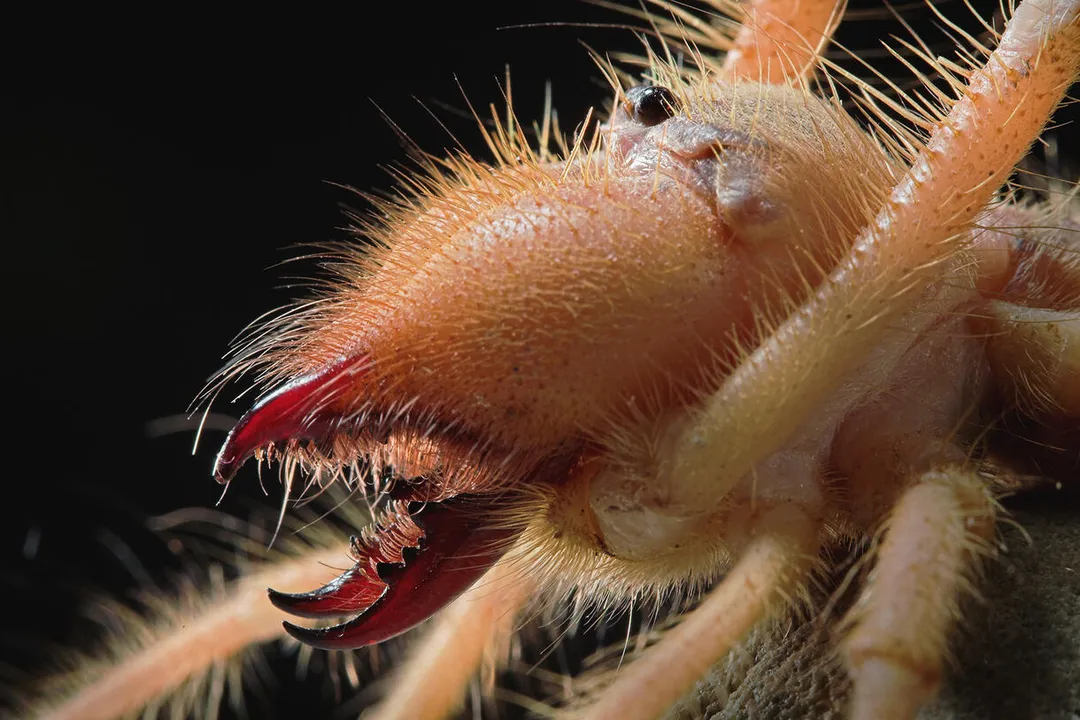
They are the largest proportional to body size among all animals possessing these specialized mouthparts
The chelicerae of the camel spider are noted for their exceptional relative size, being larger in proportion to the rest of the prosoma than those found in other animals that possess this mouthpart, like horseshoe crabs.
Related Questions
What is the primary function of the massive chelicerae in camel spiders?Which defining anatomical feature, present in scorpions, is explicitly absent in camel spiders?What feature distinguishes true spiders (Order Araneae) from camel spiders (Order Solifugae) regarding body connection?How do camel spiders process their solid food prey after capturing it?What is the anatomical basis for the camel spider's inability to produce silk?What is the primary role of the foremost pair of legs in a camel spider?What sensory organs found on the underside of a solifuge's hind legs are considered analogues to structures found in scorpions?What is the evolutionary significance attributed to the size of the camel spider's chelicerae?If a person hears a clicking sound associated with camel spider aggression, what is this sound called?What does the Latin translation of the order name, Solifugae, accurately describe about the creature's behavior?