What environmental condition characterized the seas where Xiphactinus thrived and required substantial prey?
Answer
Warm, shallow seas
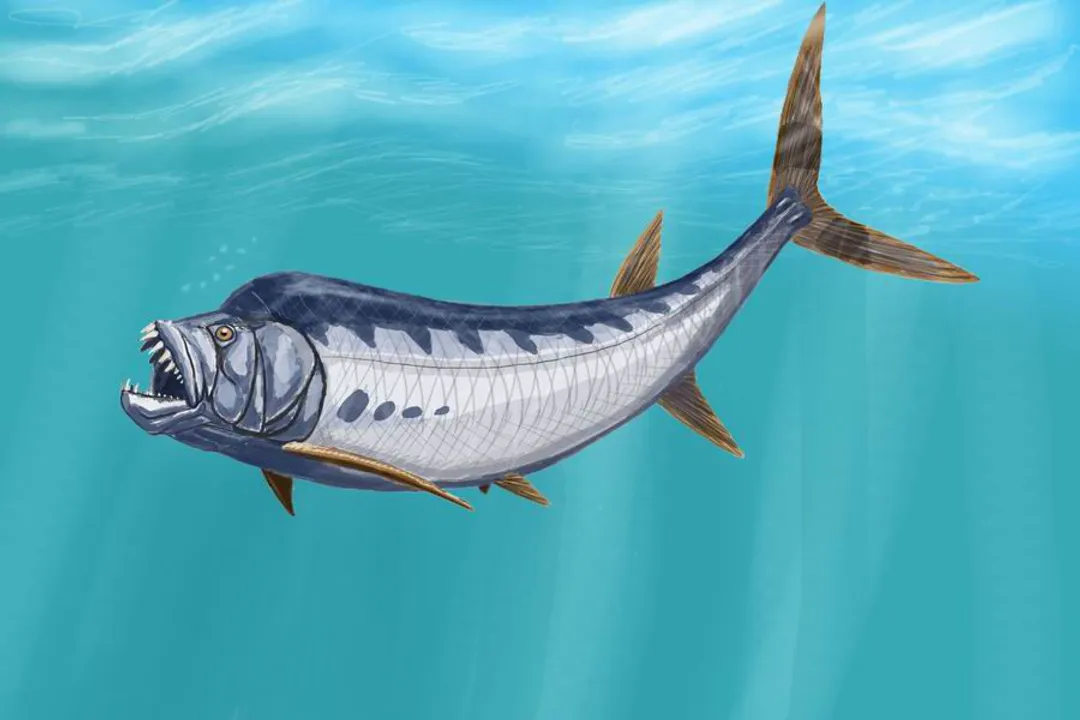
The environment supporting such a gigantic predator was characterized by specific thermal and depth conditions prevalent during the Late Cretaceous period. The text specifies that Xiphactinus thrived in the warm, shallow seas of that time. This type of habitat typically supported the abundant marine ecosystem required to sustain the substantial dietary needs of a fish reaching the magnitude of Xiphactinus, allowing it access to sizable prey species.
Related Questions
What type of massive predator was Xiphactinus in terms of skeletal classification?Which common victim appears frequently cited as a favored meal for Xiphactinus?How large was the specific Gillicus found inside the Xiphactinus specimen relative to the predator?What consistent fossil evidence defines the dramatic method of consumption utilized by Xiphactinus?What feeding capability did Xiphactinus demonstrate regarding prey size compared to its own head?What was Xiphactinus's ecological status among predatory Osteichthyes in its environment?What crucial detail is noted about the contemporary fish Ichthyodectes and Protosphyraena?To which modern ecological roles is the feeding strategy of Xiphactinus sometimes analogized?What environmental condition characterized the seas where Xiphactinus thrived and required substantial prey?What characteristic suggests Xiphactinus had a highly specialized oral structure for consumption?