Xiphactinus Diet
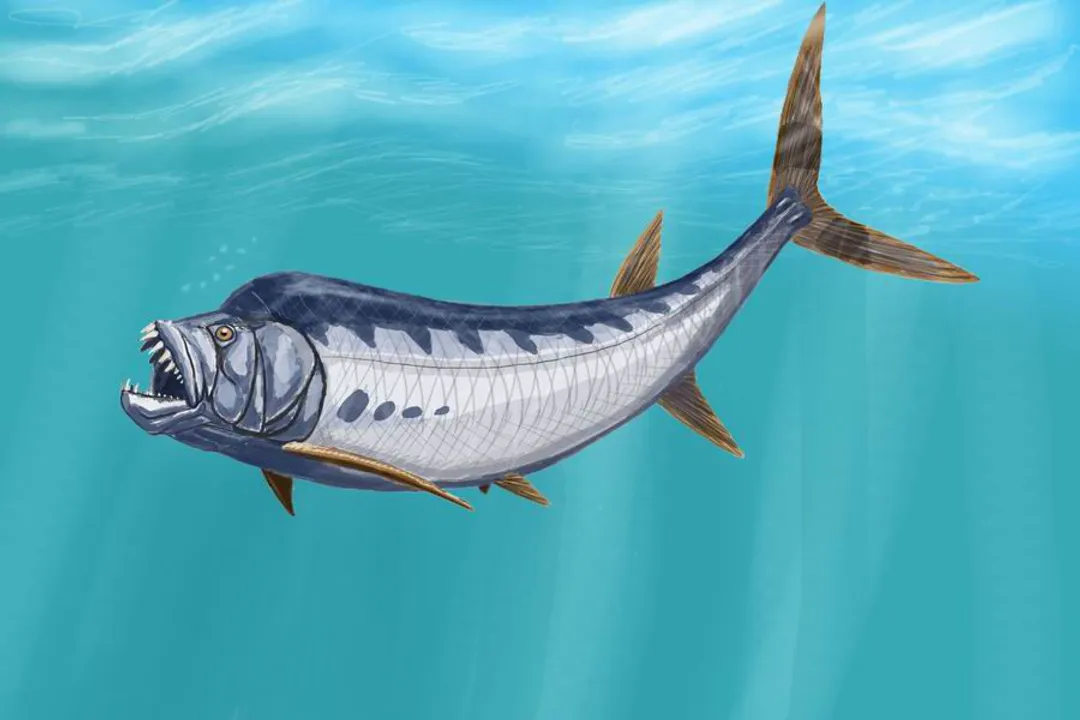
The world of the Late Cretaceous seas held giants, but few were as dramatically fierce as Xiphactinus. This massive, predatory bony fish occupied the apex slot in its environment, a true titan of the ancient oceans. Understanding what fueled such a large creature requires delving into the hard evidence left behind in the rock record, particularly concerning its choice of meals.
# Apex Hunter Status
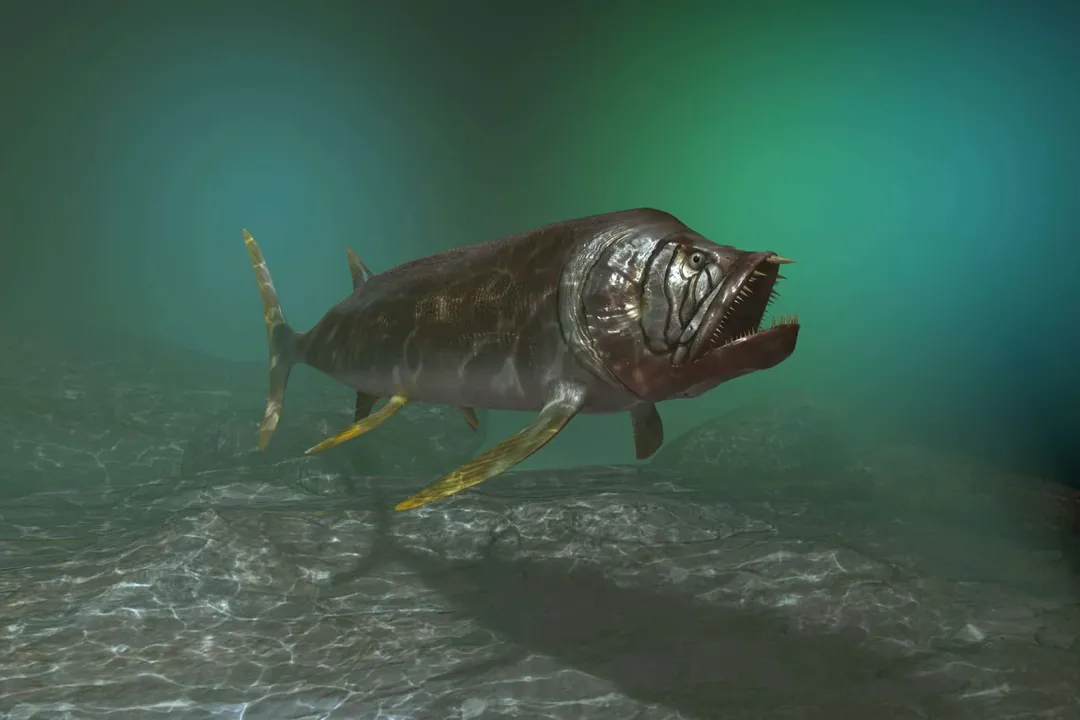
Xiphactinus was unequivocally a carnivore. Its anatomy, large size, and fossilized gut contents point to a lifestyle centered entirely around consuming other marine life. Its existence implies a marine ecosystem abundant enough to support a fish of this magnitude, thriving in the warm, shallow seas prevalent during its time. The sheer scale of this animal meant that its dietary needs would have been substantial, necessitating the pursuit and capture of sizable prey on a regular basis.
# Known Food Sources
The menu for Xiphactinus appears to have been exclusively piscivorous, focusing on other substantial fish species that swam alongside it. Paleontologists have been able to identify several common victims based on preserved stomach contents within Xiphactinus skeletons.
Two frequent targets cited in the fossil record are Protosphyraena and Ichthyodectes. Both were contemporary fish, meaning Xiphactinus wasn't scavenging but actively hunting within its peer group. Protosphyraena, in particular, seems to have been a favored meal, frequently mentioned in association with these large predators.
The most striking piece of evidence, however, involves a different genus: Gillicus. This provides a concrete example of the predator's feeding habits. One particularly famous specimen of Xiphactinus was recovered with the remains of a Gillicus still intact within its stomach cavity. This finding is invaluable because it allows for a size comparison that reveals the predatory capabilities of the hunter.
# Size Discrepancies
When comparing the predator to its final meal, the figures are astonishing. The Gillicus found inside the predator measured roughly one-third the total body length of the Xiphactinus itself. Even more impressively, reports suggest Xiphactinus was capable of swallowing prey that was larger than its own head. This demonstrates a feeding mechanism that didn't rely on tearing or dismembering food into manageable chunks before ingestion.
Considering the known size disparity between the prey species and the predator, one must pause to consider the biomechanics involved. A bony fish achieving such feats implies an incredible flexibility in its jaws and an ability to exert significant suction or engulfing force. Furthermore, to successfully swallow a struggling animal one-third its own size suggests that the process must have been rapid and final, preventing the prey from causing significant internal damage during the swallowing process itself. This points toward a hunting strategy that prioritized immediate incapacitation through sheer engulfment rather than a prolonged struggle, perhaps relying on the shock or sheer volume of water displacement to stun the victim.
# Feeding Mechanism
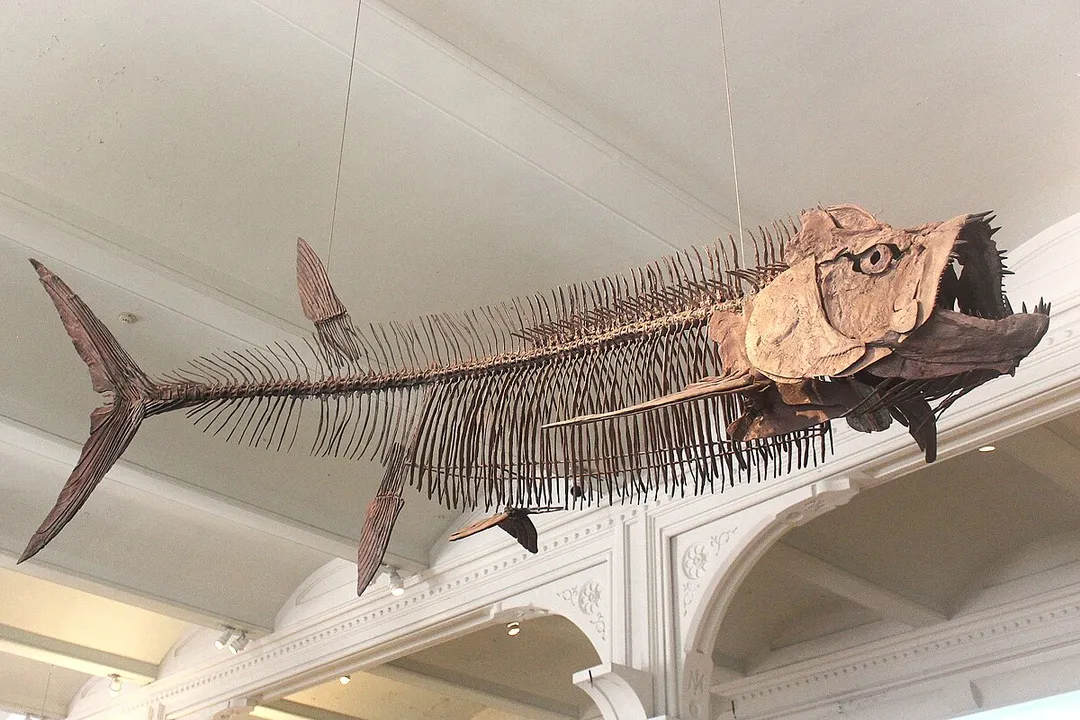
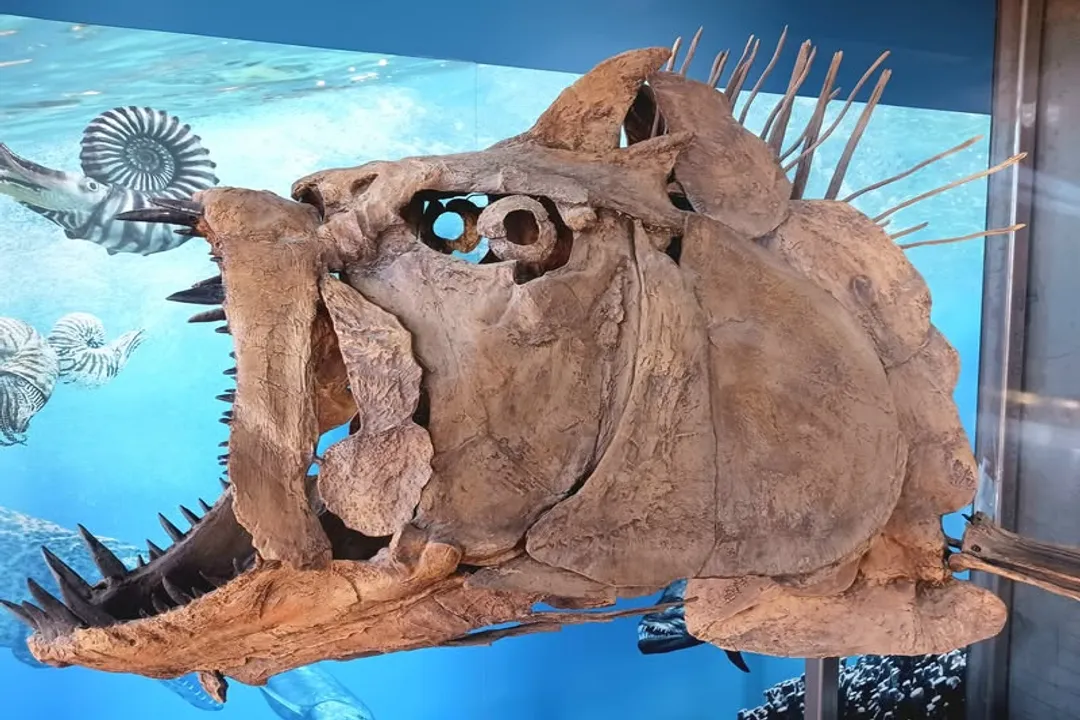
The consistent fossil evidence points toward a singular, dramatic method of consumption: Xiphactinus swallowed its prey whole. This is a defining characteristic of its diet and hunting style, contrasting with interpretations of how some contemporaneous sharks might have fed.
This habit is not merely an educated guess based on the fossil's gut contents; it reflects a feeding adaptation. For a fish of this scale to regularly consume other large, presumably bony fish without significant jaw disarticulation or evidence of crushing suggests a highly specialized oral structure built for maximum gape. In essence, the goal was a one-gulp kill.
If we map Xiphactinus onto modern marine ecology, it might occupy a role somewhat analogous to a modern large tuna or perhaps a specialized, extremely large pike, but with the added handicap of being a bony fish attempting to ingest material much bulkier than most bony fish manage. While modern bony fish often have limits on the size of prey they can consume due to skeletal rigidity compared to reptiles or sharks, Xiphactinus seems to have pushed those morphological boundaries in its Cretaceous domain. This suggests that while it was a bony fish, its skull structure had evolved specific traits to handle this specialized, large-prey diet, perhaps exhibiting a more kinetic skull system than its contemporaries.
# Ecological Niche
The diet of Xiphactinus places it firmly at the top of the local food pyramid within its habitat. In an ecosystem teeming with large marine reptiles, the fact that a bony fish achieved such a dominant predatory niche is noteworthy. While ichthyosaurs and mosasaurs occupied similar roles in other regions or slightly different niches, Xiphactinus represented the pinnacle of predatory Osteichthyes (bony fish) in its specific Late Cretaceous marine setting. Its success relied entirely on its ability to out-compete other large predators for high-calorie, sizable prey like Protosphyraena and Ichthyodectes. The continued discovery of fossils showing direct predation provides a clear, visceral link demonstrating that this fish was not just large, but actively dominant in securing the best resources available.
Related Questions
#Citations
Xiphactinus - Wikipedia
Xiphactinus | Walking With Wikis - Fandom
Xiphactinus audax - A-Z Animals
Xiphactinus | ARK: Survival Ascended & Evolved - Dododex
Several Xiphactinus skeletons are preserved with the fish Gillicus ...
Xiphactinus fossil exhibit in Big Bend National Park Texas - Facebook
Xiphactinus - Facts and Figures - ThoughtCo
Xiphactinus - ARK Official Community Wiki