What ecological role do yellowfin tuna fill in the pelagic food web by consuming vast quantities of smaller fish?
Answer
Exerting top-down pressure, acting as a natural regulator
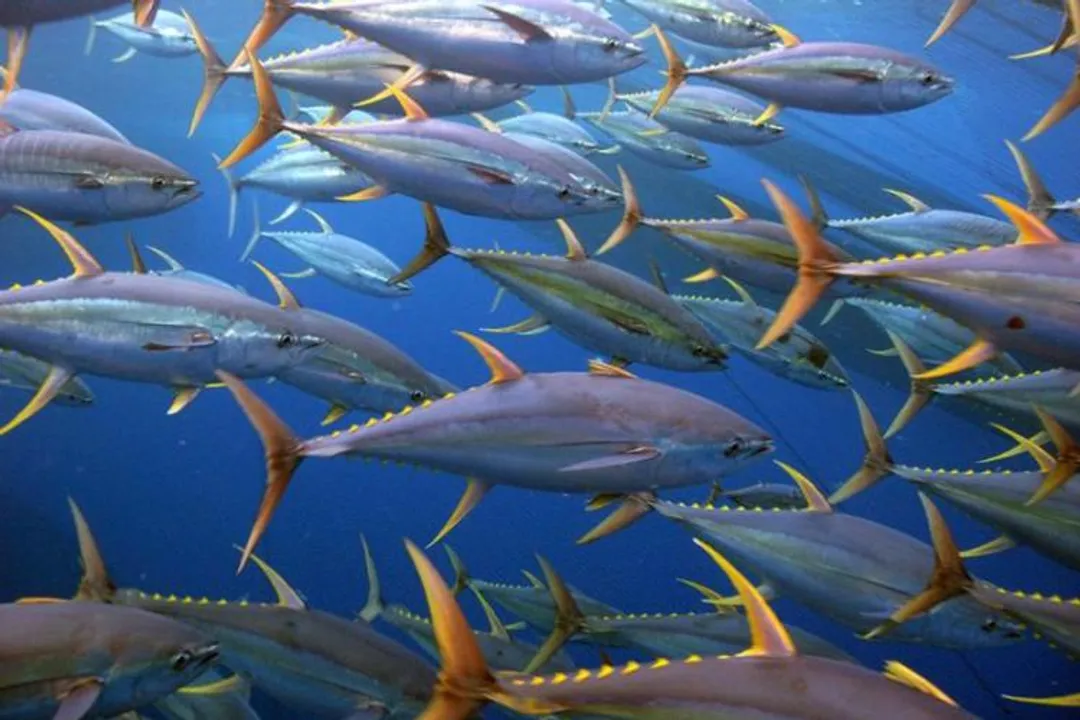
Occupying a high trophic level in the pelagic food web, the dietary habits of the yellowfin tuna have profound systemic effects. By consuming substantial amounts of forage fish and mid-level predators, they exert significant top-down ecological pressure. This action functions as a natural regulatory mechanism, helping to control the populations of the species immediately below them in the food chain within the extensive areas they inhabit. Furthermore, their abundance serves as an indicator of ecosystem health, as declines in their prey directly threaten yellowfin well-being.
Related Questions
What are the three major categories comprising the yellowfin tuna diet?Which food source contributes the majority volume in yellowfin stomach content analysis?What type of prey do smaller, juvenile yellowfin tuna primarily target?What is the primary factor necessitating a flexible menu for yellowfin tuna across their range?If a yellowfin tuna encounters a dense bait ball, what becomes its primary energy source?Besides mainstays, what specific small zooplankton were noted in the diet of yellowfin near Hawaiian waters?How does the diet of a growing yellowfin tuna change regarding prey size and energy return?Why must yellowfin tuna consume protein-rich animals according to their predatory nature?What survival mechanism involves yellowfin tuna associating with drifting objects like seaweed mats?What ecological role do yellowfin tuna fill in the pelagic food web by consuming vast quantities of smaller fish?