Regarding the wombat's slow digestive process necessary for breaking down tough cellulose, what is the approximate maximum transit time for food?
Answer
Up to two weeks
Wombats consume large quantities of tough, fibrous vegetation, such as grasses and roots, which require significant time and specialized microbial action in the gut to break down cellulose effectively. To facilitate this extensive digestion and maximize nutrient and moisture extraction, the food transit time is exceptionally slow. This process can take as long as two weeks for the material to pass completely through the digestive system, resulting in the final product being extremely dry.
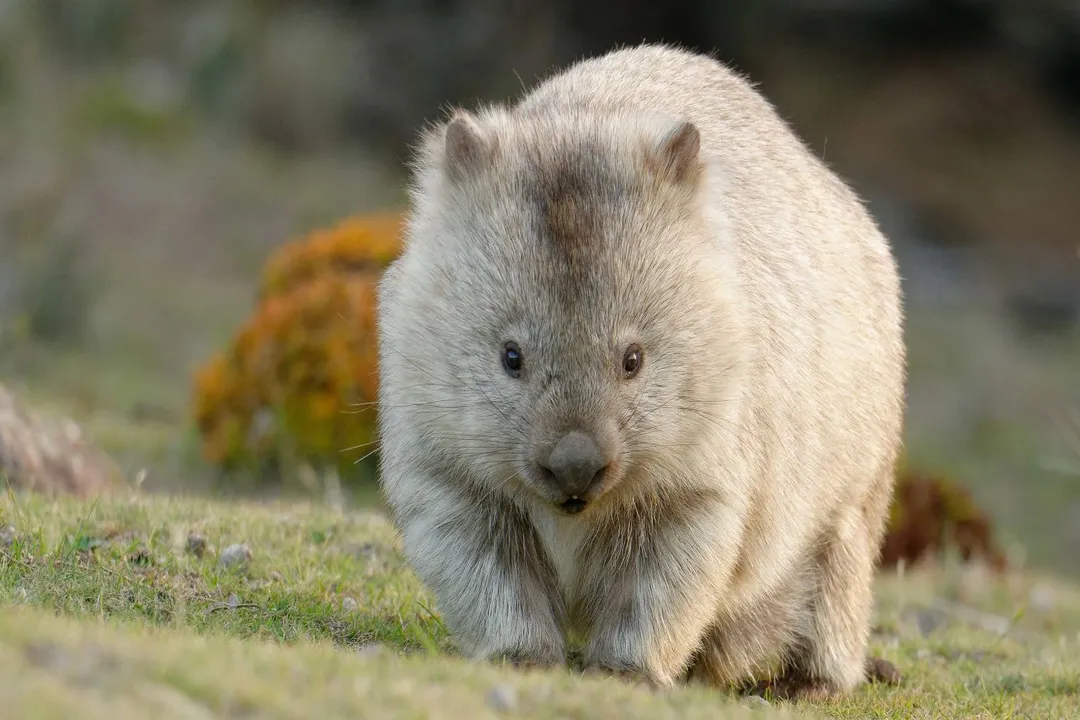
#Videos
Why is wombat poop cube-shaped? Researchers reveal its mystery.
Related Questions
What distinctive geometric form characterizes the scat produced by the common wombat?Where within the intestinal tract is the critical zone that forms the wombat's cubic feces?What specific feature of the lower colon walls results in the angular, faceted shape of the wombat's scat?What advantage does the cubic shape offer regarding the wombat's territorial markers placed on logs or rocks?On what types of prominent features do solitary wombats often deposit their dry, cubic droppings as territory markers?Which scientific body confirmed the physical mechanism causing the cubing effect by examining deceased wombats' intestines?While wombat feces are very dry due to slow transit time, what factor alone does not account for the unique cubic shape?Regarding the wombat's slow digestive process necessary for breaking down tough cellulose, what is the approximate maximum transit time for food?In terms of pure morphology, how are the fecal outputs of a deer described in contrast to the wombat's output?Are the resulting cube-shaped droppings entirely uniform in size across all deposits?