What does a midget faded rattlesnake look like?
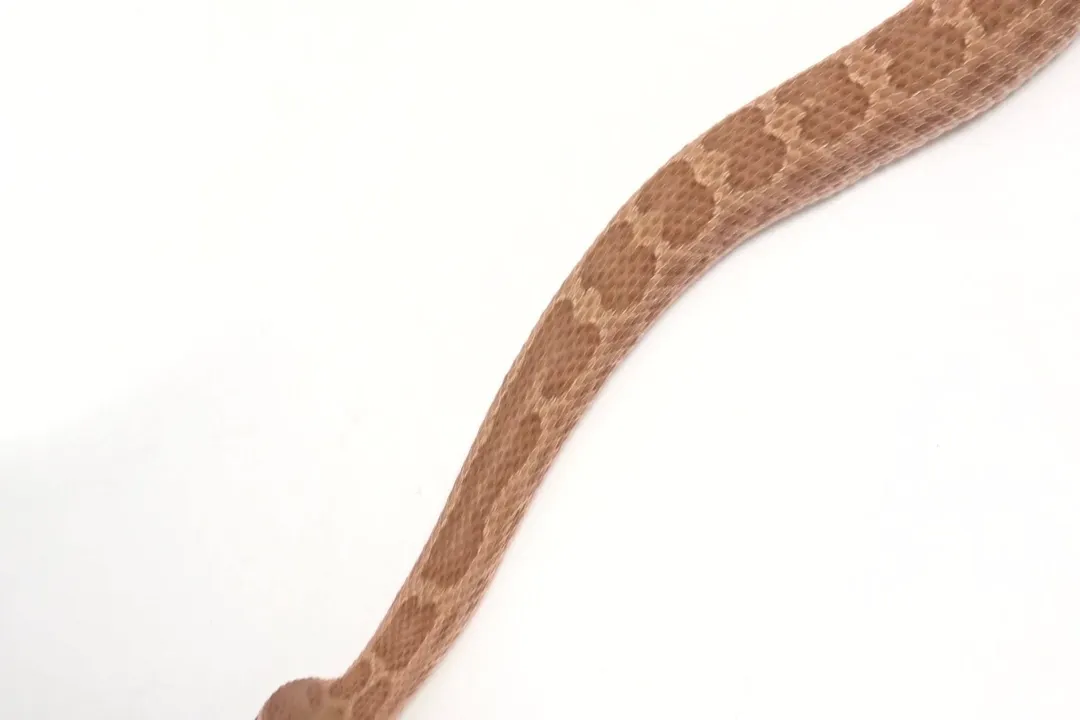
The visual identification of the Midget Faded Rattlesnake (Crotalus concolor) often centers on its name—a combination of its relatively small stature and its muted, subtle coloration across its range in the western United States. [1][2] Unlike some of its flashier relatives, this snake presents a masterclass in camouflage, making careful observation essential to notice its distinct characteristics. [3] The overall impression one gets when encountering a healthy specimen is one of uniformity rather than high contrast, though specific features do emerge upon closer inspection. [5]
# General Size Profile
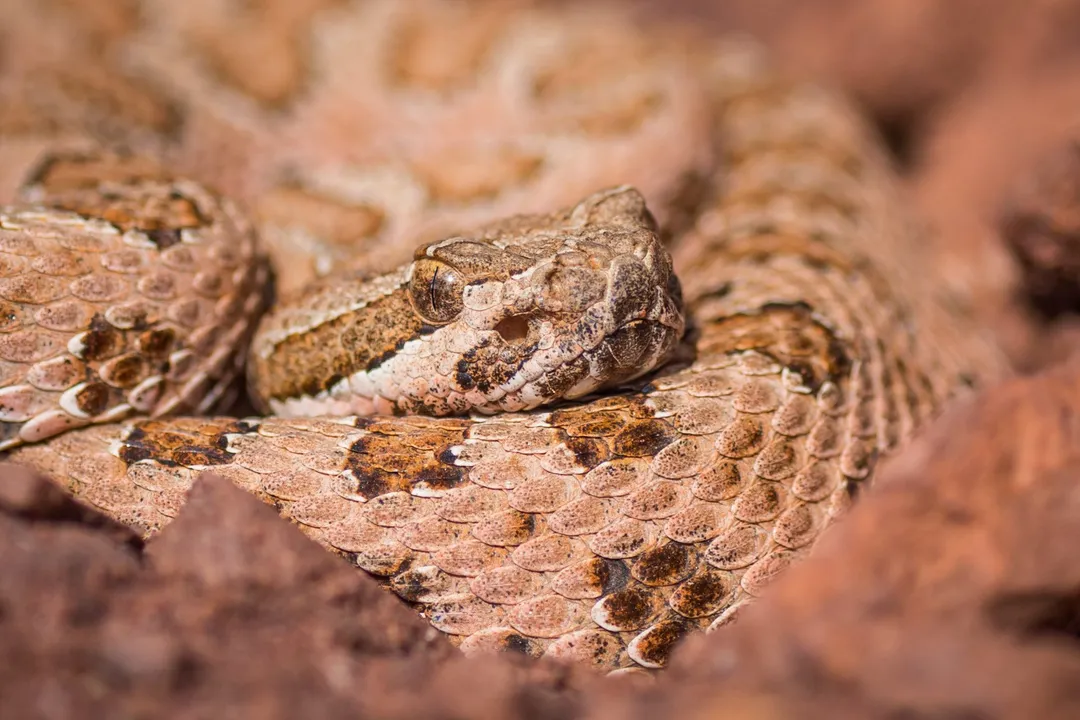
One of the most immediate descriptors for Crotalus concolor is its size, which generally places it among the smaller rattlesnakes in North America. [2][8] While precise maximum lengths can vary by region and source, an adult specimen is typically not excessively long, which contributes directly to the "midget" designation. [1][7] For those encountering a juvenile, the size difference is even more pronounced; hatchlings are quite small, sometimes only a few inches long, and possess patterns that may be more clearly demarcated than those seen in adults. [6][8] This reduced adult size means that when encountered in the field, particularly against a backdrop of rocks or desert floor, they can be easily overlooked unless they are actively moving or coiled in an exposed position. [4] It is important to remember that size alone is not a definitive identifier, as many young snakes of other species can appear small, but in combination with the coloring, it becomes a strong indicator. [2]
# The Faded Coloration
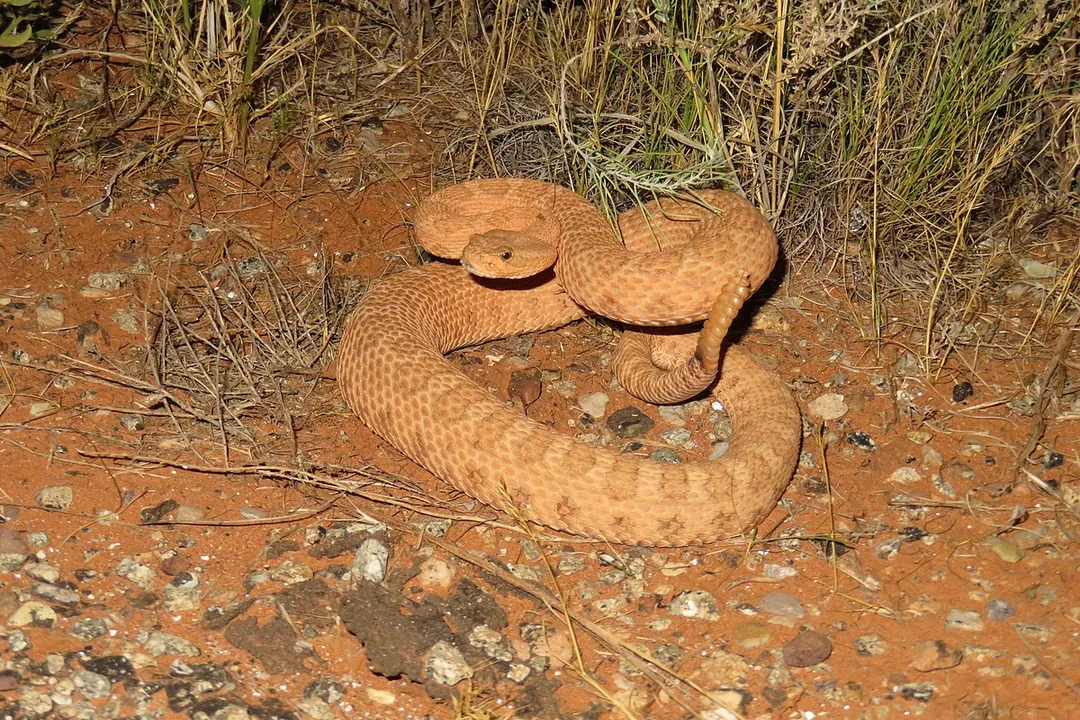
The descriptor faded speaks directly to the most prominent visual characteristic of this pit viper: its ground color. [1] The coloration is rarely vibrant or strongly saturated, instead reflecting the soil, sand, or rock upon which it lives. [3][7] This high degree of crypsis means that a snake found in the dusty, grayish regions of Utah might appear starkly different from one found near reddish sandstone formations in Arizona or Colorado. [3][7][9] Common background hues include light gray, tan, pale olive-brown, or yellowish tones. [1][3] This adaptability in base color is a survival advantage, yet it complicates identification for the untrained eye, as one snake may look tan while another of the same species a few miles away looks distinctly gray. [5]
A key point for observation, which might be easily missed if one only looks for the classic dark diamond pattern, is the lack of strong contrast. [1] If a snake has intensely black, sharp-edged blotches against a pale background, it is less likely to be a Midget Faded Rattlesnake and more likely another Crotalus species exhibiting less pattern reduction. [1] The fading effect is so pronounced that, from a distance, the snake can easily blend into the surrounding substrate, almost becoming a shadow or an extension of the ground itself. [5]
# Pattern Details
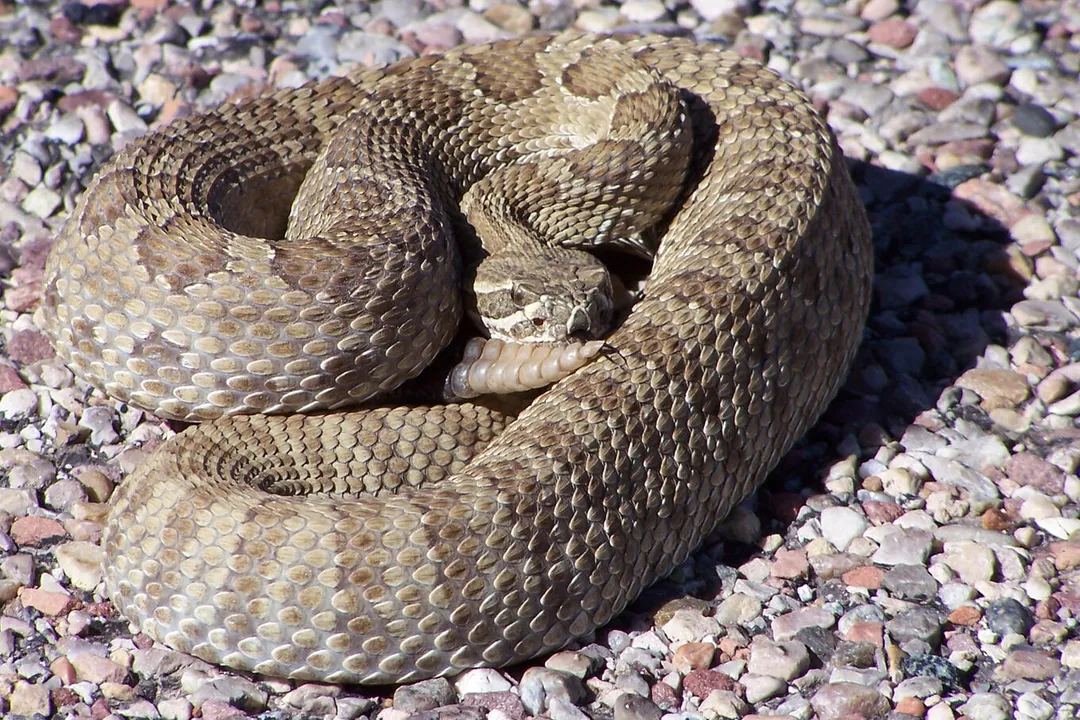
While the name suggests a lack of pattern, the Midget Faded Rattlesnake does possess dorsal markings, though they are often indistinct. [1][7] These markings usually take the form of somewhat irregular, dark brown or reddish-brown blotches or saddles that run down the center of the back. [1] The central blotches are typically wider than the dark spaces separating them, an important note when contrasting with some other species where the spaces are more dominant. [7]
The edges of these blotches are usually diffuse or smudged rather than sharply defined. [1] This blurring effect is what contributes most significantly to the overall "faded" appearance. [3] Instead of sharp black lines, you might observe a darker smudge or a slightly reddish hue that seems to bleed into the lighter ground color. [1][9] Along the sides, smaller, fainter spots may exist, often being less noticeable than the primary dorsal markings. [7]
When considering how local environments influence appearance, one can observe that in areas with significant vegetative cover or darker soil, the blotches might darken slightly to maintain the necessary camouflage contrast against the darker environment, demonstrating an expected plasticity in appearance beyond simple lightness or darkness. [3] For instance, a snake basking on dark shale might present a darker overall appearance than one on pale, sun-bleached sand, yet both retain the characteristic blurred edges of the blotches. [9]
# Head and Scales
The head structure is typical of a pit viper: distinctly triangular and broad relative to the neck, housing the heat-sensing pits located between the eye and the nostril. [1][8] While the head color generally follows the lighter ground color, there are often markings that can aid identification. A common feature, though sometimes faint, is a dark line or stripe that runs from the eye back toward the jaw angle. [7] This postocular stripe can sometimes be obscured by dust or by the snake’s overall muted tone. [1]
Examining the scales provides critical tactile and visual verification. The scales of the Midget Faded Rattlesnake are strongly keeled. [1] Keeled scales mean that each scale has a ridge running down its center, giving the snake a rough, non-glossy texture rather than a smooth, shiny appearance. [1] This texture further aids in breaking up the snake's outline in the rugged terrain it inhabits. Counting scales is often reserved for expert identification, but noting the rough, matte texture is a valuable field observation. [8]
# Distinguishing Juveniles
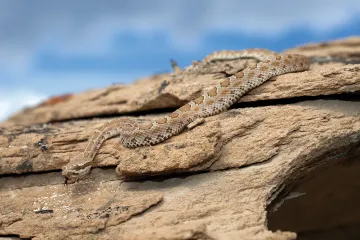
The appearance of a young Midget Faded Rattlesnake warrants special attention because juveniles often present a slightly different visual package than adults. [6] While they share the same general color palette—muted tans, grays, or browns—the darker dorsal markings tend to be more distinct and less faded in the very young snakes. [6][8] This heightened contrast in newborns and very small individuals is a common pattern among many rattlesnakes, perhaps serving as a temporary warning or camouflage mechanism before they fully acclimate to their specific, long-term microhabitat. [6] As they grow, the ground color seems to overtake the distinctness of the pattern elements, leading to the uniform, faded look of the adult. [1]
An interesting field observation involves the rattle itself. Because rattlesnakes add a new segment to the rattle with each shed, a very young snake will have a very small, thin rattle tip, often referred to as a "button" on its first shed, which looks quite different from the thicker, more substantial rattle found on a mature individual. [4] If a small snake is seen, the presence of this small rattle confirms it as a rattlesnake, but its diminutive size further supports the Crotalus concolor identification when combined with the faded coloration. [2]
# Analyzing Geographical Differences
The concept of "faded" is truly relative to the local environment, making it less a fixed color standard and more an indication of low contrast with the immediate surroundings. [3] In regions dominated by lighter, fine-grained sediment or limestone, the snakes will trend toward pale tan or light gray. [9] Conversely, in areas where they utilize darker volcanic rock or soil that retains moisture and appears darker, the base coloration will shift accordingly, sometimes appearing as a dull, brownish olive. [3]
This regional variation means that relying solely on a single color description found online can lead to misidentification. If you are in a known Midget Faded Rattlesnake habitat, the primary indicator is often the subtle, smeared nature of the blotches, rather than the exact shade of brown or gray. [7] To illustrate this point, imagine two visual scenarios: In a high desert area where the ground is pale, a specimen might be a pale, uniform tan with faint, slightly darker smudges barely visible. [9] In a slightly greener, more vegetated canyon edge in Colorado, the snake might be an overall olive-brown, with the dorsal blotches appearing as slightly darker, duller brown patches, still lacking the sharp outlines of a diamondback. [3] This persistent blurriness of pattern, regardless of the base shade, is arguably the most consistent visual clue across its known range. [1][7] Understanding this context allows a more accurate assessment in the field: is the pattern muted relative to its surroundings in a way characteristic of C. concolor, or is it just a uniformly dark snake? The former points toward this species.
This reliance on cryptic coloration underscores why responsible observation—keeping a safe distance and allowing the animal to remain undisturbed—is paramount. Trying to capture or heavily manipulate a specimen to confirm its color often just stresses the snake and obscures the very features that make it unique in its natural setting. [4] The appearance of the Midget Faded Rattlesnake is a testament to localized evolution, where blending in perfectly with the immediate geology is more critical than adhering to a textbook color swatch. [3]
# Summary of Distinguishing Visual Traits
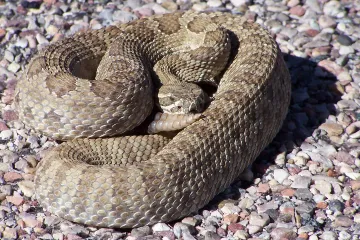
To effectively look for a Midget Faded Rattlesnake, one should synthesize the following visual markers, keeping in mind that no single trait is 100% definitive without context:
- Size: Generally smaller than other large rattlesnakes.
- Color: Muted, uniform ground color (tan, gray, olive) matching the substrate. [3]
- Pattern: Dorsal blotches present but faded, blurred, or smudged. [1]
- Scales: Rough texture due to prominent keels. [1]
- Head: Triangular shape with a possible faint postocular stripe. [7]
When evaluating a snake against these points, always prioritize the pattern quality (the blurriness) over the pattern color (the specific shade), as the latter is highly variable based on geography. [3][7] A snake that appears too boldly patterned or sharply contrasting across its body is likely a different species, even if its base color is similar. [1]
Related Questions
#Citations
Crotalus concolor - Wikipedia
Midget Faded Rattlesnake
Midget Faded Rattlesnake (Western ... - Colorado Parks and Wildlife
What distinguishes Great Basin rattlesnake from Midget Faded ...
Is this baby snake a midget faded rattlesnake?[Utah near Capitol Reef]
Midget Faded Rattlesnake - The Reptiles and Amphibians of Utah
Midget Faded Rattlesnake - Snake Snap
Midget Faded Rattlesnake - coparc