Regarding non-food items, what stage of the larder beetle is typically the primary agent of damage?
Answer
The larval stage.
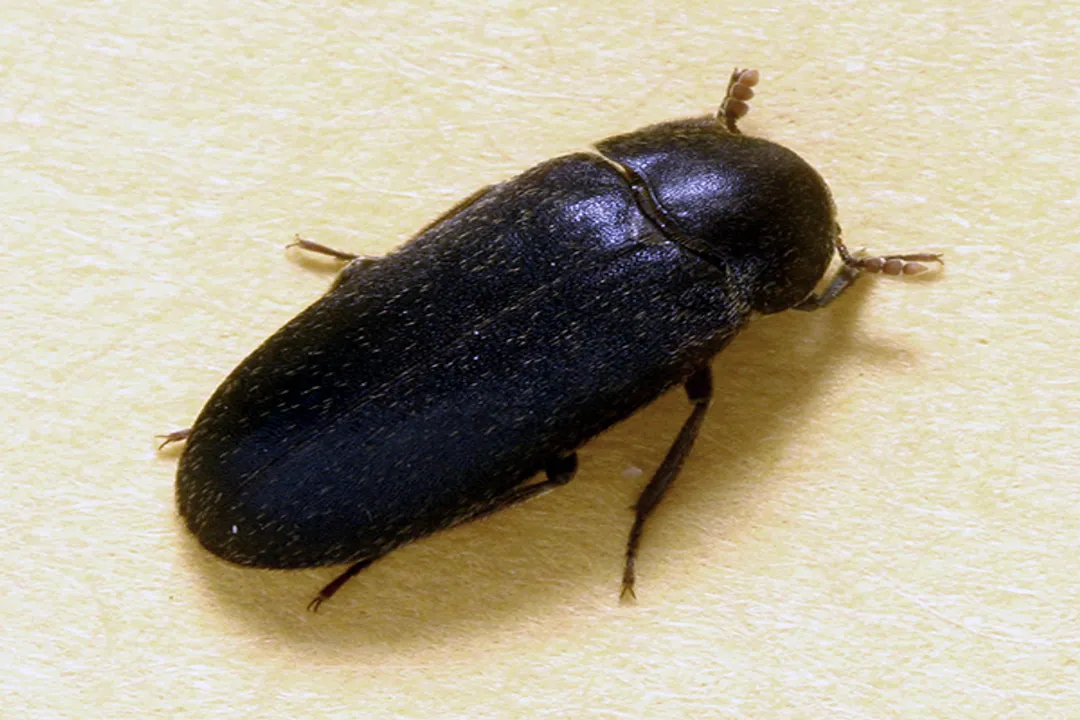
While both adults and larvae scavenge, the larvae are usually the primary agents causing damage when they feed on non-food materials, such as wood structures near where they intend to pupate.
Related Questions
What key trait differentiates the larder beetle from the sawtoothed grain beetle?What is the most reliable physical feature for identifying an adult larder beetle?What distinct anatomical feature characterizes larder beetle larvae?Which structural material containing animal protein might larder beetles consume?Where do larder beetle larvae seek to go before undergoing pupation?Besides flying adults, how can larder beetle eggs or larvae be introduced indoors?If adult larder beetles are found mainly near exterior windows and doors, what does this often indicate?What is the required immediate disposal procedure for heavily infested dry goods?What suggests the infestation source is animal debris within the structure rather than pantry food items?Regarding non-food items, what stage of the larder beetle is typically the primary agent of damage?What types of dried animal products do larder beetles readily consume when infesting a pantry?