How does blue wildebeest grazing affect Thomson’s gazelles?
Answer
Stimulating the regrowth of new-growth grasses
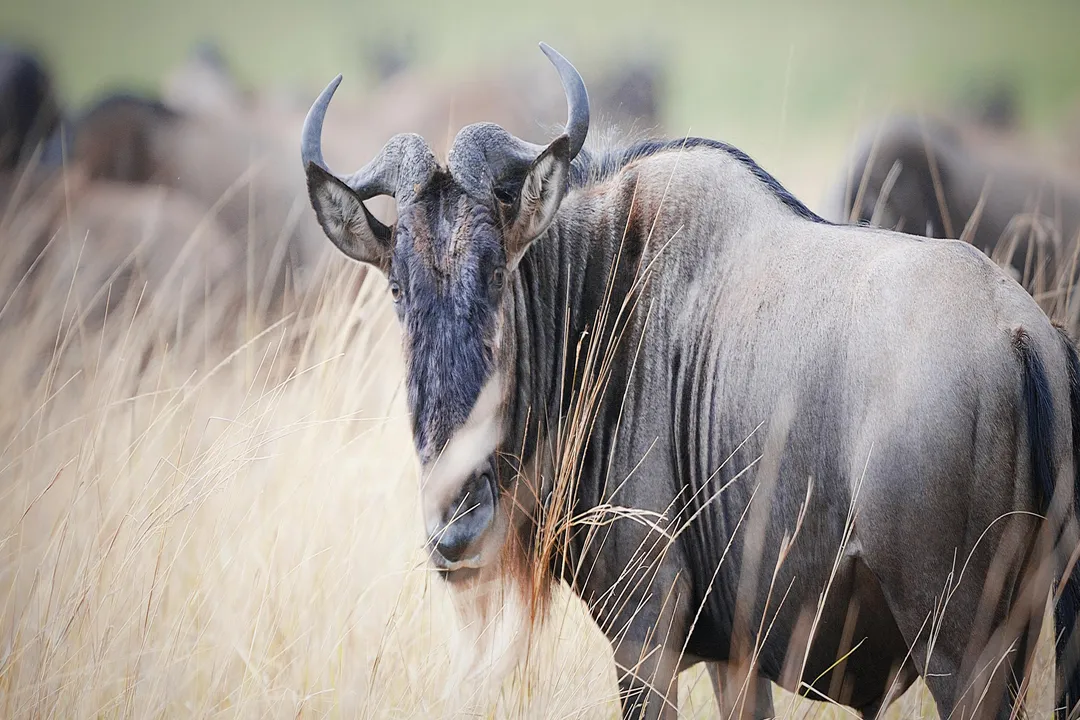
The grazing activities of the blue wildebeest serve as a necessary pruning mechanism for the savanna structure. By consuming the dominant grasses, their grazing actively facilitates the movement and feeding of smaller grazers, such as Thomson’s gazelles, by stimulating the regrowth of new-growth grasses immediately following the main herd's passage through an area. This ensures a continuous supply of fresh, nutrient-rich forage across the grassland.
Related Questions
What feeding category primarily defines the wildebeest's diet?What physical feature helps wildebeest crop dense, short grasses?Which species is *Connochaetes gnou*?What nutrient content do wildebeest actively select during the wet season?What mineral do pregnant and lactating female wildebeest require highly during the rainy season?How does blue wildebeest grazing affect Thomson’s gazelles?What is the combined daily grass consumption of both wildebeest species?What is the approximate grass consumption for an average blue wildebeest daily?What vital elements do migrating wildebeest carcasses contribute back to the land annually?Why are high-sugar, low-fiber cultivated fruits avoided for captive wildebeest?