Wildebeest Diet
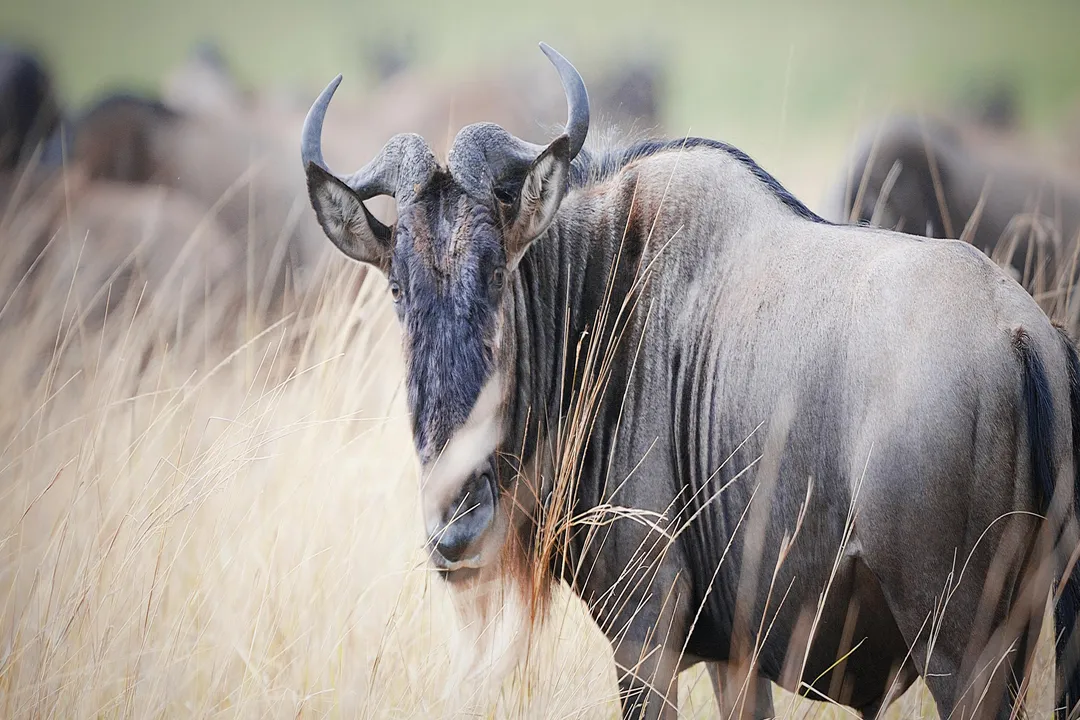
The wildebeest, often called the gnu, is defined by its relationship with the grass of the African savanna. As true herbivores, their existence is a constant search for suitable forage, a pursuit that drives the most famous terrestrial migration on Earth. The diet of these bovine-like antelopes centers almost entirely on grasses, making them specialized grazers whose feeding habits profoundly shape the ecosystems they inhabit across Eastern and Southern Africa.
# Grazer Identity
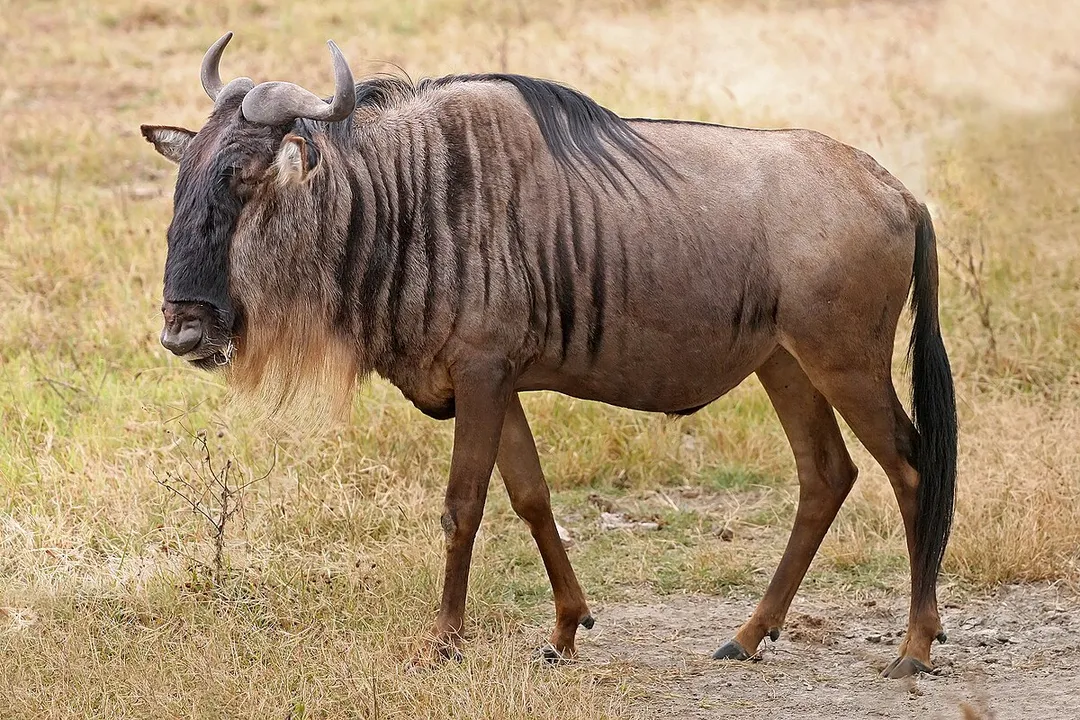
Wildebeests belong to the family Bovidae, but their feeding style sets them apart within the broader antelope group. They are categorized primarily as grazers, meaning their diet overwhelmingly consists of grasses rather than browsing on leaves and woody vegetation. This specialization is evident in their physical structure; they possess a blunt muzzle and a wide set of incisor teeth specifically adapted for cropping dense, short grasses close to the ground.
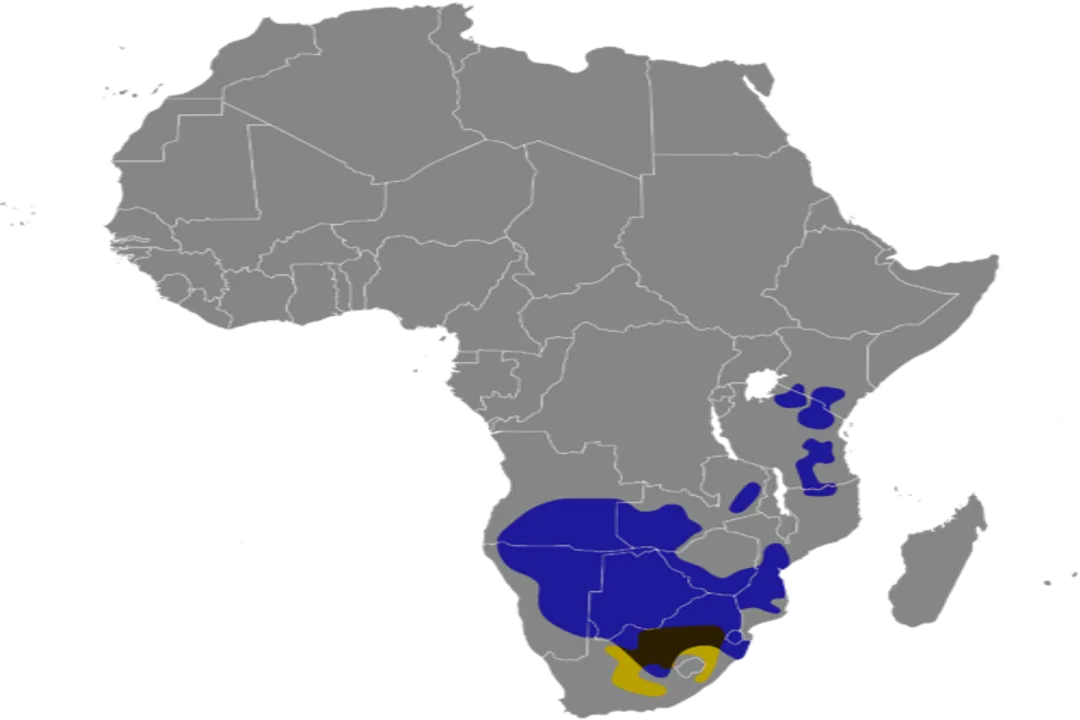
There are two main species: the blue wildebeest (Connochaetes taurinus), which includes the common and brindled races, and the black wildebeest (Connochaetes gnou). While both are grazers, their habitat preferences suggest subtle but important differences in their preferred forage quality and structure. The blue wildebeest thrives in short grass plains, while the black wildebeest tends to prefer open grassland areas, sometimes including Karoo shrublands.
# Forage Selection
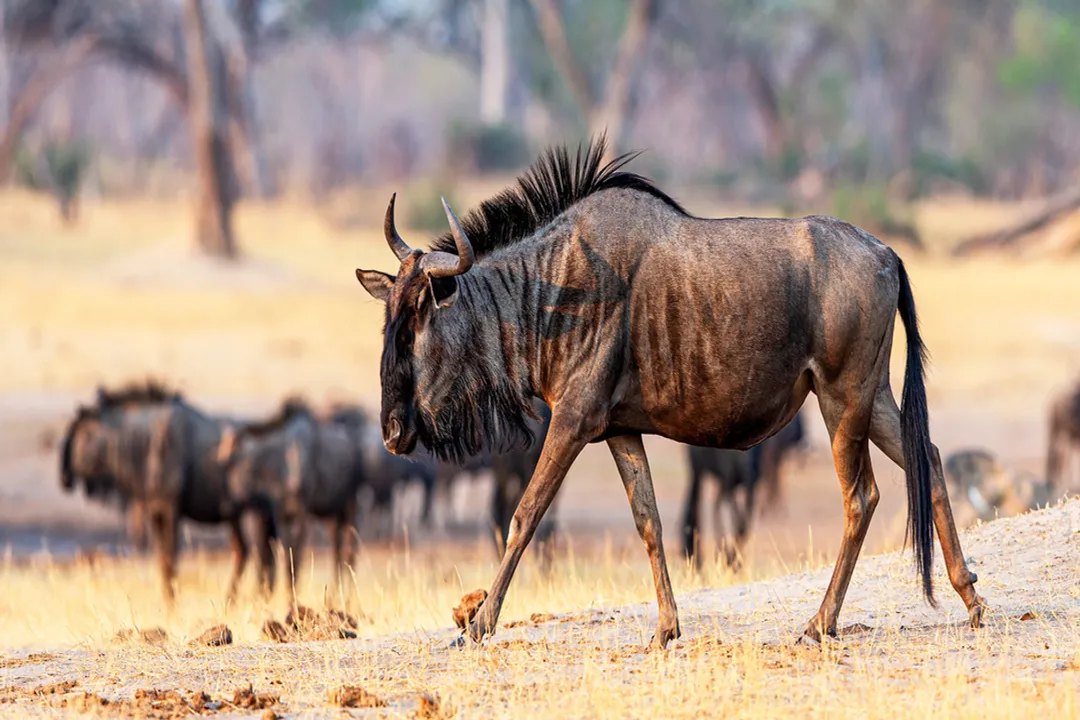
While grass is the foundation of the wildebeest menu, their feeding is far from indiscriminate. It is dictated by seasonal availability, water proximity, and critical nutritional requirements, particularly for reproduction and lactation.
During the wet season, wildebeest focus on areas where the grass is not only abundant but offers specific micronutrients. Studies indicate that during this time, they actively select grazing areas that contain grass with relatively high nitrogen content. Even more pointedly, pregnant and lactating females require high levels of phosphorus, leading the herds to seek out grasses known for their particularly high phosphorus levels during the rainy season.
The annual migration is a direct consequence of this selective feeding. When the rains cease and surface water disappears, the herds move toward dry-season ranges. Upon arrival, they shift to grazing on the available forage, which may include older growth. In times of genuine scarcity—which is less frequent for the migratory blue wildebeest than for sedentary populations—they can adapt by supplementing their diet with leaves, bark, and even fruits from trees and shrubs. However, for captive populations, high-sugar, low-fiber cultivated fruits are generally avoided as they can cause gastro-intestinal disturbances.
An interesting comparative ecological point arises when observing the blue wildebeest’s impact: their grazing habits actively facilitate the movement of smaller grazers, like Thomson’s gazelles, by stimulating the regrowth of new-growth grasses after the main herd has passed through. This suggests that the wildebeest’s grazing is a necessary pruning mechanism, preventing grassland from becoming overgrown and maintaining the savanna’s structure.
# Consumption Volume
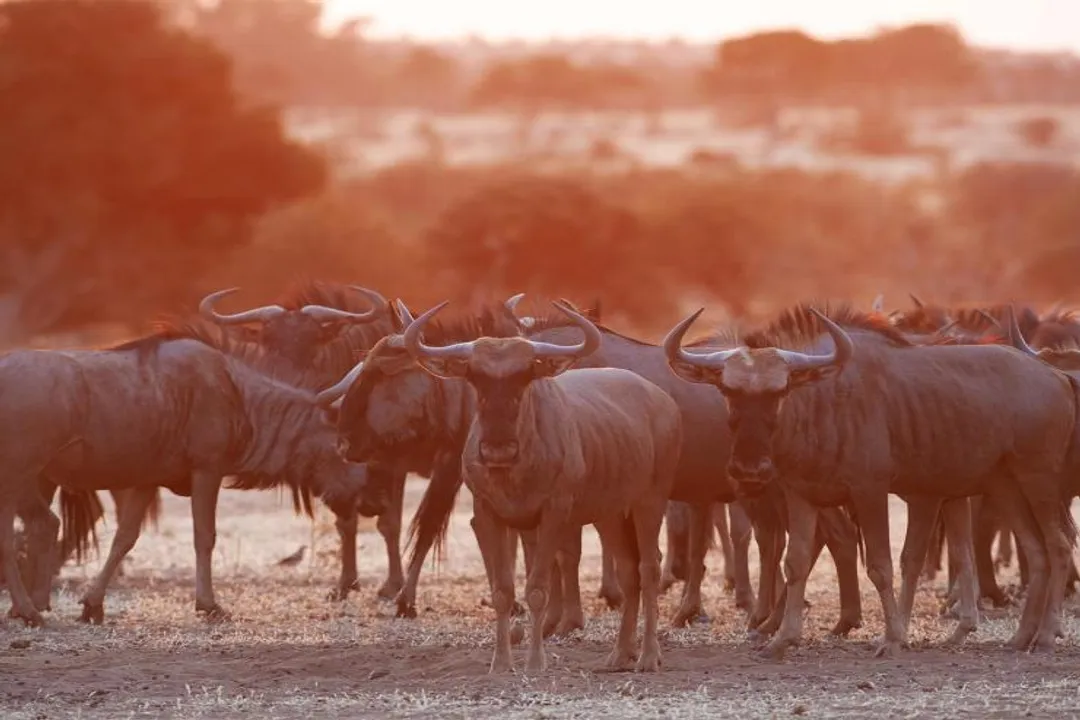
The sheer scale of the wildebeest population means that their collective dietary demands exert a massive pressure on the grassland biomass. The most recent estimates for the blue wildebeest alone place their numbers in the area of $1.5$ million individuals in East Africa. When considering the combined population of both species, the total daily grass consumption is staggering, often cited as exceeding 4,500 US tonnes, or approximately 4,100 metric tonnes, of grass every single day.
To put this daily tonnage into perspective for an individual animal, if we conservatively take the lower estimate of the blue wildebeest population ($1.5$ million) and use the total consumption figure ($4,100$ metric tonnes daily), the average animal is consuming roughly $2.7$ kilograms of grass per day. This high-volume grazing strategy is crucial because grasses are relatively low in immediate energy and nutrients compared to browsing material. Therefore, the wildebeest must process large quantities of coarse forage to meet the energy demands of survival, running, and breeding. The efficient digestive system required to extract sufficient energy from this bulk diet is a fundamental adaptation to their lifestyle.
# Diet and Ecosystem Health
The dietary habits of the wildebeest are not just about filling their stomachs; they are intrinsically tied to the health and cycling of nutrients across the savanna. Their movement itself distributes resources unevenly, which promotes diversity.
As the herds travel, they deposit vast amounts of excreta, which acts as a natural fertilizer across the landscape, increasing soil fertility. Furthermore, the immense number of animals that perish during migration—whether by drowning in rivers, succumbing to exhaustion, or being taken by predators—provides a critical nutrient pulse to the environment. The decaying carcasses are an essential food source for scavengers like vultures, which consume a large percentage of the available remains. More slowly, the decomposition releases vital elements back into the soil: one study noted that the carcasses of migrating wildebeest contribute substantial amounts of phosphorus, nitrogen, and carbon back to the land annually, directly supporting future grass growth.
This grazing pattern also influences the predator dynamics. The predictable, massive supply of herbivores supports dense populations of primary predators such as lions, cheetahs, leopards, and hyenas, creating a tightly regulated predator-prey balance within the ecosystem.
In essence, the wildebeest diet dictates its movement, and its movement, fueled by its diet, is a primary mechanism for maintaining the open, fertile structure of the African grasslands. The need for phosphorus and nitrogen in the fresh growth ensures they follow the rain, linking their feeding requirements directly to the survival of the wider savanna community.
Related Questions
#Citations
Wildebeests: Facts, Behaviours, Threats, and Diet | IFAW
Wildebeest - African Wildlife Foundation
Wildebeest / gnu - Kiezebrink Focus on Food
Wildebeest - Wikipedia
10 Fun Facts About Wildebeests | Ultimate Kilimanjaro