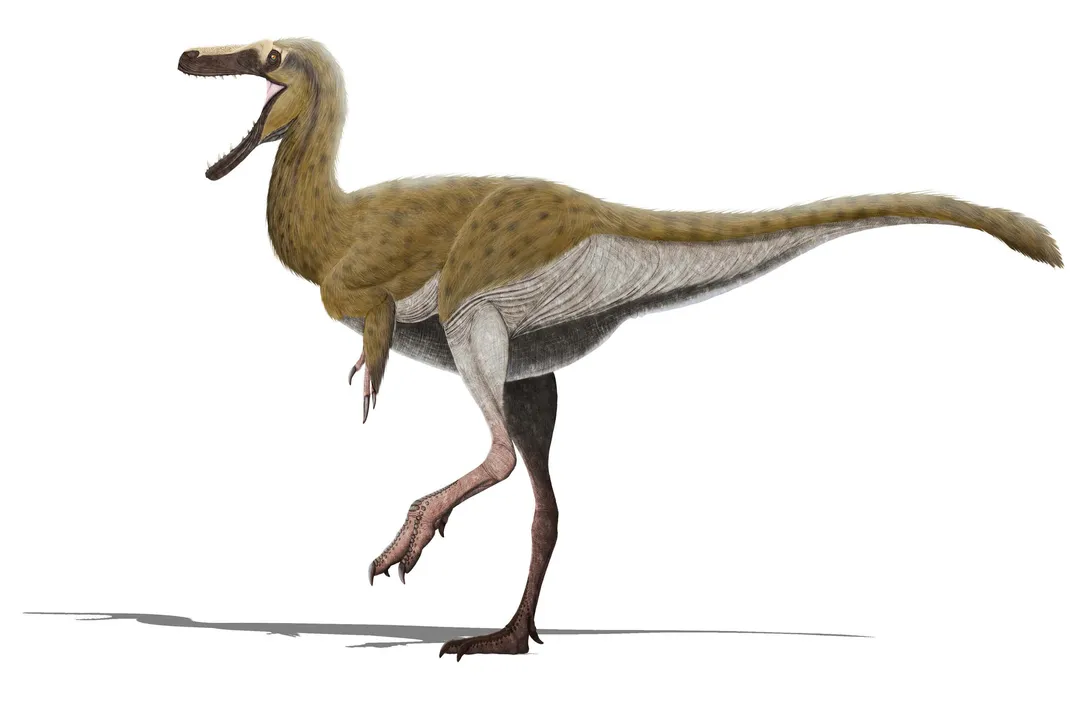
How did Xiongguanlong's feeding apparatus likely function compared to later giants?
Answer
It was better suited for slicing and tearing softer tissues
The anatomical constraints of basal tyrannosauroids, including Xiongguanlong, suggest that its feeding apparatus was adapted for slicing and shearing softer tissues, which would be typical prey found in smaller or juvenile animals. This contrasts sharply with later tyrannosaurs, whose evolved feeding mechanisms included incredibly thick, robust teeth designed specifically for the high pressures required to crush and penetrate bone. Xiongguanlong's likely reliance on slicing indicates a predatory strategy focused less on bone destruction and more on efficient flesh removal from smaller targets.
Related Questions
What is the definitive dietary classification of Xiongguanlong baimoensis?What was the approximate measured length of Xiongguanlong?What specific branch of the dinosaur family tree does Xiongguanlong belong to?What size category of prey did Xiongguanlong target based on its stature?How did Xiongguanlong's feeding apparatus likely function compared to later giants?How is Xiongguanlong's physical dimension described relative to its famous descendants?During which geological period did Xiongguanlong baimoensis live?What hunting strategy is implied for Xiongguanlong based on its medium build?What foundational role does Xiongguanlong's diet represent in tyrannosaur evolution?How did Xiongguanlong's daily caloric needs compare to a 10-meter-long predator?What anatomical constraint reinforces the conclusion about Xiongguanlong's diet specialization?