How are the internal tissues of insects liquefied for consumption by the Yellow Garden Spider?
Answer
By injecting digestive enzymes that work externally
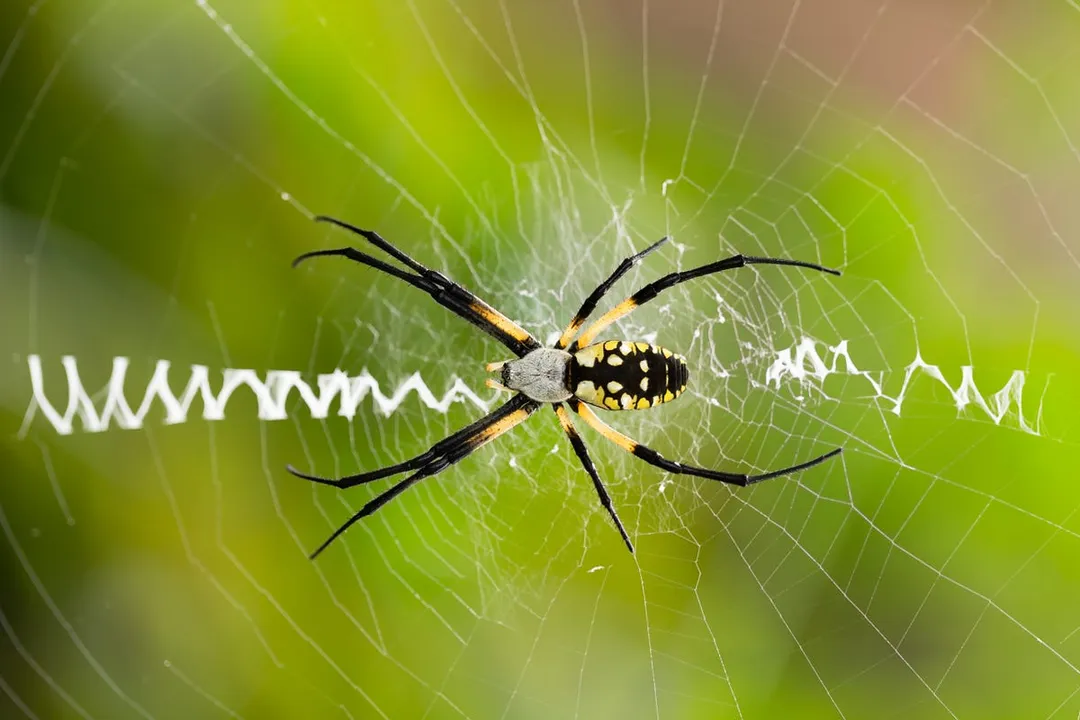
The digestive mechanism utilized by this species is entirely external, highlighting a unique requirement for their survival, especially in captivity. Following immobilization and venom injection, the spider introduces specialized digestive enzymes directly into the prey item. These enzymes begin the breakdown process outside the spider's body, liquefying the soft internal tissues of the insect. The spider then returns to suck out this resulting nutrient-rich liquid, leaving behind only the dry, indigestible exoskeleton, which is subsequently discarded from the web.
Related Questions
What is the main purpose of the zig-zag stabilimentum woven by Argiope aurantia?What physical property must the silk of the Argiope aurantia web possess regarding a large grasshopper?What type of insects form the primary targets of the Yellow Garden Spider’s diet?What action does Argiope aurantia perform immediately before delivering the venomous bite to snagged prey?How are the internal tissues of insects liquefied for consumption by the Yellow Garden Spider?What happens to the dry husk remaining after Argiope aurantia extracts nutrients from its captured prey?What is the primary consideration regarding prey size when feeding a captive Argiope aurantia?Where are the large, intricate orb webs of Argiope aurantia typically positioned for optimal feeding?Which common prey items present a specific, elevated danger to the Argiope aurantia spider during capture?Why is the Argiope aurantia considered a highly valued resident in gardens and agricultural settings?What complex engineering feat is demonstrated by the silk tensioning for different prey sizes?