Does a chicken snake have teeth?
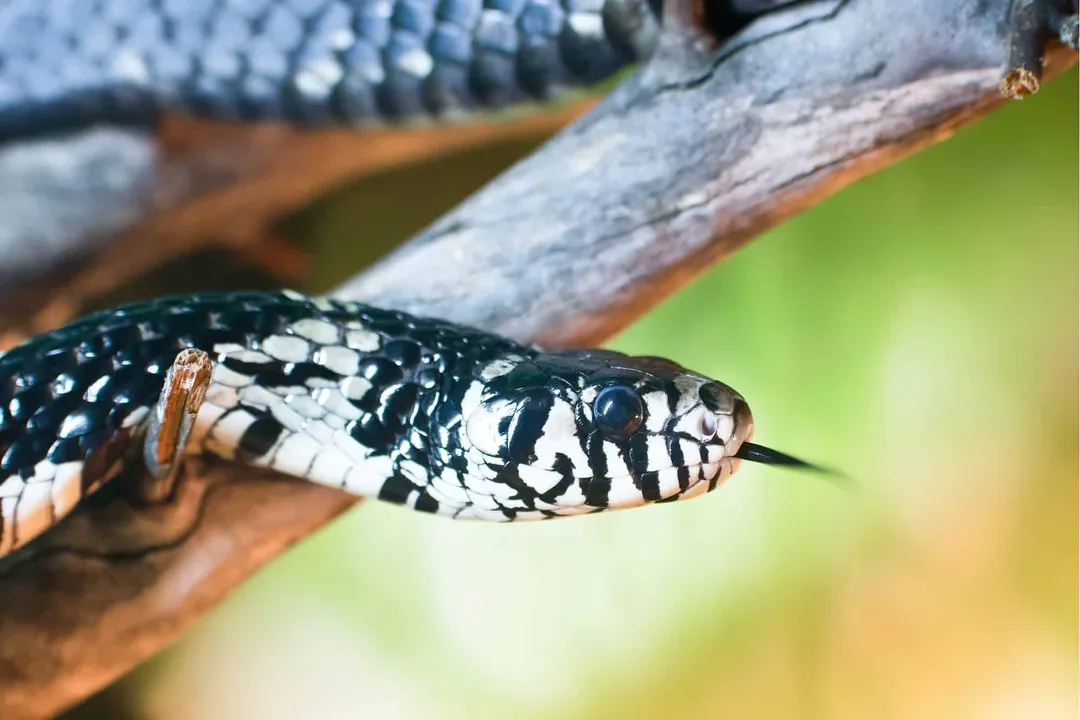
The common name "chicken snake" often conjures up images of a slithering menace lurking near poultry coops, but it also sparks a very specific, practical question for homeowners and amateur herpetologists: does this particular reptile possess teeth? Answering that requires first establishing exactly what we are calling a chicken snake, as this name is often applied regionally to various non-venomous constrictors, most commonly members of the Pantherophis genus, particularly the Gray Rat Snake. [5][6] Understanding the dental structure of these snakes is less about preparing for a dangerous attack and more about appreciating the mechanics of how they subdue their meals.
# All Snakes Equipped
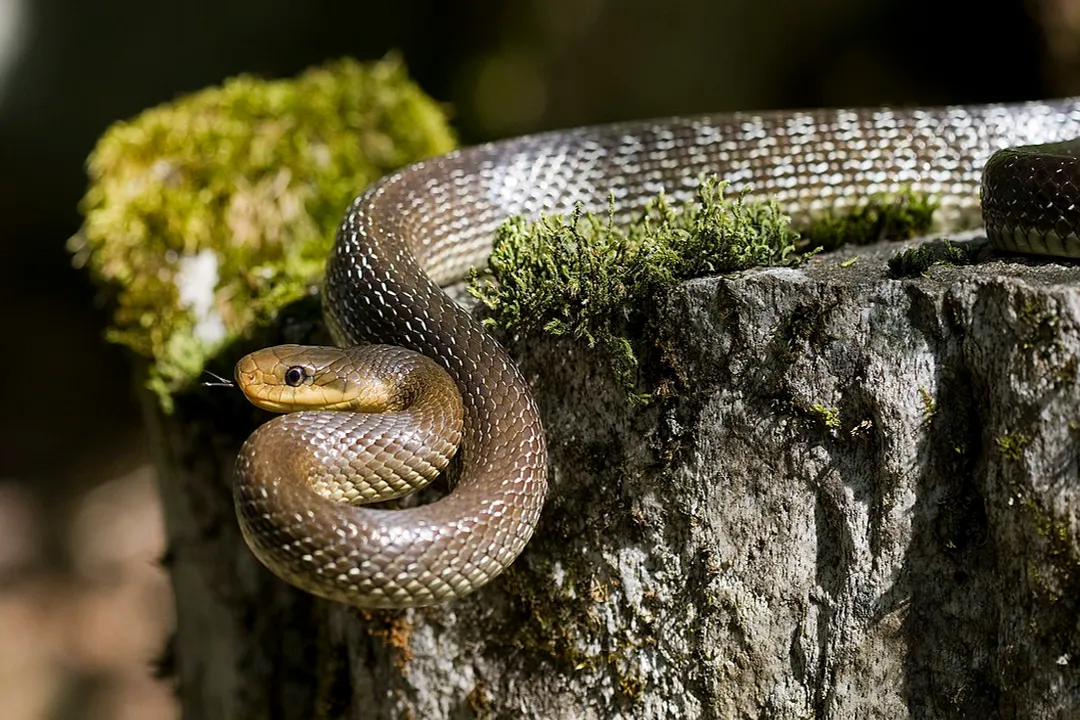
To address the question definitively for the chicken snake, we must first look at the general rule governing the entire snake order. Contrary to what some might assume about legless reptiles, snakes do not lack the structures needed for grasping food. [8] In fact, virtually all snakes possess teeth. [8] This is a fundamental characteristic of their anatomy, regardless of whether they are venomous or non-venomous constrictors like the chicken snake. [8]
The key distinction, which often leads to confusion, is the purpose and type of those teeth. Unlike mammals, snakes do not have heterodont dentition (different types of teeth for different jobs, like incisors and molars). [8] Furthermore, snakes do not chew their food; their jaws are built to unhinge and swallow prey whole. [8] This means the teeth they possess are designed strictly for retention.
# Defining the Species
The animal most frequently identified as a chicken snake in various parts of its range is the Rat Snake, often specifically the Gray Rat Snake (Pantherophis spixii or related species depending on the exact classification system used). [5][6] These snakes are native to the southeastern and south-central United States and are well-known for their presence near human habitations, particularly where rodents are a concern, such as barns and chicken coops. [4][5]
Rat snakes are non-venomous constrictors. [5][6] Their primary method of subduing prey, which ranges from small mammals and birds (hence the name) to eggs, involves wrapping around the victim and suffocating it through constriction—squeezing until the prey can no longer inhale. [6] This method relies on physical restraint, not biochemical intervention.
# Dental Structure Details
Since the chicken snake, being a rat snake, is a non-venomous species, its dentition is classified as aglyphous, meaning it lacks specialized hollow fangs for venom injection. [8] However, this absence of venom-delivery apparatus does not mean an absence of teeth entirely.
A chicken snake's mouth is lined with rows of small, sharp, rearward-curving teeth. [8] Snakes typically have four rows of teeth in the upper jaw and two rows in the lower jaw. [8] These teeth are slender, needle-like, and pointed backward toward the throat. [8] When a snake bites, this backward curve acts like tiny barbs or anchors. If the prey attempts to pull away, the curve of the teeth ensures they dig in deeper, facilitating the snake's ability to pull the meal down its throat in the correct orientation. [8] They are built for securing a grip on slippery, struggling prey, not for slicing or chewing.
If you were to examine the mouth of a captured or deceased specimen, you would find these small teeth along the maxilla, the palatine bones, and the dentary bones of the lower jaw. [8] They are usually uniform in size, unlike the dramatically enlarged fangs seen in vipers or pit vipers. [8]
# Bite Mechanics Contrast
The difference between a chicken snake's bite and that of a venomous species like a rattlesnake or copperhead provides a stark contrast in function. Venomous snakes possess specialized teeth—the fangs—that are often grooved or hollowed to channel venom from specialized glands into the victim during a bite. [8] These fangs are usually located at the front of the upper jaw. [8] A chicken snake lacks this specialized infrastructure. Its bite, while likely startling and certainly capable of drawing blood due to the sharp, numerous teeth, introduces no venom into the wound. [5]
It is interesting to note that even for a constrictor whose primary killing method is suffocation, the initial bite is still critical for control. Consider a rat snake attempting to secure a large, panicky bird or a fast-moving rodent; the multitude of rear-curving teeth ensures that once purchase is made, the prey cannot easily escape before the constriction sequence begins. [6] The effectiveness of their grip is a direct result of this dense dental arrangement.
A subtle but important aspect of their dental anatomy is replacement. Like all snakes, chicken snakes regularly shed and replace their teeth throughout their lives. [8] If a tooth breaks off during a struggle with prey or an accidental encounter with a foreign object, a new one is already developing beneath it, ready to take its place within a relatively short time frame. This biological feature ensures their feeding efficiency remains high throughout their lifespan.
# Practical Identification Observation
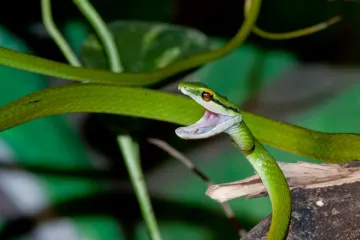
When observing a snake near a coop, recognizing that it does have teeth but that they are not venomous fangs is key to safe wildlife interaction. If you see a snake, and it appears dark or black, especially in poor light or from a distance, it is highly likely to be a Rat Snake/Chicken Snake, as they are known for their dark coloration. [5] Because they are often found near structures, people frequently get a close look, increasing the chance of noticing the small teeth if the snake gapes defensively. However, mistaking any dark snake for a Cottonmouth (Water Moccasin) or a dark phase rattlesnake in the Southeast can lead to unnecessary panic and harm to a beneficial predator. The key difference in a defensive posture is not the presence of teeth, but the profile of the head (Rat Snakes have a more slender head profile compared to the distinct spade-shape of many pit vipers) and the behavior—Rat Snakes tend to rattle their tails against leaf litter to mimic a rattlesnake, but they do not possess the venom delivery system. [5]
This tendency to mimic danger is actually a learned behavior, suggesting a high degree of situational awareness. They understand that perceived threat—even if the dental armament is non-lethal—is often enough to deter a potential predator or human interference near their foraging grounds. [5]
# Contextualizing the Bite Risk
For someone managing livestock, the most actionable piece of information regarding the chicken snake's teeth is knowing what not to worry about. You do not need to fear an injection of venom, which simplifies first aid dramatically. A bite is primarily a puncture or scratch hazard, requiring cleaning and monitoring for secondary infection, much like any other deep scrape. [5]
When we compare the oral structure of this common barn visitor to the few genuinely dangerous snakes in the same environment, the utility of their teeth becomes clearer. A venomous snake needs a quick, deep bite to inject its cocktail of toxins; their teeth are highly specialized for this singular purpose. The chicken snake, however, needs its teeth for continuous, light-duty gripping during the process of applying lethal constriction. The entire dental arcade functions as a specialized, non-return fastening system, perfectly suited for wrapping around and hauling in substantial meals like mice or even small chickens or ducklings, which they are known to consume. [4] In fact, their predatory success against rodents far outweighs the very minor risk they pose to adult poultry. [4]
The fact that they have teeth, even small ones, underscores a universal evolutionary pressure on snakes: you must hold your meal securely while you subdue it. Whether that subdual is achieved by venom or by strangulation, the initial lock-on is non-negotiable, and the rear-curving, aglyphous teeth of the chicken snake are the tools that accomplish that first, vital step.
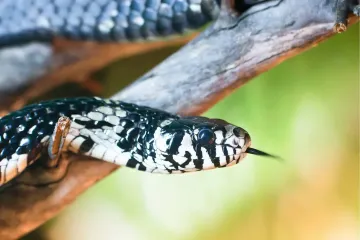
# Understanding Predator Roles
It is worth pausing to consider the ecological niche filled by snakes that are called chicken snakes. In many regions, they are second only to feral cats in their efficiency at rodent control in and around outbuildings. [4] A homeowner weighing the rare possibility of a small bird or egg loss against the constant, daily pressure of mice and rats destroying feed stores or spreading disease will find the snake's presence beneficial. The small teeth are the instruments of a predator whose diet priorities align with human interests in pest control. While they certainly can eat poultry, their main attraction to a coop environment is the rodent population that gathers around spilled feed. [4] Their dental design is therefore a perfect match for a predator that consumes small, quick-moving terrestrial mammals rather than requiring a quick, injecting strike against large, struggling warm-blooded prey. Their mouth structure reflects their lifestyle: grip, coil, squeeze, swallow.
# Final Assessment
The short answer, supported by the broader knowledge of ophidian anatomy, is an unequivocal yes: the chicken snake has teeth. [8] These teeth are numerous, small, and backward-pointing, designed for gripping prey during constriction, not for injecting venom or chewing. [8] Recognizing this structure helps demystify the animal, shifting the focus from an unwarranted fear of fangs to an appreciation of a highly specialized, non-venomous pest controller common to rural and suburban environments. [5]
Related Questions
#Citations
What kind of snake has fangs and bit a chicken? - Facebook
Is this a chicken snake? : r/whatsthissnake - Reddit
Chicken Snake - Spilotes pullatus - A-Z Animals
Snakes in the Coop - Murray McMurray Hatchery Blog
Wonders of Wildlife: Central Rat Snake - Alabama Wildlife Federation
Rat snake - Wikipedia
Rat Snake - an overview | ScienceDirect Topics
Do all snakes have teeth? - Reptiles & Amphibians - Quora