Can eagle rays jump?
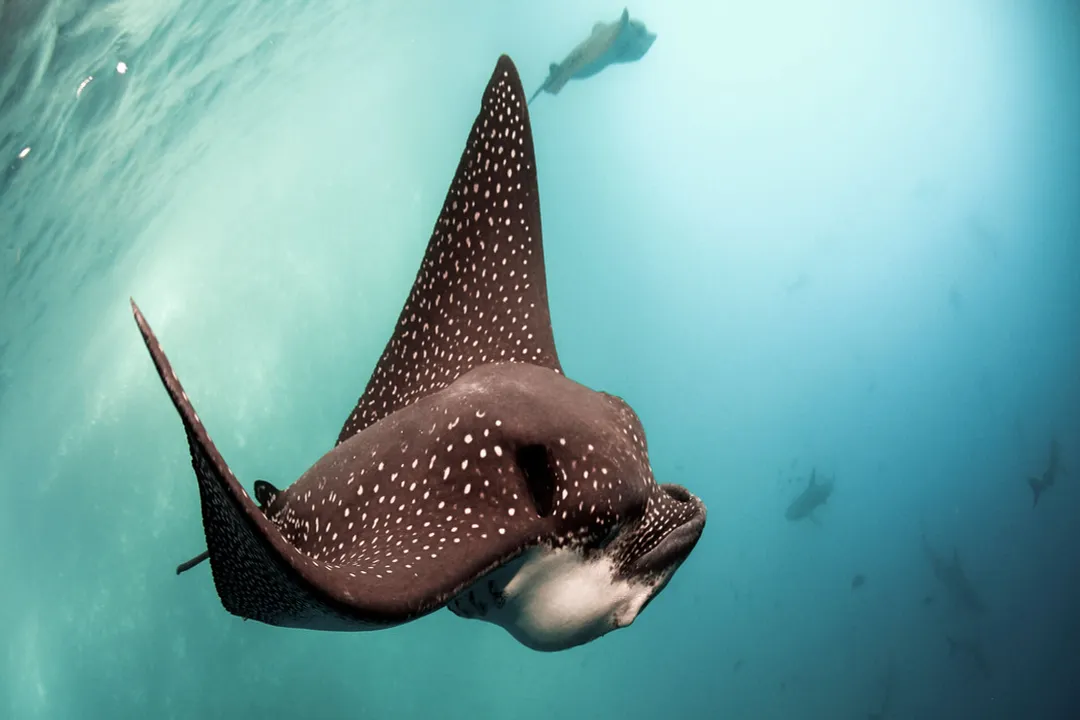
The spectacular sight of a large marine animal breaking the surface of the ocean is always breathtaking, but when it comes to rays, the image is usually one of flat, gliding grace near the seabed. However, there is a notable exception to this stereotype when observing the eagle ray species. Indeed, eagle rays do jump, launching themselves completely clear of the water in a feat of surprising aerial athleticism for creatures that spend their entire lives submerged. [2] This behavior is frequently documented, suggesting it is not an exceptionally rare occurrence, even if the precise motivation behind it remains one of the ocean’s captivating mysteries.
# Confirmation Jump
For many observers, especially divers and coastal enthusiasts, witnessing an eagle ray leap is a highlight of any marine encounter. These rays, particularly the widely distributed spotted eagle ray (Aetobatus narinari), are renowned for their powerful, wing-like pectoral fins, which they flap to propel themselves through the water, giving the impression they are "flying" beneath the surface. [1][2] This method of propulsion is efficient for long-distance travel and foraging, but it requires significant power to translate that horizontal momentum into a vertical burst clear of the water. [1]
The visual evidence, often captured by fortunate onlookers, shows these large animals arching their backs mid-air before re-entering the water, sometimes with a significant splash. While specific measurements of the height achieved are not universally standardized, the sheer mass involved makes any leap impressive. [2] The spotted eagle ray itself can be substantial, with some individuals recorded reaching wingspans near three meters (about nine feet). [2][1] When a creature of this size and shape executes a jump, it suggests a powerful, deliberate action rather than a simple accidental breach.
# Behavior Theories
The scientific community acknowledges the phenomenon of eagle ray leaping but has not reached a definitive conclusion as to why they engage in this behavior. [2] This lack of certainty leaves room for several compelling, though unproven, hypotheses, many of which relate to social interaction or physical maintenance.
One theory centers on hygiene: perhaps these energetic breaches serve to dislodge external irritants or parasites clinging to their skin or gills, a sort of dynamic cleaning process. [2] Another possibility points toward communication. In the context of their sometimes chaotic mating rituals, where females can be pursued by multiple males, leaping might be a way for a female to escape unwanted attention or jousting males. [2] The intense competition during breeding season, which can involve males chasing and fighting one another, could certainly prompt an abrupt aerial escape. [2]
Perhaps the most appealing, though entirely speculative, reason is that they jump purely for enjoyment. This is often compared to the behavior of dolphins, which are known to ride waves and leap seemingly for play. [2] While attributing human emotions like "fun" to a ray is anthropomorphic, the idea that these powerful swimmers occasionally express vigor through acrobatics is an engaging concept for those who study them. [2]
# Species Distinction
It is important to note that "eagle ray" is a broad term covering approximately 20 distinct species within the Myliobatidae family. [2] The most commonly recognized, and the one most frequently observed by divers in certain regions, is the spotted eagle ray. [2] This species is easily identifiable by its dark back adorned with contrasting white spots, and it is generally found in tropical shallow coastal waters, including coral reefs, bays, and estuaries. [1][2]
However, researchers have clarified that the ray once globally recognized as the spotted eagle ray is actually two distinct species. The true spotted eagle ray is confined to the Atlantic Ocean, whereas the very similar ocellated eagle ray (Aetobatus ocellatus) resides in the Indo-West and Central Pacific. [1] This geographical distinction is vital for conservation and understanding local populations. While both species share the characteristic "flying" motion and the potential for jumping, their ranges are separated by entire ocean basins. [1] Other named species include the common eagle ray, the Australian eagle ray, and the banded eagle ray, illustrating the diversity within the family. [2]
# Underwater Flight Mechanics
To appreciate the jump, one must first consider their primary mode of movement: propulsion via pectoral fins. [2] Unlike many bottom-dwelling rays that use undulating motions, eagle rays utilize their wing-like fins in a coordinated flapping motion, resembling avian flight. [1] This specialized movement allows them to cover vast distances efficiently.
Considering the sheer size—up to 9 feet wide for the spotted variety—the energy required to accelerate vertically from a cruising speed to breach the surface is immense. This suggests that when an eagle ray leaps, it is likely utilizing maximum propulsion generated by these specialized fins, possibly building up speed close to the surface or utilizing a sudden burst of acceleration while near the bottom before rocketing upward. A high-energy exit like this implies that the preceding behavior, whether predator evasion or play, must involve rapid acceleration, which differs quite a bit from their characteristic, slow, soaring travel across the reefscape. [1]

# Defense and Daily Life
Eagle rays possess formidable tools for defense, which plays into the context of why they might leap to escape. Several species carry venomous barbed spines near the base of their long, whip-like tails, which can be several times the length of their bodies. [2] While they are generally shy and prefer to swim away from potential threats, these spines offer potent protection against predators like tiger sharks, silvertip sharks, and hammerhead sharks. [1][2] Therefore, a jump could very well be a drastic, last-resort evasion tactic when cornered or heavily pursued by one of these top predators. [1]
Their daily routine, when not airborne, involves foraging on the seafloor. [2] Eagle rays are carnivores equipped with specialized flat teeth designed for crushing hard-shelled prey. They use their distinct, shovel-shaped snout to search through the sand for crustaceans, mollusks, and even octopuses. [1][2] This bottom-feeding lifestyle means they spend a great deal of time near the substrate, often in areas where divers and snorkelers can find them. [2]
# Conservation Concerns
A critical aspect of learning about eagle rays is recognizing the threats they face. The spotted eagle ray, for instance, is classified as Endangered on the IUCN Red List. [1] This serious listing highlights that human activities place significant pressure on their populations. Overfishing is a major contributor, as these rays are caught both intentionally by artisanal gillnet fisheries and unintentionally as bycatch in industrial shrimp trawls. [1] Their swimming style, which keeps them active throughout the water column, makes them susceptible to many different types of fishing gear. [1] Furthermore, as coastal inhabitants of sensitive ecosystems like reefs and estuaries, they are vulnerable to habitat degradation stemming from pollution and climate change effects like dredging. [1] Protecting these jumping marvels requires addressing these large-scale threats. [1]
If you are observing rays in an area known for their presence, such as near Florida's Tampa and St. Petersburg regions—a known habitat for the Atlantic spotted eagle ray—remembering their conservation status adds weight to the experience. Seeing one leap should prompt reflection not just on its beauty, but on the fragility of its existence in our oceans. [1]

# Witnessing the Aerial Display
For those hoping to catch this thrilling spectacle, understanding their behavior and habitat preference can improve chances. Since the rays prefer shallow coastal waters, bays, and lagoons, sometimes viewing them from a kayak or even a shallow beach area is possible, though direct interaction should always be avoided. [1][2] Given that one theory for jumping involves escaping predators like hammerheads, the behavior might be more common in areas where these sharks are actively hunting, or perhaps during periods of high social activity like mating season, when large schools of up to several hundred individuals may gather. [2] Paying attention to the presence of other large predators or observing groups of rays during summer months, which aligns with their typical breeding time, might present a better opportunity to see this behavior than a solitary foraging session. [2] This aerial demonstration, whether for parasite removal or sheer exuberance, serves as a dynamic reminder of the complexity and power hidden just beneath the ocean's surface. [2]
# Identification Marks
Beyond their jumping prowess, eagle rays offer unique ways for researchers and enthusiasts to keep track of individuals. The spotted eagle ray offers a particular advantage here: its spot pattern functions much like a human fingerprint. [2] A study indicated that photo identification software could successfully identify individuals with high accuracy based on these markings. [2] This tool is invaluable for population monitoring, especially for a species facing "Endangered" status, as it allows scientists to track movement, residency time in specific areas, and perhaps even correlate specific behaviors, like jumping frequency, to individual rays over time. [1][2] This quiet, patterned method of tracking allows conservation efforts to benefit from visual confirmation without disturbing the animals. [2]
Related Questions
#Citations
Top Ten Eagle Ray Facts | Original Diving
Spotted Eagle Ray | Oceana