Are there eagle owls in North America?
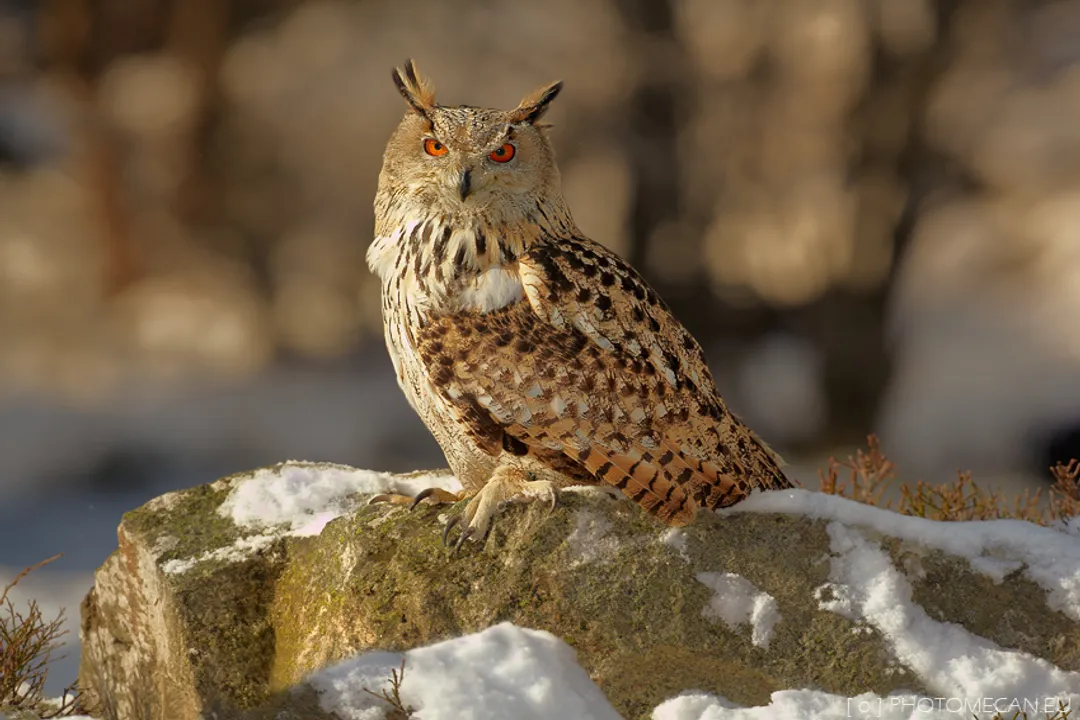
The sheer power and imposing silhouette of an enormous owl often lead to questions about their distribution, particularly when these magnificent birds are spotted or reported near home. When people inquire specifically about the presence of the Eurasian Eagle-Owl (Bubo bubo) in North America, the answer requires a nuanced look at native ranges versus captive populations. [1][2] While this impressive raptor is not native to the continent, its presence in zoological institutions across the United States means that many North Americans have the opportunity to see them up close. [3][4][5]
# Impressive Size
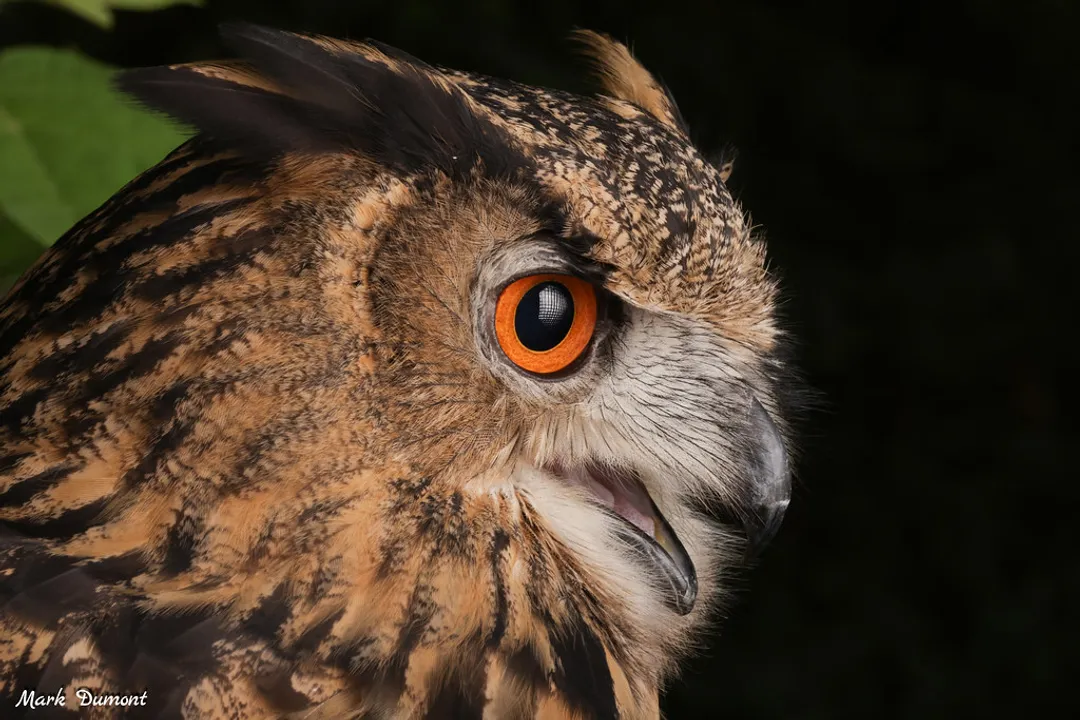
The Eurasian Eagle-Owl is rightfully renowned for its stature, easily ranking among the world's largest owls. [2] To put its dimensions into perspective, it can reach a body length of around 75 centimeters (30 inches). [1] Its wingspan is truly staggering, often measuring up to 200 centimeters, or about 6.5 feet. [1][3] In terms of weight, adult males might weigh around 2.5 kilograms, while larger females can tip the scales close to 4.5 kilograms. [1] This substantial build, combined with its piercing orange-yellow eyes and prominent ear tufts—which are feathers, not actual ears—makes it instantly recognizable. [1][2][6]
The species displays considerable variation across its vast range, leading to the description of numerous subspecies. [5] These subspecies can show differences in overall coloration, ranging from pale sandy tones in drier regions to darker, richer browns in heavily forested or colder environments. [5] For instance, the large European forms tend to be quite dark, while those found in the arid regions of the Middle East and India are notably lighter. [5] The general pattern, however, includes mottled, cryptic feathering that offers superb camouflage against tree bark or rocky outcrops. [2]
# Native Territory
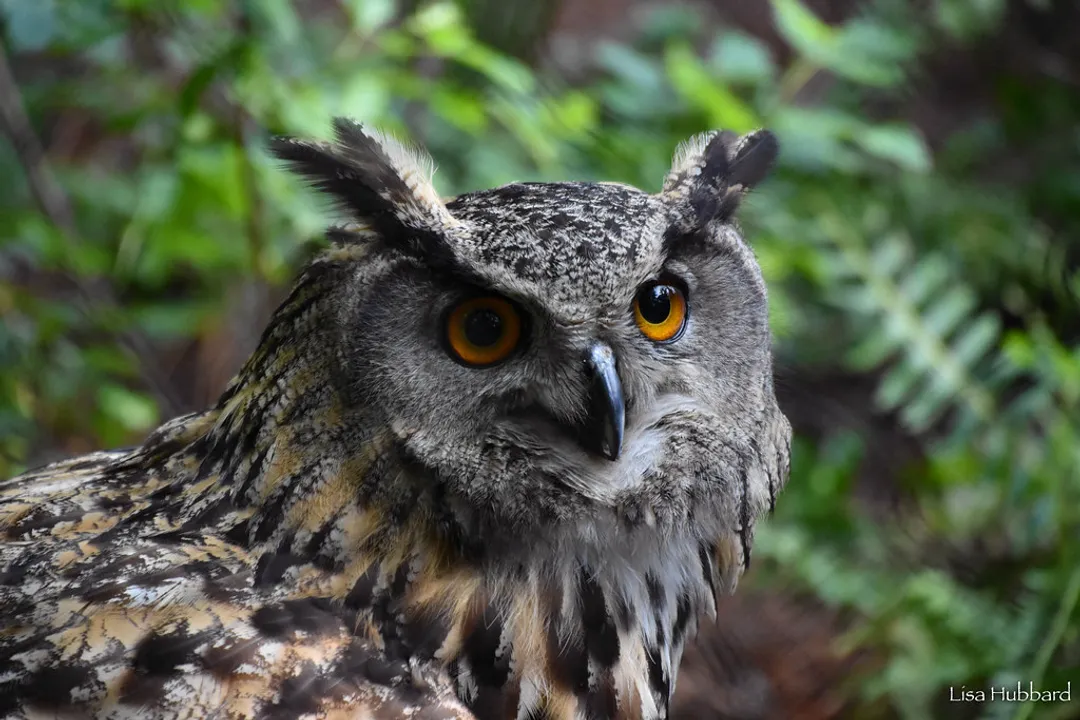
The core distribution of the Eurasian Eagle-Owl is centered firmly in the Old World, covering extensive areas of Europe and Asia. [1][2] It is an incredibly adaptable bird, thriving in diverse habitats ranging from deserts and rocky mountainous regions to dense forests and open steppes. [2] This adaptability is reflected in its incredibly wide native range, which is one of the largest among all owls. [1][2]
It is crucial to understand that this species does not naturally occur in the wild populations of North America, which includes the United States, Canada, and Mexico. [1][2] North America possesses its own spectacular, large owl species—most notably the Great Horned Owl (Bubo virginianus)—but these are distinct entities, not stray members of the Eurasian species. [6] The Great Horned Owl is widespread throughout the Americas and fills a similar ecological niche, but it is structurally smaller than its Eurasian counterpart. [6]
# Captive Status
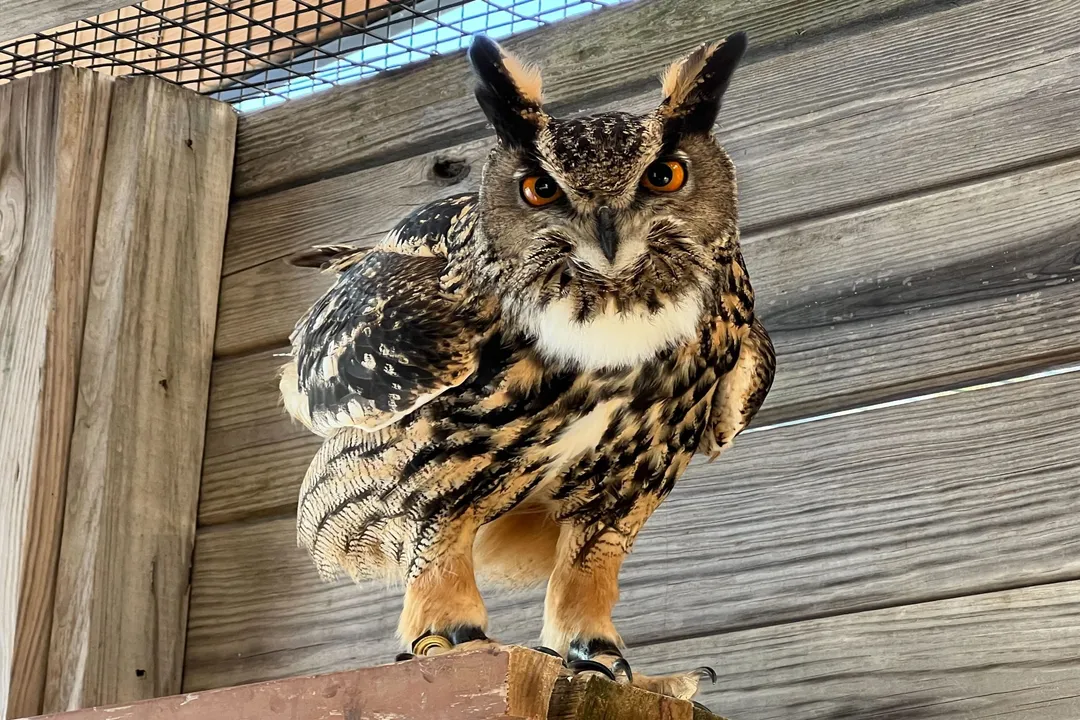
The reason many people in North America encounter the Eurasian Eagle-Owl is through zoological collections and wildlife centers. [3][4][7][8][9] Facilities across the continent house these birds as educational ambassadors or for species management programs. [4][7][8][9] For example, institutions like the Cincinnati Zoo, the Denver Zoo, the San Francisco Zoo, the Lincoln Park Zoo, and the Potter Park Zoo have all featured this species in their animal residents listings. [3][4][7][8][9]
These captive populations represent the primary, confirmed presence of Bubo bubo within North America. While the primary focus of many zoos is education and conservation awareness—often highlighting their status as non-native species in a North American context—these birds provide invaluable opportunities for the public to appreciate the sheer scale of this Eurasian giant. [3][4][7][8][9]
If a wild sighting of a bird matching the Eurasian Eagle-Owl's description were ever confirmed in North America, it would almost certainly be classified as an escaped or released captive bird, rather than evidence of a self-sustaining wild population. [1] Given the bird's considerable size and predatory prowess, any established feral population would generate significant conservation concern, though no such established wild population is recognized. [1][2]
When reviewing rare bird reports, particularly for large owls in North America, the default assumption should always lean toward the native Great Horned Owl unless compelling, verifiable evidence—such as photographic confirmation of specific plumage characteristics unique to the Eurasian species, or behavioral markers seen in captivity—is available.
# Ecological Context
The Eurasian Eagle-Owl occupies the apex aerial predator niche across its native range. [2] Its diet is incredibly broad, encompassing everything from small rodents and birds to sizable prey like foxes, hares, and even small deer fawns. [2] They are known to take prey almost as large as themselves. [2] Observing such a powerful hunter in a controlled setting, where zookeepers must manage its significant dietary needs, gives an immediate appreciation for the ecological role it plays overseas. [3][4]
Considering the established native predators in North America, the successful establishment of a breeding, wild population of Eurasian Eagle-Owls would introduce a raptor capable of competing directly with, and potentially dominating, native predators like the Great Horned Owl. [6] The fact that they have not established themselves, despite the presence of many birds in captivity, speaks volumes about natural barriers and perhaps the vigilance of wildlife management agencies against the establishment of non-native apex predators. The sheer ecological impact of a successful introduction, where an avian predator hunts mammals like foxes and large ground birds regularly, would be immediate and profound on local ecosystems accustomed to current predator levels.

# Subspecies Identification
Understanding the variation within the species is helpful when trying to differentiate subspecies, though this is primarily relevant to ornithologists studying their native range or zoological curators managing specific lines. [5] Raptor Tag notes that the identification of subspecies often relies on subtle geographic variations in size and plumage density. [5] For instance, some subspecies are adapted to colder northern climates, possessing denser, fluffier plumage for insulation, while others in warmer, arid zones are leaner and paler. [5] Knowing that these distinct regional forms exist underscores how specialized the Eurasian Eagle-Owl is to its Old World environments, further cementing why it is not a natural fixture in the North American avian community. [1][5]
In summary, while the magnificent Eurasian Eagle-Owl is absent from the native avifauna of North America, its impressive physical traits and presence in numerous North American zoos make it a visible and frequently studied ambassador for Old World raptors. Birders interested in confirming sightings should focus their attention locally on confirming the identity of the abundant Great Horned Owl, using the zoo residents as a benchmark for comparing what a truly colossal owl looks like. [6]
Related Questions
#Citations
Eurasian eagle-owl - Wikipedia
17 Species of Eagle-Owls (With Pictures) - Avibirds.com
Eurasian Eagle Owl - San Francisco Zoo & Gardens
Eurasian eagle owl - Cincinnati Zoo & Botanical Garden
Eurasian Eagle Owl SSP - RAPTOR TAXON ADVISORY GROUP
Eurasian Eagle-Owl - iNaturalist
Eurasian Eagle Owl - Lehigh Valley Zoo
Eurasian Eagle-Owl | Potter Park Zoo
[PDF] Eurasian Eagle Owl | Denver Zoo