Why don't pronghorn jump fences?

The pronghorn antelope, North America’s fastest land animal, often presents a curious paradox when interacting with the agricultural fencing that crisscrosses its range. Despite being capable of impressive bursts of speed that dwarf any domestic predator, these animals are frequently observed attempting to thread themselves under man-made barriers rather than clearing them with a leap. This behavior runs contrary to the established stereotype of how large ungulates deal with obstacles, leading many observers, from ranchers to wildlife biologists, to ask precisely why they often refuse to jump. [cite]
# Speed Dominance
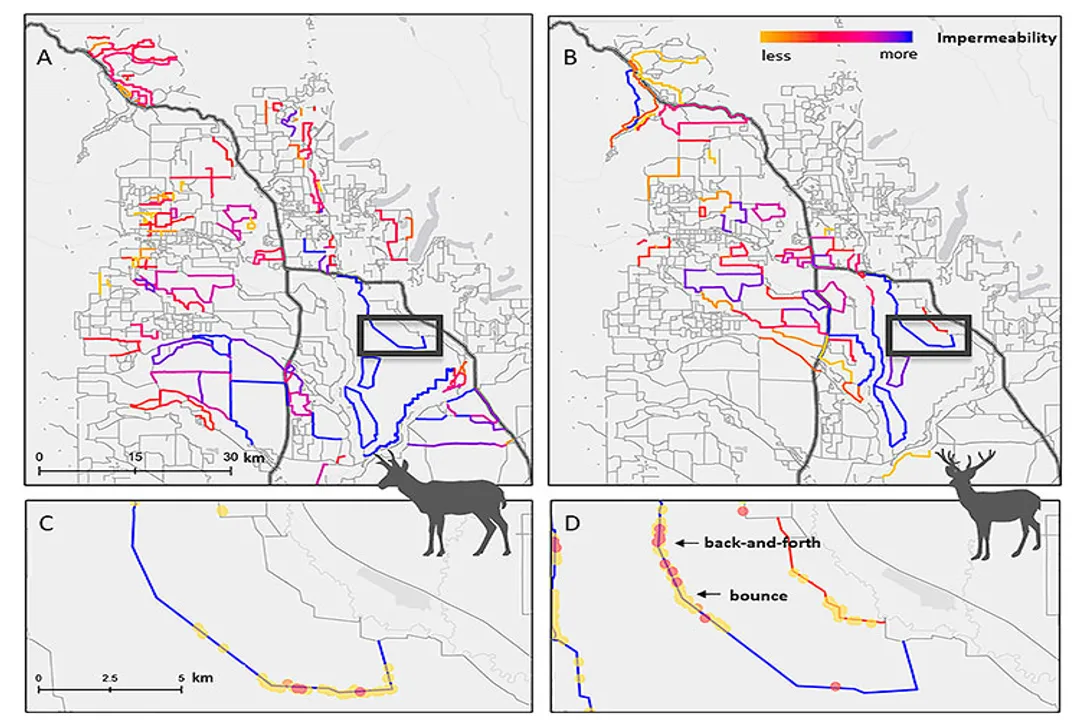
The defining characteristic of the pronghorn is its incredible running ability. Built for sustained, high-velocity travel across open terrain, they are engineered for horizontal movement, not vertical acrobatics [cite]. While they can certainly run faster than any other animal in the Western Hemisphere, this specialization influences how they approach barriers. Their anatomy prioritizes acceleration and stamina.
A key piece of context often missing is that a pronghorn’s maximum vertical jump height is generally cited as being around 32 inches [cite]. While this is certainly an athletic feat, it is barely higher than what many common boundary fences are constructed to stop. An animal accustomed to open plains, using its speed to escape threats, naturally defaults to the path that expends the least relative energy or presents the lowest risk of awkward impact.
# Fence Height Reality
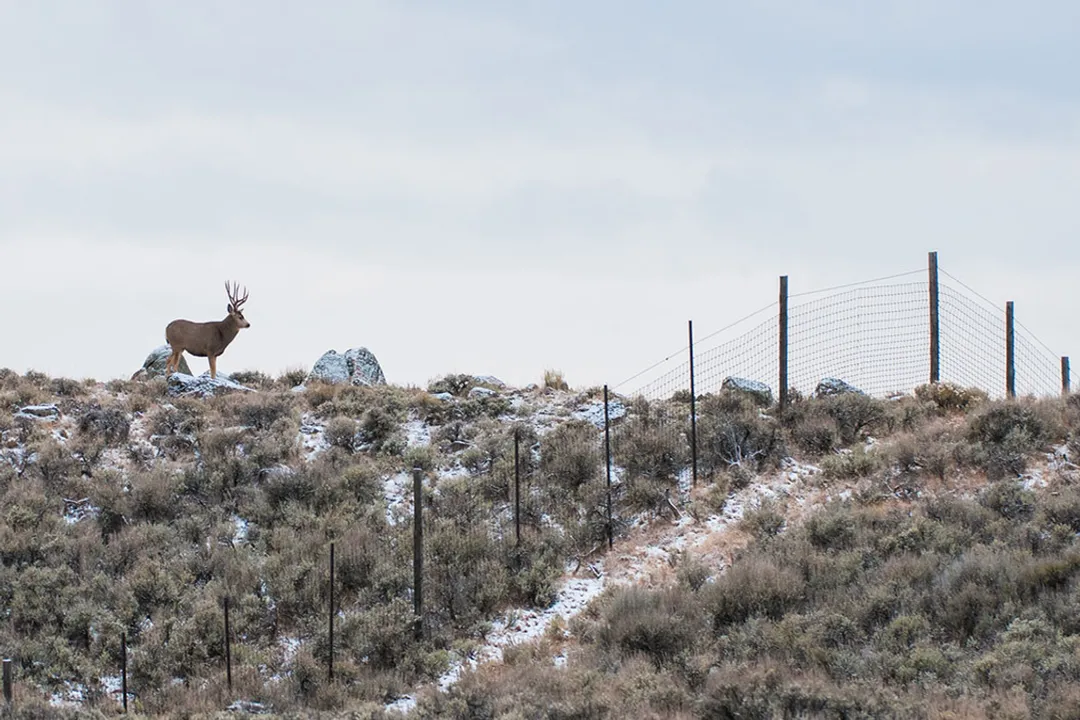
When examining the choice between crawling and jumping, the reality of typical fence construction comes into play. Many fences designed to contain livestock, particularly woven wire or smoother panel fencing, do not exceed three feet in height, often sitting around the 32-inch mark or lower [cite].
Studies and observations confirm that if the bottom wire of a fence is low enough, pronghorn will almost always pass underneath rather than leaping over [cite]. While they can clear a 32-inch fence, the behavioral preference strongly leans toward maintaining ground contact. If a fence is built higher, say five or six feet, the animal might be forced to jump, but in situations where both options are viable, the ground-level route prevails [cite]. This suggests that the decision isn't strictly about physical capability, but rather about efficiency and learned response to predictable barrier types.
# Obstacle Perception
The unique visual processing of the pronghorn plays a significant role in how it assesses a fence line. Their eyes are positioned for scanning vast distances, giving them exceptional far-sightedness, but this can affect depth perception up close, especially when moving at speed [cite]. Approaching a fence, which often appears as a series of thin, vertical, or horizontal lines, can create a visual confusion or hesitation.
If the lines of the fence seem too dense or the clearance underneath appears slightly inadequate due to terrain variation or grazing pressure, the animal might misjudge the jump or perceive an unacceptable risk of snagging. When moving in a group, the hesitation of one individual can influence the entire herd’s reaction, leading to a collective decision to seek a gap rather than attempt the aerial maneuver [cite].
# Behavioral Adaptation
The tendency not to jump is often reinforced behavior passed down through generations of herd activity. Wildlife biologists note that fence avoidance is a learned trait, particularly in areas where fences have been a long-standing feature of the landscape [cite]. If a pronghorn successfully navigates under a fence once or twice without incident, that becomes the established method for dealing with that specific type of barrier.
This adaptation is crucial for maintaining migratory routes. Pronghorn undertake some of the longest terrestrial migrations in North America, moving hundreds of miles seasonally to find forage [cite]. Over such distances, encountering hundreds of fences, adopting a consistent, low-risk passage strategy is far more energy-conscious than assessing the jump potential of every single barrier.
A common ranching approach focuses on leaving a 16- to 18-inch gap at the bottom of the fence structure, often by removing the lowest strand of barbed wire or installing a smooth bottom wire well above the ground. While this works for crawling, it's important to recognize that barbed wire fences, often present, pose a different risk profile than smooth wire fences when passing underneath, even at low heights. The spacing between wires matters for their slender bodies, contrasting sharply with a thick-bodied animal like an elk, which is less likely to crawl and more likely to breach a different part of the fence structure [original insight 1].
# Migration Hurdles
The primary concern regarding this ground-level preference is fragmentation. When fences block access to essential winter range, calving grounds, or water sources, the conservation status of the species is threatened [cite]. Studies reveal that fences significantly hinder migratory wildlife, even those capable of jumping, because the animals prioritize certain passage methods [cite].
The decision to crawl under a fence, even when a jump is physically possible (say, at 32 inches), can be viewed through an energy budget lens. Jumping requires a burst of anaerobic energy and risks injury from striking wires or landing awkwardly. In contrast, crawling under, if the gap is adequate, is a lower-energy, predictable movement. When migrating hundreds of miles, minimizing these unpredictable energy spikes becomes critical for survival, making the ground-level negotiation inherently preferable over the aerial option [original insight 2]. This preference means that even fences deemed "jumpable" by human standards become effective barriers because they force the animal into a less desirable crossing method.
# Modification Solutions
Recognizing this inherent ground-level preference has driven conservation efforts toward creating what are termed "pronghorn-friendly fences" [cite]. These designs focus explicitly on maximizing the space near the ground while often compromising the top edge.
Effective modifications frequently include:
- Lowering the Bottom Wire: Ensuring the bottom wire is set no higher than 16 to 18 inches off the ground, allowing the pronghorn to pass through easily without needing to crouch excessively or risk snagging [cite].
- Wire Spacing: Adjusting the spacing of the wires above the bottom strand to prevent entanglement, as the animal must push its body through a tight vertical opening.
- Visual Markers: In some cases, ensuring the fence structure is not visually overwhelming can help. For instance, using smooth wire instead of too many strands of highly visible barbed wire might reduce visual hesitation while still offering a physical barrier [cite].
The challenge remains in balancing wildlife passage with ranching needs, as fences must still effectively contain domestic livestock like cattle. When a fence is modified for pronghorn, it must remain effective for its intended purpose against other species present in the same habitat [cite]. Ultimately, the pronghorn’s refusal to jump is not a biological failure but an efficient, energy-saving adaptation that unfortunately clashes with the modern infrastructure of the Western landscape.
Related Questions
#Citations
How Can the Pronghorn Cross the Fence?
Pronghorn-Friendly Fence Modifications
Why Pronghorn Don't Jump
Pronghorn of Yellowstone - Don't Fence Me In! - Tracks & Trails
Pronghorns avoid jumping fences due to safety concerns
New study reveals how fences hinder migratory wildlife in the ...
The Speedboat needs 18"..."Due to their unique biology, ...
Do pronghorn jump fences? | Sheep, Goats, Moose, Antelope ...
Washington Pronghorn / Can they jump a fence?