How rare are Eurasian eagle owls?
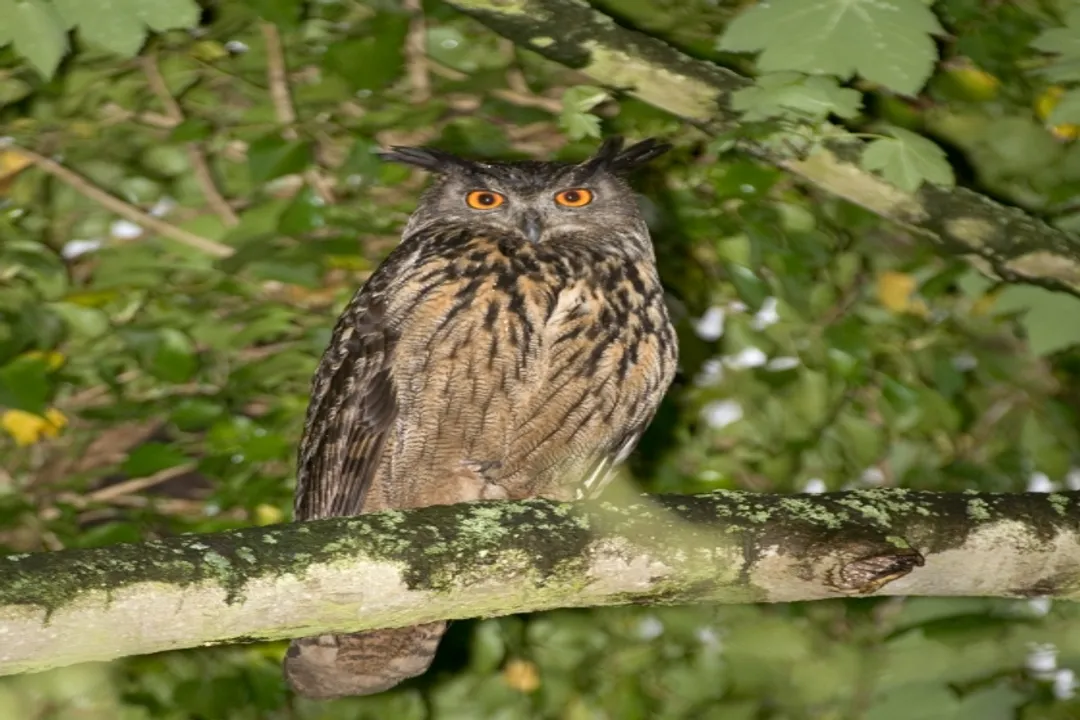
The question of how rare the Eurasian eagle owl truly is depends heavily on which map you are looking at, as this magnificent bird occupies an astonishingly wide geographic range yet maintains a surprisingly patchy presence across that territory. They are, by sheer distribution, one of the most widespread owls in the world, spanning across Europe, Asia, and North Africa. This vast area of occupation suggests they are anything but rare on a continental scale, inhabiting everything from rugged, rocky areas and open woodlands to drier desert environments.
# Global Spread
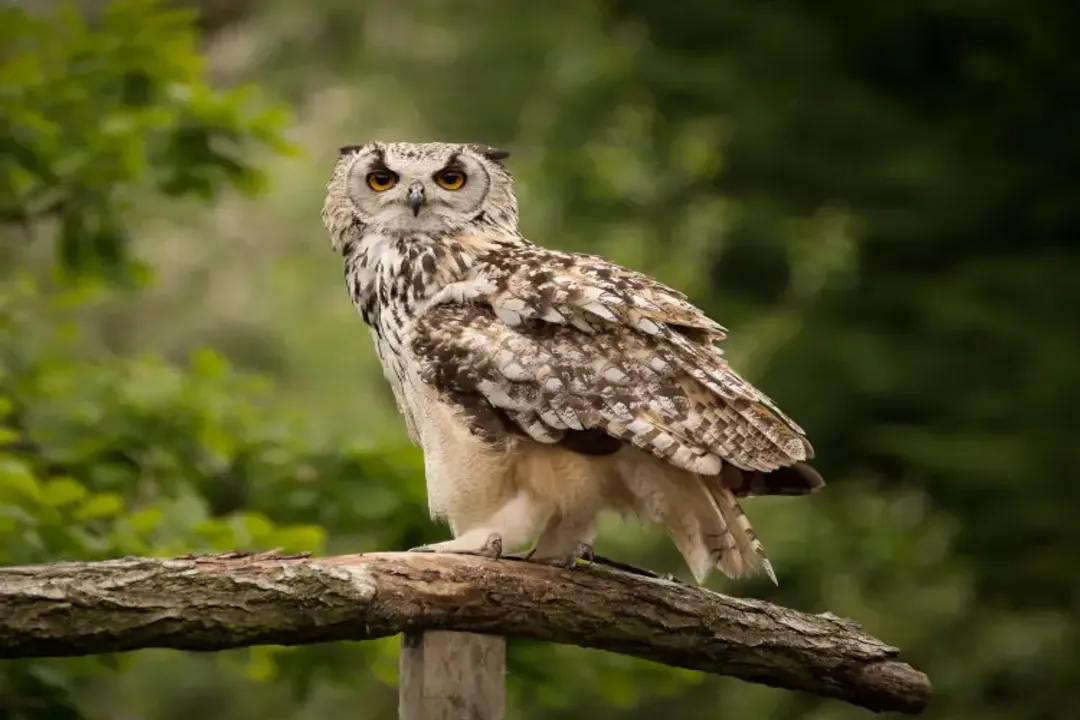
The sheer breadth of their territory sets them apart. The Eurasian eagle owl is distributed across large sections of the Palearctic realm. This means that while an individual bird in western Europe might be a rare sight requiring dedicated searching, the species as a whole maintains a massive footprint across continents. Their distribution covers much of Europe, extensive tracts of Asia, and the northern reaches of Africa.
This widespread nature contrasts sharply with some other raptors that are confined to very specific ecological niches or smaller island chains. The ability of the Bubo bubo to persist across such diverse landscapes—from high mountains to lowlands—is remarkable. However, being widespread does not automatically translate to being common everywhere.
# Local Density
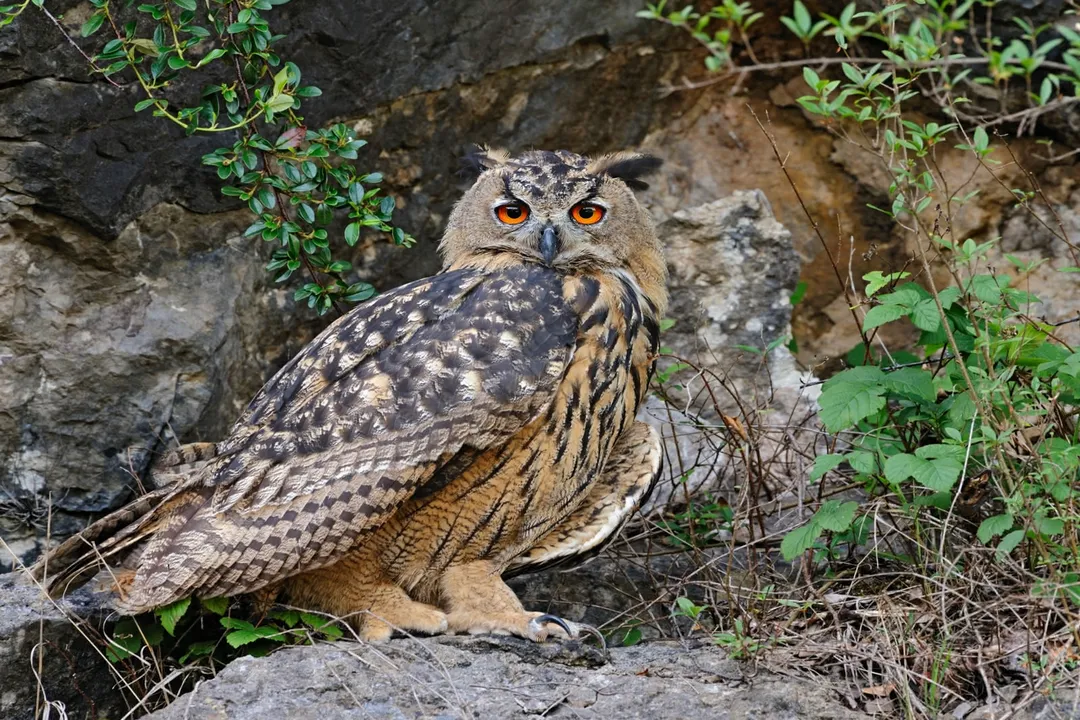
When assessing rarity, density is the crucial factor, and this is where the picture becomes complicated. Across their massive range, the population is characterized as being very unevenly distributed. In some regions, they might be classified as locally common, while in others, they are entirely absent or occur only in isolated pockets. This means a birdwatcher focused on central Europe will have a very different experience from one in Siberia or Morocco.
Given that these owls require substantial tracts of land to sustain themselves, it is logical to conclude that even in areas where they are considered "locally common," their actual population density—the number of birds per square kilometer—is inherently low when compared to smaller, less space-intensive bird species. A single breeding pair can require an enormous territory to find enough food, meaning that a perceived local abundance still represents a relatively low numerical count across the landscape. Monitoring populations across such a varied and immense area presents unique logistical challenges for ornithologists trying to establish a definitive global rarity assessment.
# Varied Habitats
The adaptability of the Eurasian eagle owl is a primary factor in its extensive range, which speaks against a diagnosis of overall rarity. They are highly adaptable regarding their nesting and hunting sites. They utilize cliffs, rocky outcrops, and gorges, but they are also comfortable in open woodland areas. In drier, more arid parts of their range, deserts and semi-deserts also serve as viable homes. This flexibility allows the species to avoid being bottlenecked by specific climatic conditions that doom more specialized species.
# Swiss Recovery
A compelling case study illustrating the fluctuation of rarity for this species is found in Switzerland. In certain parts of their historical range, including Switzerland, the population faced severe declines, leading to local extinction at one point. This historical near-disappearance in a well-studied European country highlights how localized threats—habitat loss, persecution, or prey depletion—can make an otherwise widespread species locally rare or absent.
However, the story does not end in absence. Successful reintroduction programs have brought the species back. In areas like the Swiss Alps following these efforts, the Eurasian eagle owl has become locally common again. This trajectory—from widespread, to locally extinct, to locally recovered—shows that "rarity" is a fluid state dependent on human and environmental interactions rather than just inherent biological limits.
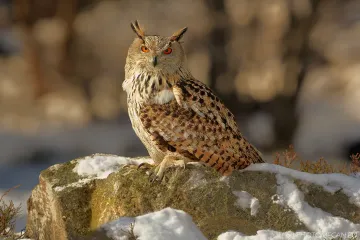
# Hunting Prowess
Understanding the owl's place in the food web also provides context for its survival, even if it doesn't directly measure rarity. These are apex nocturnal predators, powerful enough to take on prey significantly larger than themselves. While they consume a variety of small and medium-sized mammals and birds, they are noted as one of the few owl species capable of successfully hunting animals as substantial as small deer. This capability suggests a high level of predatory success and broad dietary plasticity, which generally supports a stable population, provided habitat and prey availability remain adequate.
# Subspecies Diversity
The species classification itself plays a role in discussions of rarity. The Eurasian eagle owl is composed of numerous recognized subspecies. While the overall species is widespread, specific subspecies might face much greater threats or have significantly smaller populations than the group as a whole. For instance, a subspecies confined to a single island or isolated mountain range would be far rarer than the general population found across continental Europe and Asia. The survival status of these individual subspecies can differ widely, even if the general species name suggests wide distribution. Without looking at the specific conservation status of each regional variant, a simple statement about the entire species can mask localized extinction risks.
The status of the Eurasian eagle owl, therefore, is best described not by a single rarity metric, but as a species that is globally distributed but locally sensitive. They are common enough to avoid global concern based on distribution alone, yet rare enough in many settled areas to require dedicated observation and local conservation effort to maintain their presence.
Related Questions
#Citations
Eurasian Eagle Owl - San Francisco Zoo & Gardens
Eurasian Eagle Owl SSP - RAPTOR TAXON ADVISORY GROUP
Eurasian Eagle-owl | The Peregrine Fund
Eurasian eagle-owl species information - Facebook
Eurasian Eagle-Owl - BTO
Eurasian Eagle-Owl | Animal Kingdom Wiki - Fandom
Eurasian Eagle-owls are one of the few owls to soar on thermals ...
Eurasian Eagle Owl | Cascades Raptor Center
Eurasian Eagle-Owl - Schweizerische Vogelwarte Sempach