Where do Canadian horses live?

The geography of where horses reside in Canada is far more varied than one might initially assume, spanning from remote, windswept islands to established farms tucked into agricultural heartlands. It is not a single answer, but a collection of distinct habitats and stewardship models that house the country’s equine population. For some, "living" means complete freedom in a harsh, unique environment, while for others, it means careful preservation within dedicated breeding programs aimed at maintaining a specific national heritage. [6][7]
# Island Sanctuary
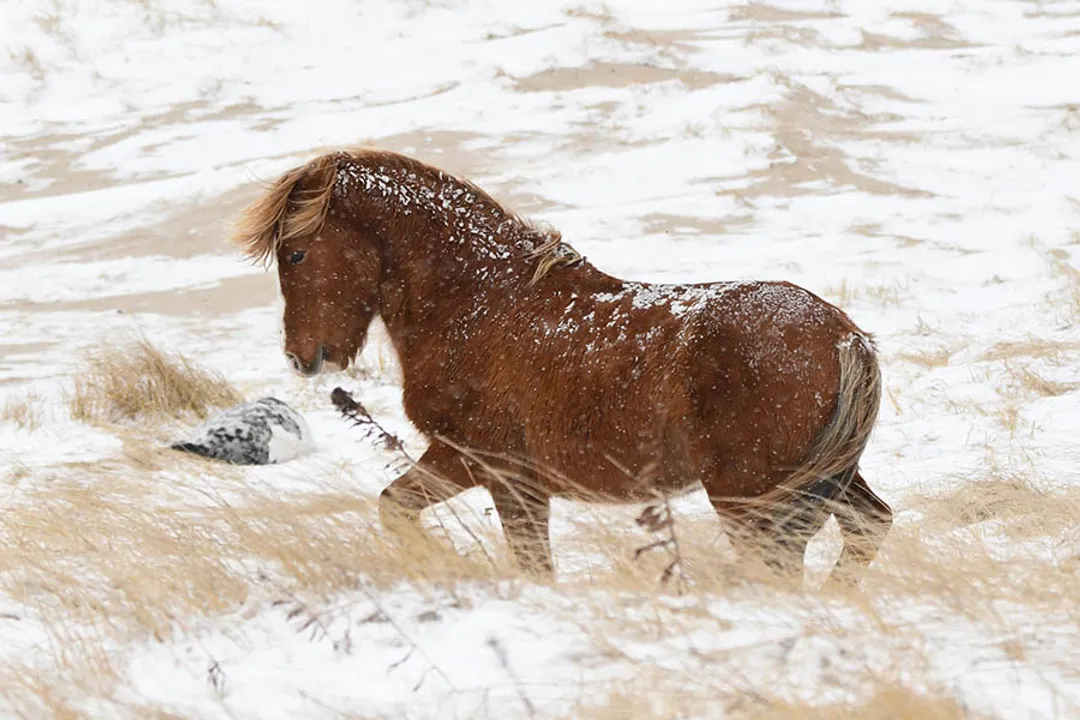
The most distinct and perhaps most famous setting for a wild Canadian horse population is Sable Island, located about 180 kilometres (112 miles) off the coast of Nova Scotia. [1][3] These horses, often referred to as Sable Island horses, are a feral population living under the protection of Parks Canada. [3] They exist without human intervention in terms of feeding, breeding, or veterinary care, making their survival entirely dependent on the island's natural resources. [1]
The island itself is a dynamic, crescent-shaped sandbar, sometimes referred to as the "Graveyard of the Atlantic" due to the numerous shipwrecks that have occurred nearby. [1] The horses here contend with a challenging coastal environment, characterized by brackish water, sand dunes, and sometimes harsh weather conditions. [3] Their population management is hands-off; when the population grows too large for the carrying capacity of the island—which fluctuates based on vegetation and harsh winters—the agency implements population control measures, often involving relocation or culling of some animals. [1] This environment forces a natural selection process unlike that experienced by managed domestic herds elsewhere in the country. The horses are sustained primarily by dune grasses and vegetation found across the island's interior. [3] It is worth noting that while Sable Island is perhaps the most well-known site for wild horses in Canada, other groups of wild horses exist in various locations, though the Sable Island herd remains the most studied and geographically isolated example within official parklands. [4]
# Heritage Horse Origins
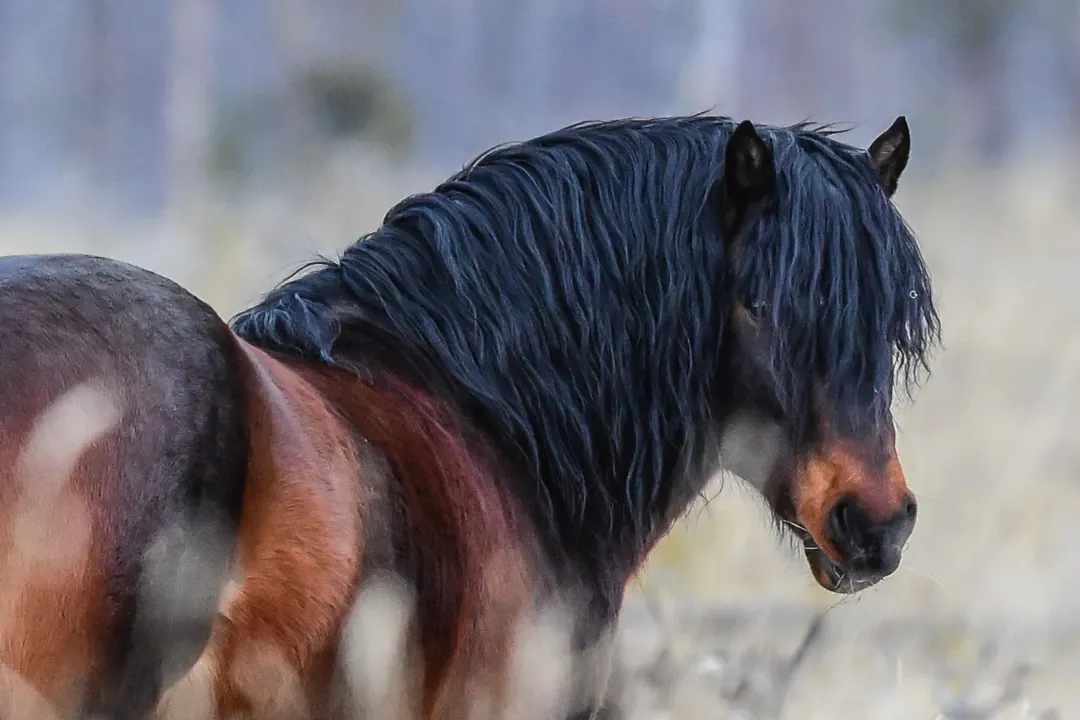
Moving away from the coast and toward the historical agricultural centers, one finds the lineage of the Canadian Horse, or Cheval Canadien. This breed is Canada’s oldest, tracing its roots back to horses brought over from France in the 1600s by colonists. [7][8] Originally, these foundation animals were essential for all aspects of life in early New France, serving as draught animals for farming, transportation, and even pulling carriages in urban centers like Montreal and Quebec City. [8] Their primary living situation, historically, was intimately tied to the farmstead and the small family holding, where they were expected to be versatile and hardy work partners. [7]
Today, while they no longer dominate agricultural life, the descendants of these foundation stock live in various settings, often maintained by dedicated breeders and enthusiasts across the country. [6] Many of these individuals are focused on preserving the breed's characteristics, which include hardiness, good temperament, and strength relative to their size. [7] Preserving a breed with such deep historical ties to a specific region means that while you might find a Canadian Horse in Alberta or Ontario today, its genetic stronghold and highest concentration of historical significance remain rooted in Quebec. [8] The continued existence of this breed relies on focused efforts; every new birth is crucial for maintaining the genetic pool, especially as the total population remains relatively small. [6]
Considering the breed’s origin, an interesting point arises about their current distribution: while the Sable Island horses are geographically fixed by the island's existence, the Cheval Canadien population is distributed based on human interest and specialized breeding endeavors across provinces. This contrast highlights that the concept of "where they live" for this heritage breed is less about a specific geographic territory and more about the quality of the stewardship environment, whether that's a quiet farm in Eastern Canada or a specialized rescue facility elsewhere. [2]

# Domestic Environments
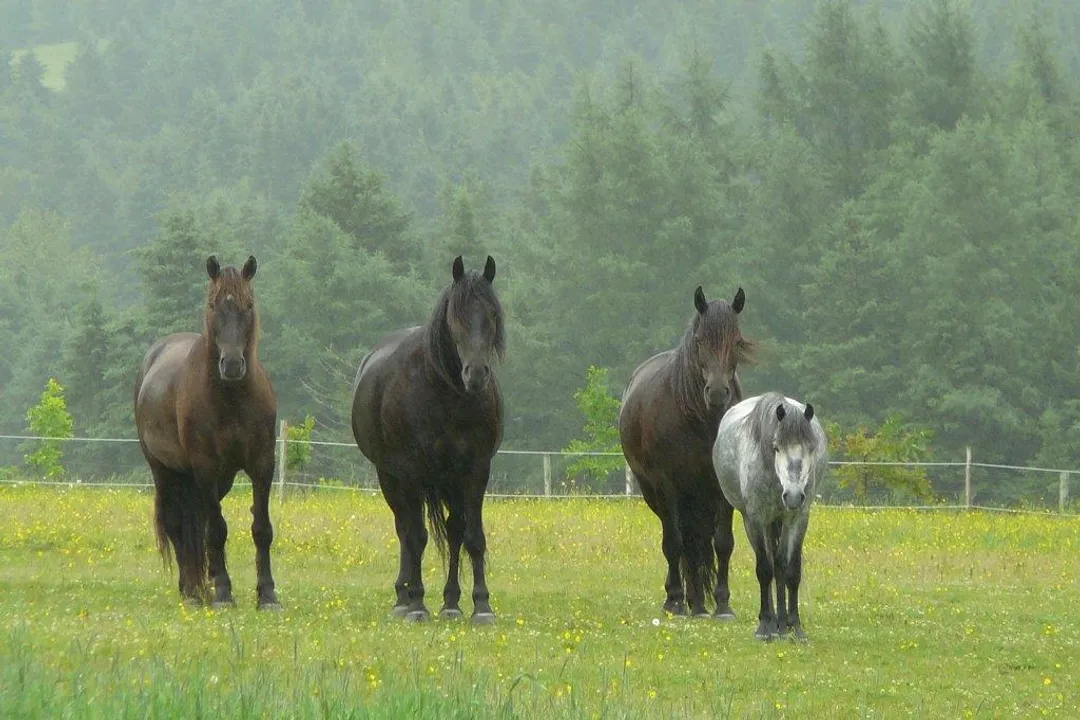
Outside of the wild horses of Sable Island and the specific preservation breeding programs for the Cheval Canadien, the vast majority of Canadian horses live in typical domestic settings common across North America. [9] These environments are highly varied, determined entirely by the needs and resources of their owners.
One can find horses living in large commercial operations, such as dedicated horse ranches, which focus on breeding, training, or sometimes providing equine services. [9] These ranches might be found across the Prairies—like those in Alberta, which have strong traditions in ranching and performance horse disciplines—or in the more moderate climates of Ontario and British Columbia. A horse's daily life in these settings involves managed pastures, dedicated barns for shelter, and arenas for training. [5]
Conversely, many Canadian horses live on smaller acreage or hobby farms. For an owner focused on trail riding or showing, the primary requirement might be safe fencing, basic shelter, and access to veterinary care, which can be established almost anywhere that zoning permits. [5] The critical element defining their living situation here is the access to quality feed, like hay, which is a major component of their diet, particularly during the long Canadian winters when fresh pasture is unavailable. [9] This need for reliable, high-quality forage influences where owners choose to keep their horses, often leading to higher concentrations near prime agricultural lands capable of producing good hay crops. [9]
# Comparing Lifestyles

When mapping out where Canadian horses live, it becomes evident that environmental pressure versus human management defines the habitat. The Sable Island horses are subject to the extreme volatility of the Atlantic, surviving lean years when storms deplete vegetation or when the harsh climate stresses the herd. [1] Their survival is a raw ecological study.
In contrast, the Cheval Canadien lives in environments optimized for genetic stability and breed continuation. Owners actively manage diet, shelter, and breeding pairs to adhere to breed standards, effectively creating a living, breathing historical archive. [6][7] A practical difference arises in the management of shelter: while the Sable horses rely on natural windbreaks or huddling together, a domestic Canadian Horse might be housed in a specialized, climate-controlled barn during a snowstorm, reflecting a completely different approach to environmental challenges. [2]
To illustrate the difference in daily existence based on location type, one can consider the seasonal realities:
| Location Type | Primary Shelter Source | Year-Round Feed Focus | Environmental Stressors |
|---|---|---|---|
| Sable Island | Natural cover, proximity to others | Dune grasses, island vegetation | Storms, salinity, limited forage during drought/snow |
| Heritage Farm (Managed) | Barns, run-ins, specialized shelters | Tested hay, grain supplements | Managing genetic diversity, maintaining condition |
| General Domestic Ranch | Barns, run-ins, fenced pastures | Commercial hay, on-site grazing | Cost of feed, managing pasture quality |
This comparison shows that "living in Canada" means something fundamentally different depending on whether the horse is a ward of the state on an isolated island, a precious link to Quebec’s past, or a companion animal in a private stable. [3][7][9]
# The Role of Provincial Regulations
While the physical location is dictated by geography or ownership choice, the legal framework that permits a horse to live in a certain spot is provincial. Zoning laws dictate whether a large commercial operation can be established, and agricultural regulations influence everything from transportation to feed safety. For instance, the operation of a horse rescue or a sanctuary, another place where horses "live" in Canada, is subject to the specific animal welfare acts of the province it resides in. [4] While some organizations work to find homes for horses across the country, including those that might otherwise face euthanasia or neglect, the physical sanctuary itself must comply with local by-laws regarding animal density and facility standards. [4] This regulatory layer adds a human-constructed dimension to where horses are allowed to live, irrespective of the natural landscape. [5]
Related Questions
#Citations
Sable Island horse - Wikipedia
Canadian Horse - The Livestock Conservancy
Horses - Sable Island National Park Reserve
Protecting Wild Horses in Alberta (& Canada) - Zoocheck
Rare Canadian horses at home in the Valley
Canada's Heritage Horse: Every New Birth Counts!
Canadian Horse: a Quebec Agricultural Treasure
Canadian Horses for Sale / Canadian Horse Breeder in Alberta ...