Are kite spiders poisonous?
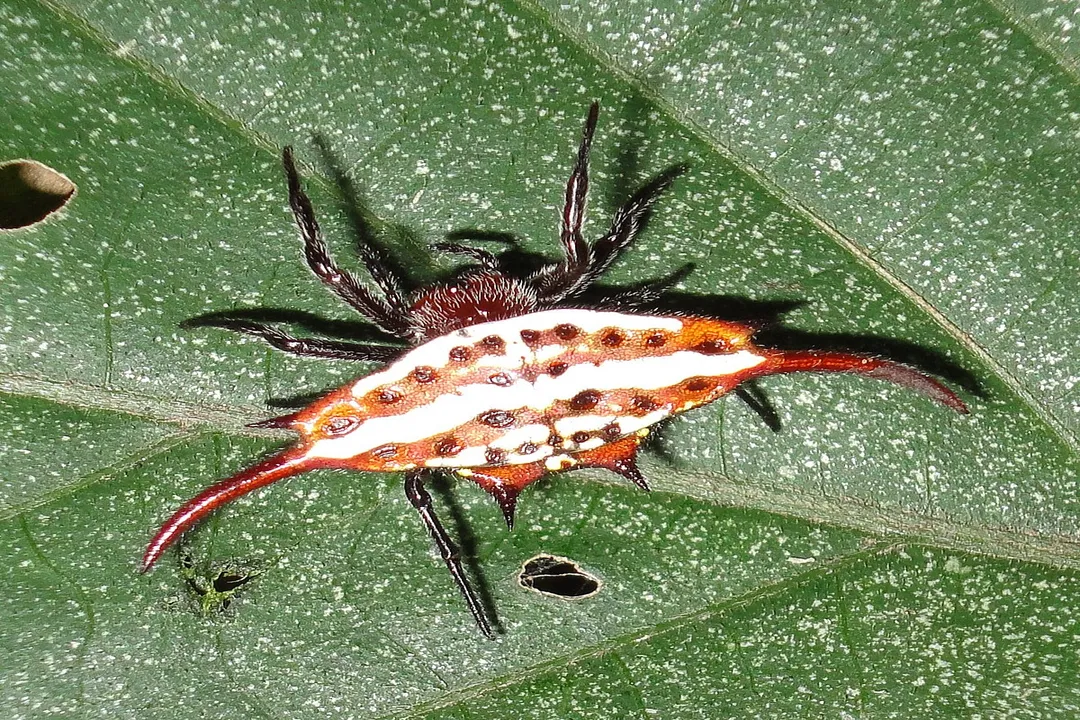
The sheer visual drama of certain spiders often prompts immediate questions about safety, and the creature commonly known as the kite spider is a prime example. With its hardened, often brightly colored, and distinctly spiked body, it looks like something engineered for defense or offense, leading many observers to wonder about its potential to cause harm. Understanding these spiders requires looking past the initial intimidating facade and examining the biology behind their structure and their interaction with humans.
# Body Shape
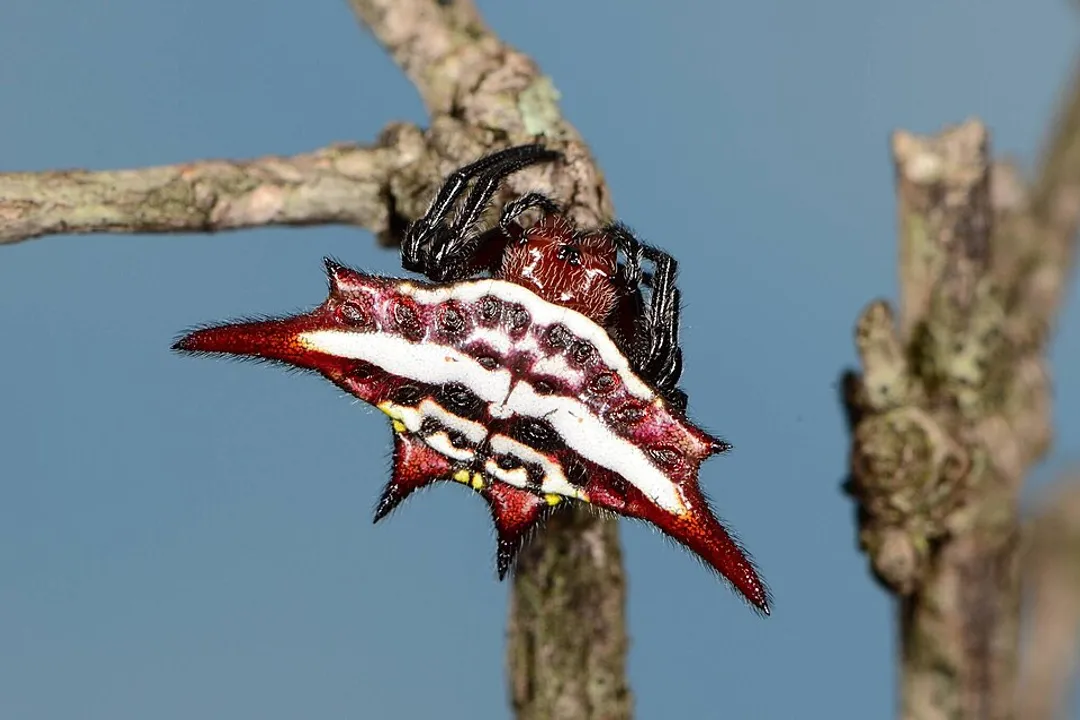
The common name "kite spider" tends to refer to several species within the Gasteracantha genus, which are part of the broader group known as spiny orb-weavers. What truly sets them apart is the shape of their abdomen, which is not smooth and rounded like many common spiders, but rather hard, rigid, and adorned with distinct protrusions or spines. These spines give the spider an almost geometric, flattened appearance, somewhat resembling a shield or, as the name suggests, a small kite.
The physical characteristics can vary quite a bit depending on the exact species found. For instance, Gasteracantha versicolor is frequently cited and is also sometimes referred to specifically as the long-winged kite spider. This species is characterized by these prominent, wing-like extensions extending from its abdomen. In terms of size, the body itself is quite small, often measuring only about 5 to 7 millimeters, although the spines add to its overall span and visual impact.
# Color Variation
The coloration of kite spiders is another remarkable feature. These spiders are not monochromatic; rather, they display striking variations that can sometimes even occur within the same species or geographic area. Gasteracantha versicolor, for example, can exhibit individuals that are yellow, white, or a reddish-orange hue. These base colors are frequently patterned with dark spots or markings. Another related species, Gasteracantha sanguinolenta, is often described as being red or orange, also patterned with black spots. This diversity in appearance means that simply spotting a spiny spider doesn't immediately identify the exact species, though it firmly places it within the orb-weaver family known for these dramatic abdominal ornaments.
# Venom Status
When people ask if these spiders are poisonous, they are usually asking about the danger level of their bite to a person. It is important to note that almost all spiders possess venom, which they use to subdue their insect prey caught in their webs. The kite spider, being an active web-builder, is no exception; it does utilize venom. However, the crucial distinction lies in whether that venom is medically significant to humans.
The consensus drawn from observations and general knowledge shared by those familiar with these spiders is reassuring: the venom of the kite spider is not considered dangerous to people. They are generally regarded as harmless to humans. Even if a bite were to occur—which is unlikely unless the spider is severely provoked or trapped against the skin—the effects are expected to be minimal, perhaps causing only localized, slight irritation rather than systemic illness. This contrasts sharply with a few medically significant spider genera, like Latrodectus (widows) or Loxosceles (recluses), whose venom composition and effects pose a genuine threat.
It is worth considering that their elaborate, spiny armor might actually serve as a defense mechanism against larger predators, such as birds, which might find the spiked abdomen too difficult or unappealing to consume. If a predator attacks, the spider's primary defense is likely visual deterrence and its hard shell, rather than relying on a potent bite for deterrence against large threats.
# Web Construction
As members of the orb-weaver family, kite spiders dedicate their efforts to creating geometrically precise, circular webs designed to intercept flying insects. These webs are strong and sticky, serving as their primary hunting grounds. You will typically find these webs stretched between vegetation, often in sunny spots where flying insects are prevalent. The spider itself is usually situated either at the hub of the web or hidden nearby in a retreat, waiting for vibrations to signal a capture. Observing one of these intricate webs, especially one adorned with a colorful, spiky occupant, is often described as a rewarding sight for nature enthusiasts.
When examining webs, especially in regions like parts of Southern Africa where these species are known to reside, it is helpful to appreciate the investment of energy that goes into constructing these traps. The spider's bright, almost jewel-like appearance might seem distracting, but its survival hinges entirely on the effectiveness of the silk structure it builds.
# Coexistence and Observation
The reaction to finding a spider with such pronounced defensive features can range from fascination to apprehension. Because their appearance suggests danger, some people might immediately want to remove them from an area, like a porch or garden. However, given that their venom is not a human health concern and they are actively reducing populations of flying insects, allowing them to remain in less trafficked areas is often the best ecological approach. The striking pattern and the wing-like extensions that give the long-winged kite spider its name are truly unique among local arthropods, making them excellent subjects for photography or simple observation. If you encounter one in your yard, simply appreciating its engineering—both the web and the body armor—and giving it space is the recommended interaction.
A useful way to frame the potential risk is by looking at how often the bite even happens. Unlike spiders that might wander indoors or hide in shoes, orb-weavers are generally tied to their webs. A bite only occurs if you physically disrupt the spider in its silk home or press it against your body accidentally. Therefore, if you are gardening or trimming bushes, simply looking before you grab a branch that passes close to a web is a highly effective, proactive measure that prevents nearly all potential interactions.
# Distinguishing Features
While many small, spiny spiders exist, the kite spiders in the Gasteracantha group are often distinguishable by the structure of the spines themselves—they are usually fewer in number and project outward in a more defined, wing-like fashion compared to the numerous, smaller bumps seen on other spiny orb-weavers. For the Gasteracantha versicolor, having four pronounced spines, often referred to as wings, is a key feature that sets it apart from other spiny orb-weavers. If you see a spider with two spines facing forward and two facing backward, creating a profile that mimics a small, floating object, you are very likely looking at a kite spider.
For those interested in cataloging local fauna, recognizing the difference in color morphs can be interesting, though precise species identification often requires a closer look or professional expertise. A spider that is predominantly white with black dots suggests one morph, while a deeply saturated red or orange individual suggests another, though both might fall under the G. versicolor umbrella depending on geographic location.
If you find one in a location that seems unusual for your region, remember that the identification often rests on careful comparison of the spine count and shape against detailed taxonomic keys, rather than just the general color.
| Feature | Gasteracantha versicolor | Gasteracantha sanguinolenta | General Kite Spider Trait |
|---|---|---|---|
| Body Structure | Hard, spiny abdomen; often described as having "wings" | Hard, spiny abdomen | Spiny, shield-like abdomen |
| Common Color | Yellow, white, or reddish-orange with dark markings | Red or orange with black spots | Varies widely |
| Web Type | Orb-web | Orb-web | Orb-web construction |
| Human Danger | Not medically significant | Not medically significant | Venom present, but harmless to humans |
A practical consideration for homeowners or gardeners is where these spiders choose to build. They favor areas that intercept prey, meaning they are often found near thick foliage, hedges, or between fence posts. Unlike ground-dwelling spiders, their presence in the upper layers of vegetation means that they are usually only disturbed if you are actively working near or through those areas.

# Understanding Venom Potency
The term "poisonous" is sometimes incorrectly applied when "venomous" is the correct descriptor for spiders. A poisonous organism is harmful when eaten, while a venomous one injects toxins via a bite or sting. Kite spiders are venomous, not poisonous in the sense that eating them would cause harm. More importantly, their venom is specialized for invertebrate digestion. The difference in biological scale between a housefly, the spider’s typical meal, and a human is vast. This scale difference is why the complex, fast-acting toxins necessary to immobilize an insect are often completely ineffective or cause only mild, local reactions in a mammal.
When researching or observing these creatures, it's beneficial to adopt a perspective rooted in ecological understanding. These spiders are indicators of a healthy insect population; they are nature’s pest control system, keeping the numbers of smaller flying nuisance insects in check. The energy they expend building and maintaining a large web suggests a high reliance on catching prey regularly, making them efficient workers in the garden ecosystem.
If you find yourself frequently encountering them in a high-traffic zone, like a doorway, instead of attempting eradication, you could try to relocate the existing web structure to a nearby shrub or tree that is further from foot traffic. Gently guiding the anchor lines of the web to a new spot, perhaps with the help of a long stick, can often encourage the spider to rebuild there, preserving its hunting ability without putting the web in a precarious location. This respects the creature’s role while managing human proximity.
In sum, the kite spider is a marvel of arachnid architecture and coloration, designed to catch small prey. While its sharp armor might suggest danger, the reality is that these spiders pose virtually no threat to human health, relying instead on their webs and their startling appearance for survival against natural predators. Observing them quietly, from a respectful distance, reveals them to be fascinating members of the local invertebrate community.
Related Questions
#Citations
Harmful Effects of Long-winged kite spider - Picture Insect
Spiny orbweaver spider, also known as kite spider - Facebook
What is this spider and how poisonous is it? Found in Ocala, FL
Gasteracantha versicolor - Wikipedia
Kite Spider - Kloof Conservancy BioGuide
Spiders I Love - The Kite Spider | The Go-To Guy