Are io moths invasive?
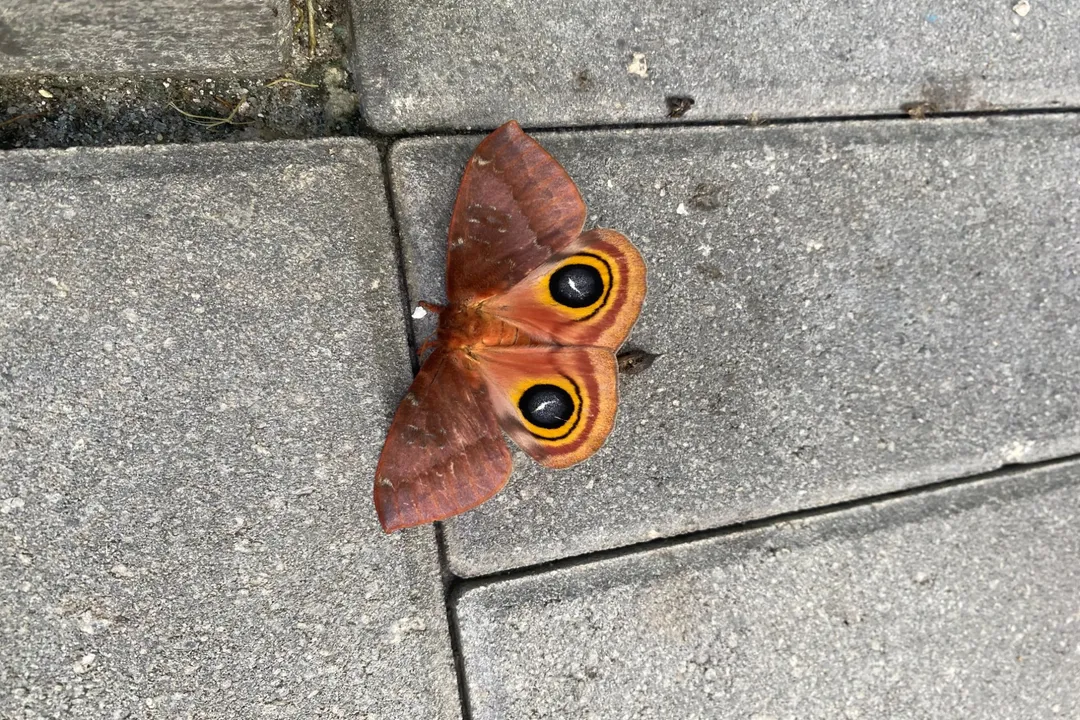
The Io moth (Automeris io) is a spectacular creature, often stopping observers in their tracks due to its vibrant coloration and impressive wingspan. While many insects crossing paths with human activity raise questions about their ecological standing—specifically whether they pose an invasive threat—the Io moth's story is more about its impressive natural defense mechanisms and broad distribution across North America than it is about being an unwelcome newcomer.[1][2][6]
# Striking Appearance
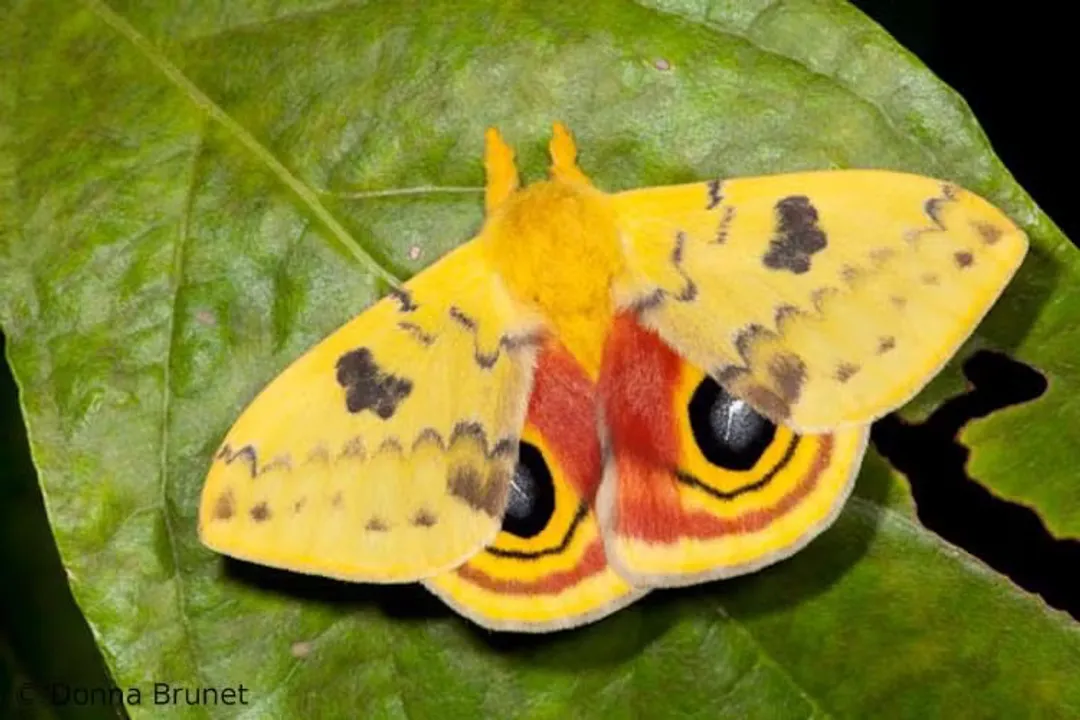
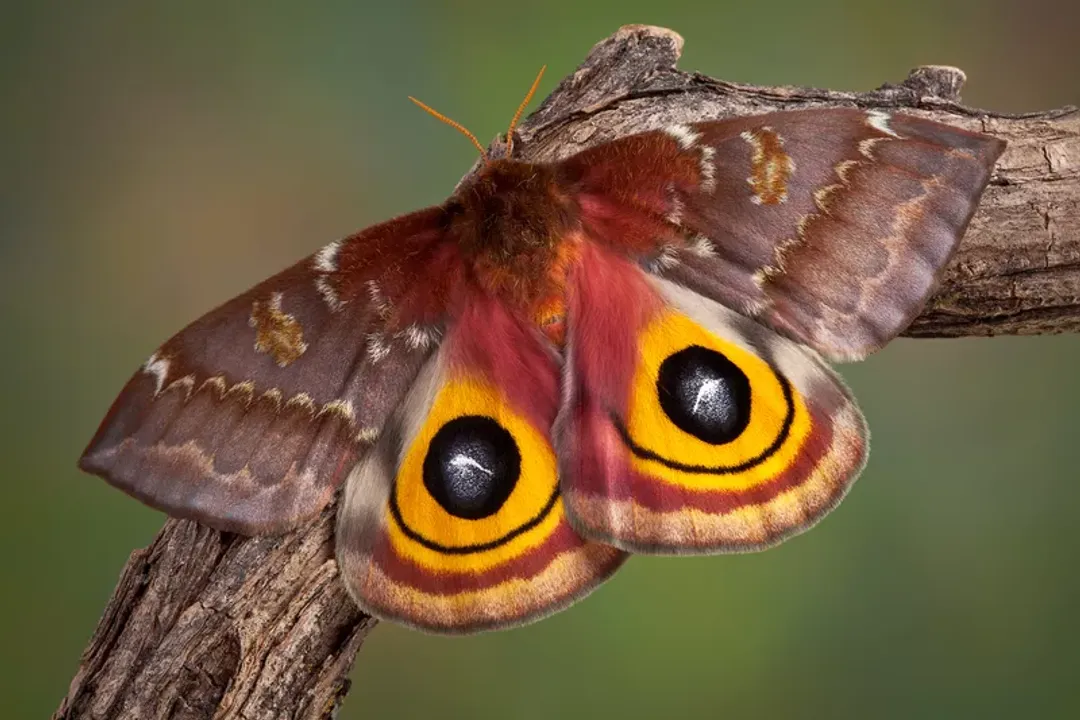
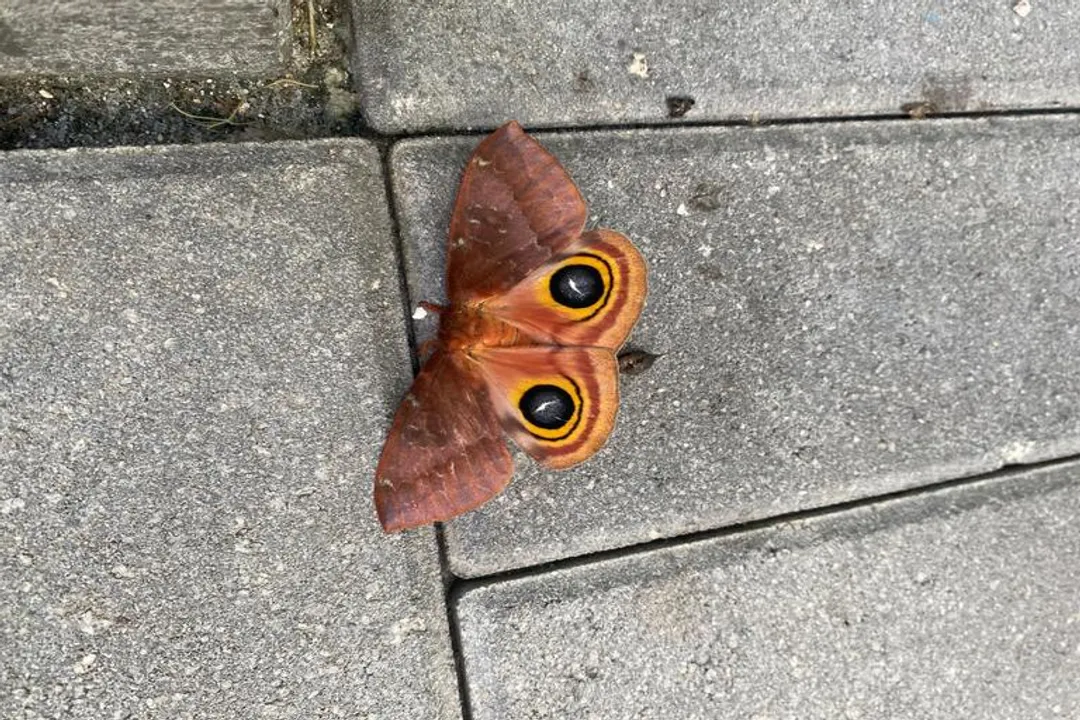
The adult moths are undeniably beautiful, though identifying the sexes requires a close look at their colors. The males sport rich yellow or reddish-brown upper wings, often with a striking purple-red band near the outer edge, contrasted by dark-ringed eyespots on the hindwings that can flash when disturbed.[1][2] Females, conversely, tend to be duller, usually appearing a shade of brown or yellow, which can sometimes cause them to be overlooked compared to their more flamboyant male counterparts.[1] Regardless of sex, the hindwings carry those characteristic, large eyespots, believed to startle potential predators, such as birds.[1][3] These moths are relatively large, with wingspans that can stretch up to three or four inches.[1]
The life cycle begins with the eggs, laid in small clusters on the underside of host plant leaves.[4] The ensuing caterpillars are perhaps the most talked-about stage. They are often bright green, sometimes featuring reddish or yellowish stripes running down their bodies, but their most notable feature is the covering of branched, stinging spines.[5][8] These spines, which are hollow and contain venom, are the primary reason humans often focus intensely on this species.[5][8]
# Native Range
To understand if a species is invasive, one must first establish its native territory. Invasive species are organisms that are non-native to an ecosystem and whose introduction causes, or is likely to cause, economic or environmental harm, or harm to human health.[9] The Io moth, however, appears well-established across a vast stretch of North America. Its distribution spans from southern Canada down through much of the eastern and central United States, extending west into states like Montana and south into areas like Florida.[2][3][7] This broad, consistent presence across multiple states and ecological zones suggests the species is indigenous to these regions rather than recently introduced.[2]
While a species can be native to a region yet still become a local pest under certain circumstances—for instance, during massive population outbreaks that severely defoliate specific trees—the term invasive typically implies movement outside of a historical range. When an insect like the Io moth thrives across regions like the mountainous West (Montana) and the humid Southeast (Florida) naturally, it speaks more to its adaptability within its historical ecosystem than to an invasive pattern of spread.[7] Local wildlife agencies often document the Io moth as a common component of their local fauna, highlighting its role in the natural food web, even if the caterpillars are occasionally noted for defoliating specific trees or shrubs.[3][4]
# Caterpillar Warning
The ecological conversations surrounding the Io moth frequently center on the larval stage, as these spiky insects demand respect from anyone handling vegetation or hiking off-trail. The spines covering the caterpillars are connected to venom glands, and contact can cause a painful reaction.[5][8] Reports from observers confirm that the sting can result in localized pain, itching, redness, and sometimes swelling.[5] Though generally not considered medically dangerous in the way a bee sting might be for an allergic person, the discomfort is significant enough that direct handling should be avoided entirely.[5]
If you encounter these caterpillars, perhaps while gardening or exploring, it is important to recognize the difference between an interesting natural occurrence and a genuine threat. While a single caterpillar might be easily avoided, if a large number are present, they can cause noticeable damage to host plants. One way to look at it is that their defensive mechanism is highly effective; few native predators would regularly risk a painful sting to consume them, which might allow populations to fluctuate more wildly than those of less-defended species.[8] For general readers encountering them, the primary takeaway should be observation from a distance, appreciating the bright warning colors and spiky armor without testing its effectiveness firsthand.[5]
# Host Plants and Feeding
The feeding habits of the Io moth larvae contribute to their local impact. The caterpillars are generalists, meaning they do not rely on a single type of plant to complete their development. They feed on a wide variety of woody plants, making them opportunistic feeders.[4] Common host plants listed in various regional guides include species like willow, rose, wild cherry, sumac, birch, maple, and blueberry.[3][4] This dietary flexibility is another factor supporting their wide geographical distribution; they are not constrained by the presence of a single, localized food source.[2]
If you are monitoring native flora in your area, noticing a high concentration of Io caterpillars might simply indicate that one of their preferred host species is abundant locally that season. Given their wide host range, they are less likely to cause widespread devastation to an entire ecosystem than a specialist insect that targets a single, dominant tree species. For instance, while a non-native pest might wipe out all the ash trees in a county, the Io moth's varied diet means that even if it heavily feeds on sumac, it can easily switch to nearby willow or cherry if necessary. This dietary breadth contributes to its successful integration into the North American biome.
# Naturalized Presence Versus Invasion
Considering the evidence—a wide native distribution across the continent, reliance on many common native host plants, and a long history within North American ecology—the Io moth is not generally considered an invasive species.[2][7] Instead, it is a widespread, native member of the Saturniidae family, known for its defensive caterpillars.[2][6] The key distinction here is that an established native species, even one capable of local overabundance, differs fundamentally from an invasive one, which requires being outside its naturalized range to cause harm.[9]
For gardeners or landowners concerned about localized heavy feeding, thinking about this in terms of "outbreaks" rather than "invasion" is more accurate. An outbreak occurs when natural predators are temporarily insufficient to control a booming native population. For example, if a mild winter allows a high number of pupae to survive, the spring may see an explosion of larvae, leading to noticeable defoliation on a few favored host trees in a small area. This is a natural population cycle, not an invasive introduction.[4] A good rule of thumb for management—if intervention were ever truly needed—would be to look at where the caterpillars are found. If they are on non-native or highly valued ornamental plants, they are acting as a local pest. If they are on wild sumac or roadside brush, they are simply behaving as native wildlife.
To help general enthusiasts quickly sort out what they are looking at, recognizing the dimorphism is helpful:
| Feature | Male Io Moth | Female Io Moth |
|---|---|---|
| Forewing Color | Bright yellow or reddish-brown | Brown or yellowish-brown (duller) |
| Hindwing Eyespot | Prominent, dark-ringed | Prominent, dark-ringed |
| Body Size | Generally smaller | Generally larger |
This inherent sexual difference is an interesting biological feature common in silk moths, yet it often means casual observers might mistake males and females for two different species entirely.[1]
# Practical Observation Tips
For those interested in observing the Io moth without encountering the stinging hazard, timing and location are everything. Since the adults are nocturnal, setting up a white sheet or screen outside on a warm summer night with a bright light source can attract them. This method allows for safe viewing of the magnificent adults, usually from late spring through summer, without ever interacting with the larval stage.[1][3]
If you are dealing with the caterpillars on a highly valued or ecologically sensitive plant, remember that handling them directly is off-limits due to the spines. A safer approach involves using tools rather than hands to relocate small clusters to a less problematic area of the property where host plants are less critical. Given their relatively short lifespan as caterpillars before pupation, allowing a natural predator, like a parasitic wasp, a few weeks to find them is often the lowest-impact, most ecologically sound strategy for managing a temporary local surge.[5] Always prioritize safe observation; these moths are indicators of a healthy, functioning native environment, even if their defense mechanisms are a bit prickly.[6]
Related Questions
#Citations
The Fascinating World of the Io Moth | All “U” Need Pest Control
Automeris io - Wikipedia
Io Moth | Missouri Department of Conservation
Io Moth Automeris io (Fabricius) (Insecta: Lepidoptera: Saturniidae)
PSA: Io moth caterpillars' venom : r/NewOrleans - Reddit
National Moth Week: Io Moth (Automeris io)
[PDF] Io moth - Montana FWP
Venomous Io Caterpillars Often Dwell Beneath Plant Matter ...
io moth (Automeris io (Fabricius)) - Invasive.Org