Can you touch an Io moth?
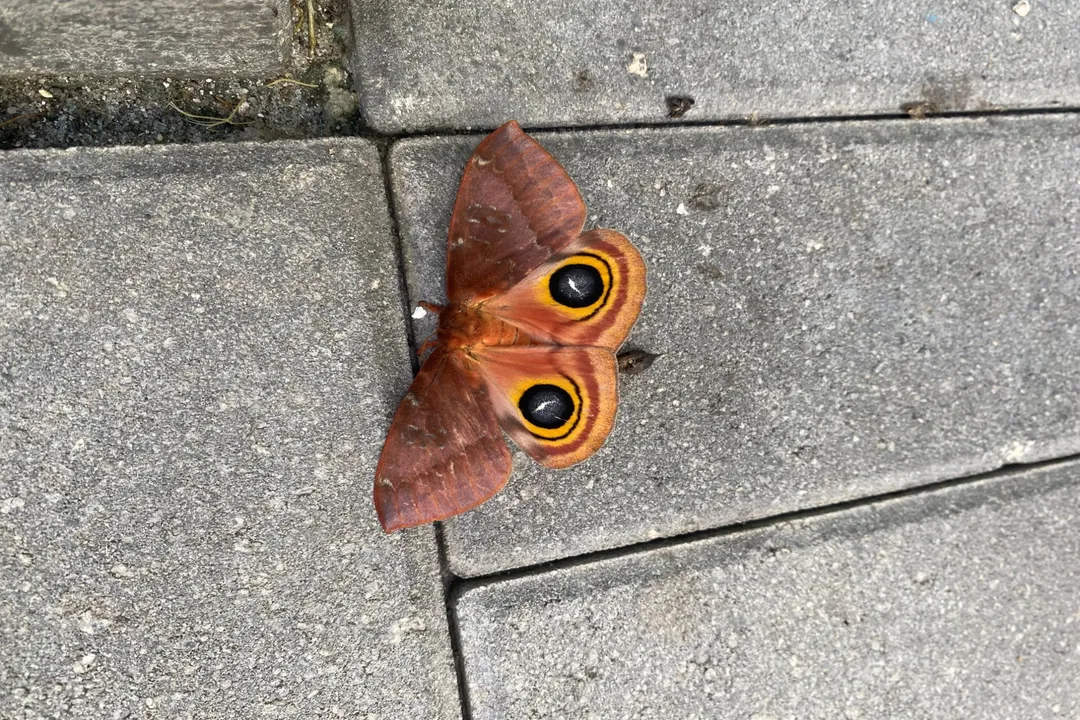
The sight of a massive, vibrant moth fluttering near a porch light often sparks curiosity, leading observers to wonder about direct interaction. When that moth happens to be the Io moth (Automeris io), that curiosity is often quickly followed by a necessary hesitation, largely due to stories circulated about its larval stage. The safety of touching the adult Io moth is a question best answered by first understanding the creature's life cycle, specifically the stark difference between the fuzzy, winged adult and its spiny, ground-dwelling younger self.[1][3]
# Caterpillar Danger
The primary reason people inquire about touching an Io moth stems from warnings associated with its caterpillar form. The Io moth caterpillar is notoriously equipped for defense, featuring branching spines that are capable of delivering a painful sting if handled improperly. [6] These larvae are not merely prickly; they possess urticating spines that, upon contact, can break off into the skin. [5]
When these spines penetrate the skin, they elicit a reaction commonly described as a sting. [3][5][7] Reports indicate that contact results in localized pain, often accompanied by a rash or itching sensation. [1][3][7] While most reactions are confined to the immediate area of contact, more severe systemic responses are possible, though rare, depending on an individual's sensitivity. [5] These more intense symptoms can include nausea or difficulty breathing, which necessitates immediate medical attention. [5] These defensive mechanisms are highly developed in the larval stage, serving as a clear deterrent to potential predators. [2][6]
The appearance of the caterpillar itself is a warning sign. They are generally greenish with reddish or yellowish stripes running down their bodies, covered densely in the aforementioned spines. [2] These spines are the source of the chemical irritant or venom that causes the discomfort. [6]
# Moth Appearance
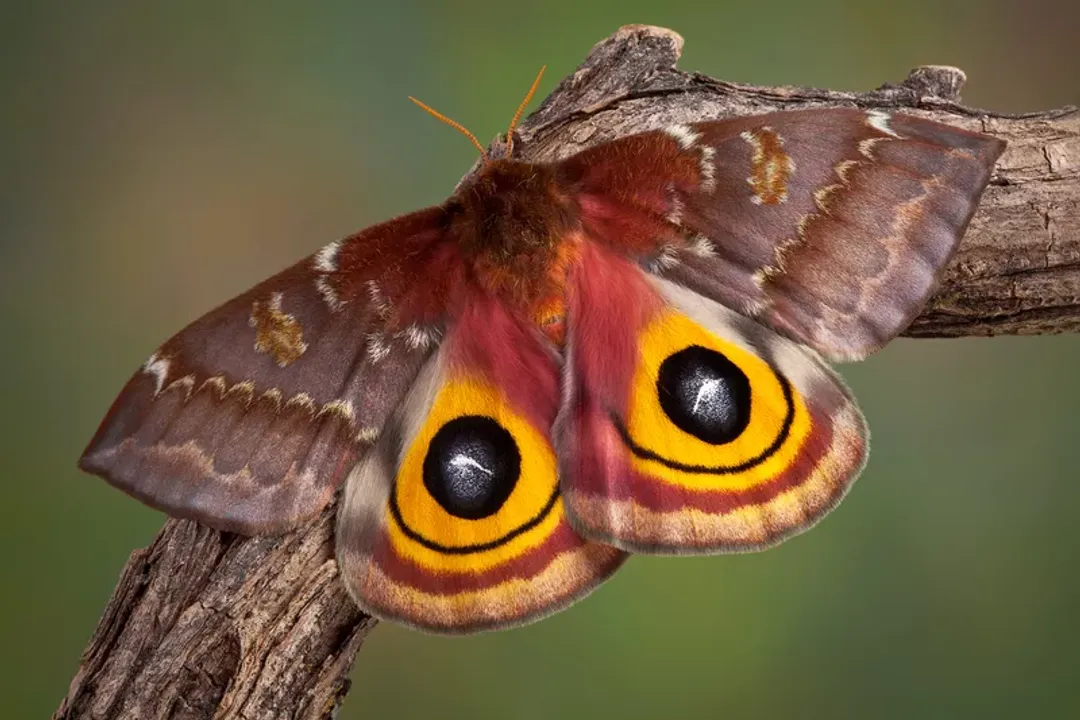
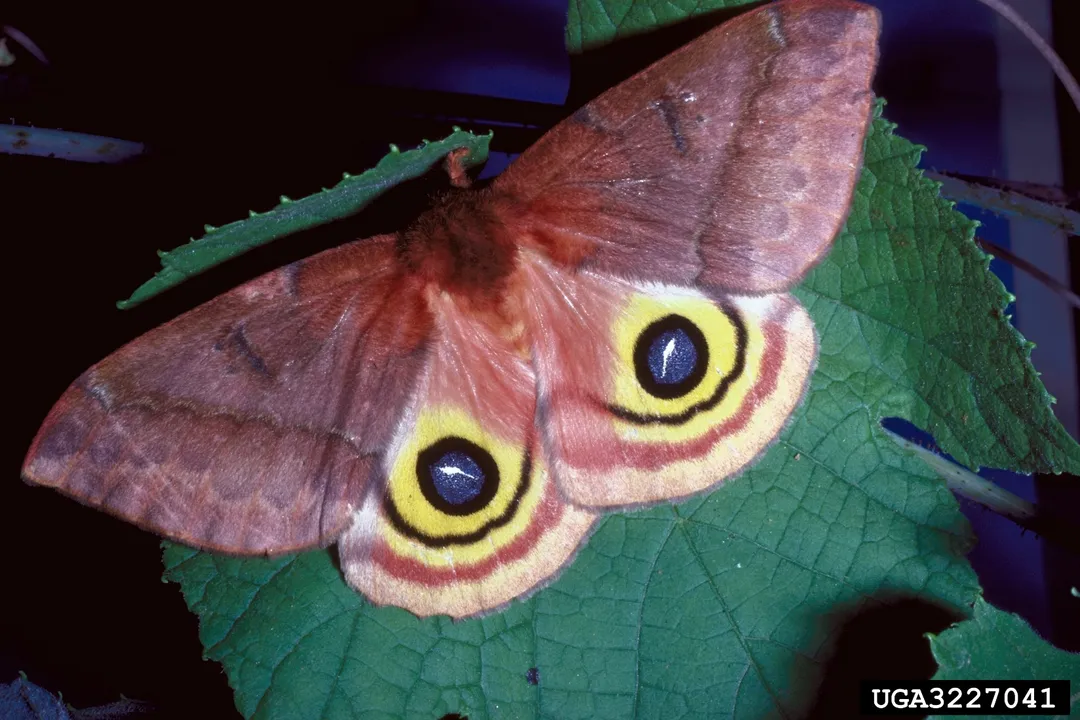
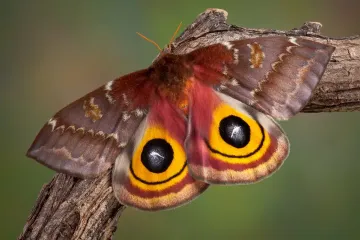
Shifting focus from the larva to the adult reveals a creature of considerable beauty and size. The adult Io moths are quite large; they can boast a wingspan of around 3 to 4 inches. [9] They exhibit noticeable sexual dimorphism, meaning males and females look different. [3] The males are typically a bright yellow, while the females tend to display a more subdued purplish-brown coloration. [3][9]
Both sexes possess a distinctive feature that is actually a defense mechanism, though not an active stinging one: large, prominent eyespots located on the hindwings. [3][9] These eyespots are designed to startle predators, mimicking the look of a much larger animal or bird, offering a momentary advantage for escape. [3] The adult moth's purpose is reproduction, and its life span is brief, often lasting only about a week or two, during which time it generally does not feed. [9]

# Contact Assessment
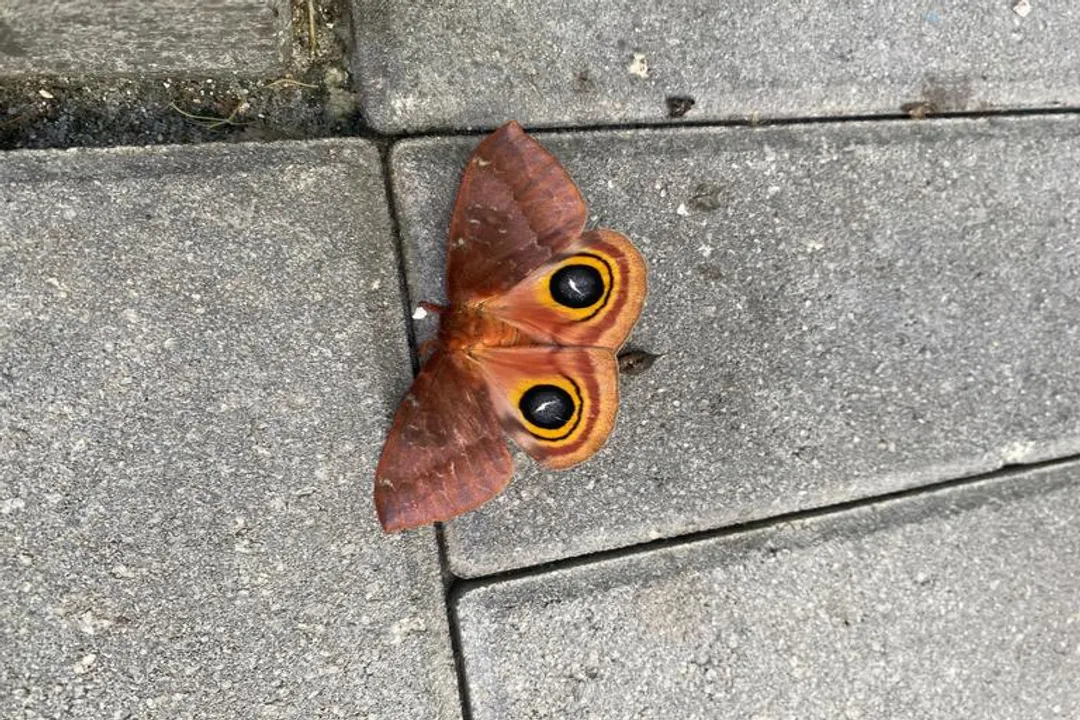
Given the clear and documented danger posed by the spiny caterpillar, the crucial point for general readers must be the distinction between the two life stages when considering physical interaction. While the sources provide ample documentation regarding the severe reactions caused by the caterpillar's spines breaking off, [1][5][6][7] they do not offer a comparable warning regarding the direct handling of the adult moth itself. [1][2][3][9] This difference in focus between sources is informative: the danger is specifically tied to the larval morphology.
When observing a mature Io moth resting quietly or flying—perhaps one found near a light source in the Southeast USA, where they are commonly observed [4]—the immediate physical threat posed by the stinging spines is absent. The adult moth's body is covered in soft scales and hairs, not the hardened, venom-injecting spines of the caterpillar. [2] However, this absence of explicit danger warnings in the provided material should not be automatically interpreted as a blanket endorsement for handling. In the natural world, insects that are not actively venomous might still carry bacteria, or their delicate wings and scales can be easily damaged by oils and rough contact from human hands. [1]
It is worth noting that many Lepidoptera (moths and butterflies) have scales that rub off easily, and while not venomous like the Io caterpillar, repeated or rough handling can compromise their ability to fly or regulate temperature. [1] Think of it this way: the evolutionary focus on protection shifted from delivering a chemical sting in the larval stage to visual deterrence (the eyespots) in the adult stage, suggesting that direct physical confrontation is generally avoided by the adult form through flight or startling displays, rather than direct physical assault like the caterpillar. [3] Therefore, while the adult lacks the chemical threat of the caterpillar, respecting the insect's need for an intact body suggests that touching should still be approached with caution. [1]
# Practical Interaction Tips
For those interested in observing these exceptional creatures, understanding context aids safer appreciation. The Io moth is frequently encountered in areas where its host plants grow. [9] In places like Florida, sightings of the caterpillar can become common enough that public awareness about the sting hazard increases, as seen in local reporting. [7]
When you see an Io moth caterpillar, the guidance is clear: do not touch it. [2][5][7] If contact occurs accidentally, experts advise washing the area thoroughly with soap and water. [5] Some sources suggest using tape to gently remove any spines stuck in the skin, followed by a period of soaking in a hot bath, though this is general first-aid advice for encounters with stinging insects. [5]
Considering the adult moth, the best practice derived from general entomological knowledge and the lack of safety documentation is one of passive observation. If you find an Io moth perched, try to observe its coloration and wingspan from a respectful distance. [3][9] If the moth has landed on you or a surface you must move, try to encourage it to fly by gently blowing air nearby or waiting for it to move on its own, rather than attempting to grasp it. [1] Protecting the delicate wings from oils and abrasion is paramount, as the adult's energy reserves are limited for its brief, reproduction-focused existence. [9] Observing its behavior, such as noting the dramatic difference in wing patterns between a male and female when they are resting, offers richer data than a quick, risky touch. [3]
# Life Cycle Context
The lifecycle of the Io moth underscores why the danger resides so heavily in the larval stage. The adult emerges from its cocoon, often in the spring or summer, ready to mate. [9] The caterpillar stage is the feeding, growing stage where the insect needs maximum defense against predation to survive long enough to metamorphose. [2] The defensive structures are a temporary but highly potent feature of that specific phase of life. Once the adult emerges, the need for that painful chemical defense has passed, and the structure of its outer covering changes entirely to scales necessary for flight. This transition highlights that the insect's defense strategy is entirely stage-dependent.
In summary, the answer to whether you can touch an Io moth hinges on which Io you are referring to. Touching the caterpillar is strongly discouraged due to the risk of painful, spine-induced stings and subsequent rashes. [1][5] Touching the adult moth is not explicitly prohibited by the provided sources, but prudence dictates observing these large, beautiful insects without handling them, thereby ensuring their survival and your safety from potential, albeit undocumented, irritation or physical damage to their fragile wings. [1][9]
#Videos
IO Moth Caterpillars Can Sting - YouTube
Related Questions
#Citations
Hey, ho, io! - UF/IFAS Extension Sarasota County - Blogs
What is it? Wednesday – IO moth caterpillars - Clemson HGIC
Io Moths are exceptional creatures | Features | southtexasnews.com
Found this by my door (SE USA). It's an Io Moth caterpillar ... - Reddit
Caterpillar Stings - Poison Control
Venomous Io Caterpillars Often Dwell Beneath Plant Matter ...
Watch out for the stinging Io moth caterpillars in South Florida - Axios
IO Moth Caterpillars Can Sting - YouTube
The Fascinating World of the Io Moth | All “U” Need Pest Control