Are fox snakes aggressive?
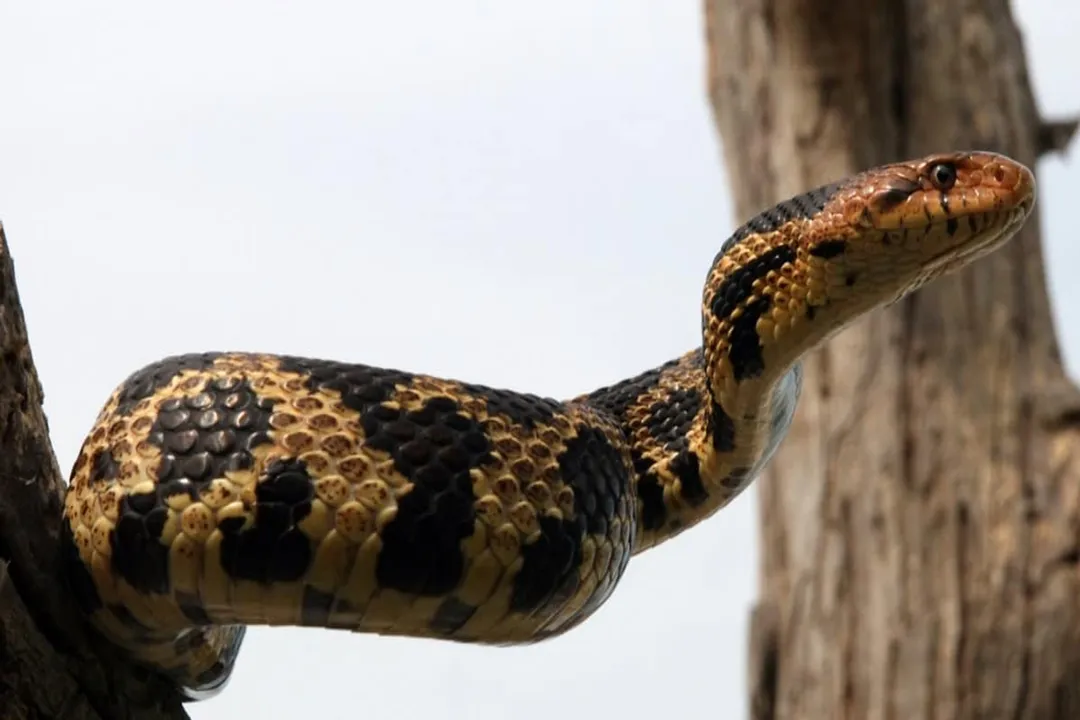
Fox snakes are generally not considered aggressive animals; their reputation for confrontation usually stems from intense defensive posturing when they feel trapped or unduly threatened. For anyone encountering one in the field, understanding this distinction between true aggression and reactionary defense is key to safe coexistence. If given any reasonable opportunity, these colubrids will prioritize escape over conflict. They are non-venomous snakes, which is a critical piece of information when assessing any potential encounter.
# Natural defense
When a fox snake finds itself cornered and perceives no avenue for retreat, it transitions into a dramatic defensive sequence designed to scare off the perceived predator. This performance is often what leads observers to label them as aggressive. The display is elaborate and intended to mimic larger, more dangerous reptiles.
Key elements of this defense include:
- Loud Hissing: The snake will inhale and exhale forcefully to create a very loud hissing sound meant to intimidate.
- Tail Vibration: A common behavior is vibrating the tail rapidly against dry leaves or ground cover. This action is specifically evolved to mimic the sound of a rattlesnake, fooling many into believing they are facing venomous danger.
- Head Flattening: To further the resemblance to pit vipers, the fox snake will often flatten its head into a broad, triangular shape.
- Musk Release: As a last resort before striking, they may release a foul-smelling musk from their cloaca.
These behaviors collectively paint a picture of a snake working hard to appear dangerous enough to deter a threat without actually engaging in a fight. It is this very convincing act that often leads to the misunderstanding that they are inherently belligerent.
# Bite implications
The probability of a fox snake biting is low unless the animal is physically handled, restrained, or repeatedly harassed. They are primarily concerned with avoiding human contact altogether. Because they are non-venomous, any bite sustained from a fox snake does not pose a medically significant threat to human health.
However, a defensive bite is not a pleasant experience. While the resulting injury is usually minor, often only causing small abrasions, the snake's dentition can complicate matters. Fox snakes possess backward-curving teeth. If a snake latches on during a defensive bite, these recurved teeth can make it difficult to pull the snake away without causing further injury to either party. In this scenario, the best action is often to remain still until the snake relaxes its grip, rather than attempting to forcibly detach it.

# Species variations
Fox snakes belong to the genus Pantherophis, and the term often refers to several closely related species, most commonly the Western Fox Snake (Pantherophis vulpinus) or the Eastern Fox Snake (Pantherophis gloydi). While their general temperament and defensive strategies are highly similar, their distribution differs.
The Western Fox Snake is widely distributed across states like Illinois, where it is a protected species in some areas. They favor open areas like prairies, grasslands, and areas near agricultural land, barns, and sheds. The Eastern Fox Snake, on the other hand, has a more limited range, often found in damp, grassy habitats or wooded areas close to water sources. Regardless of the subspecies, the defensive playbook remains consistent: avoid confrontation at all costs.
# Habitat proximity
Understanding where fox snakes live helps manage expectations about encountering them. They are often found near human dwellings, not because they seek out conflict, but because the local conditions—such as barns, woodpiles, or agricultural fields—provide excellent habitat and prey sources. They are known to be excellent climbers, meaning they can be found investigating sheds or even lower tree branches.
Fox snakes are generally diurnal, meaning they are active during the day, which increases the chance of human sightings compared to strictly nocturnal species. During colder months, they enter a state of brumation, often congregating in communal dens within rock crevices or under logs. An individual encountered basking in the sun or hunting in an open field is likely just going about its daily routine, unaware of any threat until it is too close.
When moving through areas where fox snakes are common—such as dense grass near a creek bank or around an old stone foundation—the best preventative measure is simply to watch where you step and avoid sudden movements. If you spot one from a distance, stop moving immediately. This action prevents you from accidentally cutting off its escape route, which is the primary trigger for the aggressive-looking defensive display. A moment of patience from the observer can save both parties the stress of a defensive interaction.
# Mimicry danger
The resemblance of the fox snake’s defensive display to that of the venomous Eastern Massasauga Rattlesnake creates a significant risk of misidentification. This confusion is the most common factor leading to harmful human interference with a harmless snake. The Western Fox Snake is often confused with the Eastern Massasauga in areas where their ranges overlap.
When a fox snake flattens its head and vibrates its tail, a casual observer might instantly assume they are dealing with a venomous viper, leading to a panicked response that could provoke an actual defensive strike. While the tail vibration is an excellent deterrent, a crucial point of observation is the sound produced. A true rattlesnake produces a distinct buzzing sound, whereas the fox snake's vibration, while loud in dry leaves, often lacks that characteristic buzz and may sound more like generalized leaf litter being disturbed quickly. If you observe a snake mimicking a rattlesnake, backing away slowly and allowing it to depart is the safest protocol, regardless of your identification certainty.
# Safety guidelines
For those living near or working in the natural habitats of fox snakes, a few practical guidelines help ensure safety for both people and the reptile. Since these snakes are frequently near barns or woodpiles, reducing cover close to homes can discourage large populations from setting up shop in high-traffic areas.
If you find a fox snake near your home, remember it is there for mice, rats, and other small prey, making it an asset to pest control. You should never attempt to capture or handle the snake. Keeping pets leashed and supervising children in areas known for snake activity are simple precautions that prevent accidental confrontations. If removal from an immediate area is necessary, the safest method is to gently encourage it to move away using a long object, like a rake or stick, always directing it away from yourself and toward dense cover, never toward another person or structure. Recognizing that their threat level is self-defense-based, rather than predatory toward humans, shifts the focus from eradication to avoidance.
Related Questions
#Citations
Do Fox Snakes Bite? Understanding Their Behavior and Safety ...
Fox Snakes Animal Facts - P. vulpinus and P. ramspotti
Fox Snake, Eastern | What's That Snake? - OPLIN
The Fox Snake Is Essential for the Great Lakes Region
Fox snake? : r/herpetology - Reddit
Bull Snakes and Fox Snakes in Iowa, Characteristics and Habits
Western Fox Snake | Minnesota DNR
Eastern Foxsnake | EEK WI
Pantherophis gloydi (eastern fox snake) - Animal Diversity Web
western foxsnake - Illinois Department of Natural Resources